
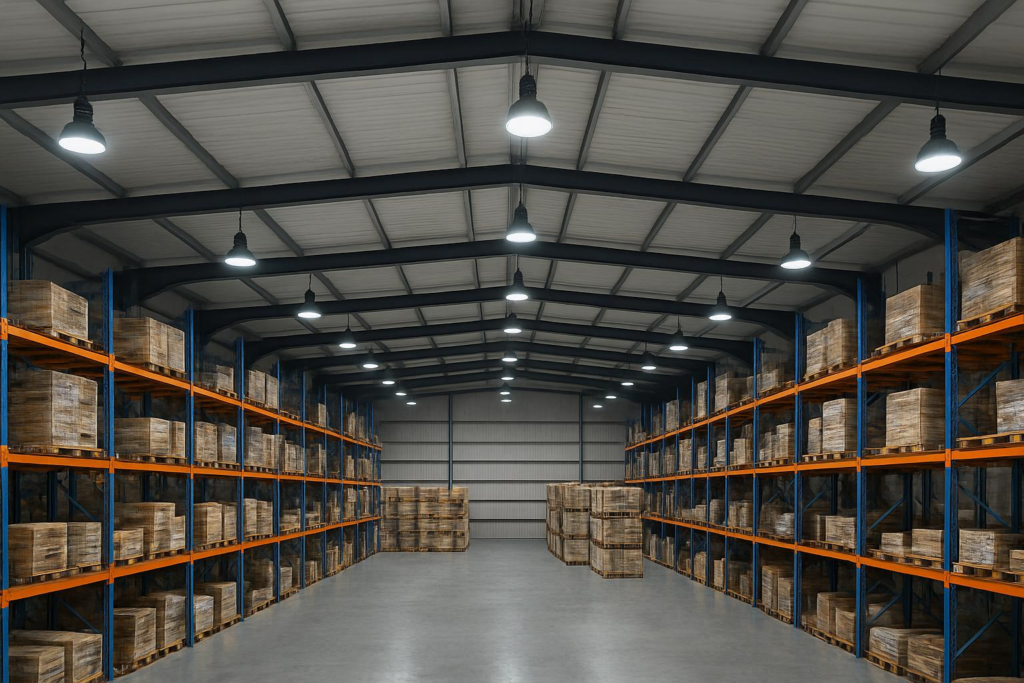
Direct answer: Neither optic wins on a datasheet, because the two numbers usually quoted are not comparable. A coated aluminium reflector typically delivers a higher light output ratio in wide distributions and tolerates heat better; a TIR lens typically delivers a tighter cut-off and a sealed optical chamber that can be washed down. The decision comes from three measurements: luminaire efficacy from an LM-79 report, UGR calculated in the actual room, and the maintenance factor for the dirt in that building.
What optical efficiency means before you compare anything
Optical efficiency is the share of bare LED lumens that leaves the fixture. The industry shorthand is light output ratio, or LOR: luminaire lumens divided by the sum of the LED lumen ratings inside. Almost no supplier publishes it, because it exposes how much light the optic and the diffuser consume.
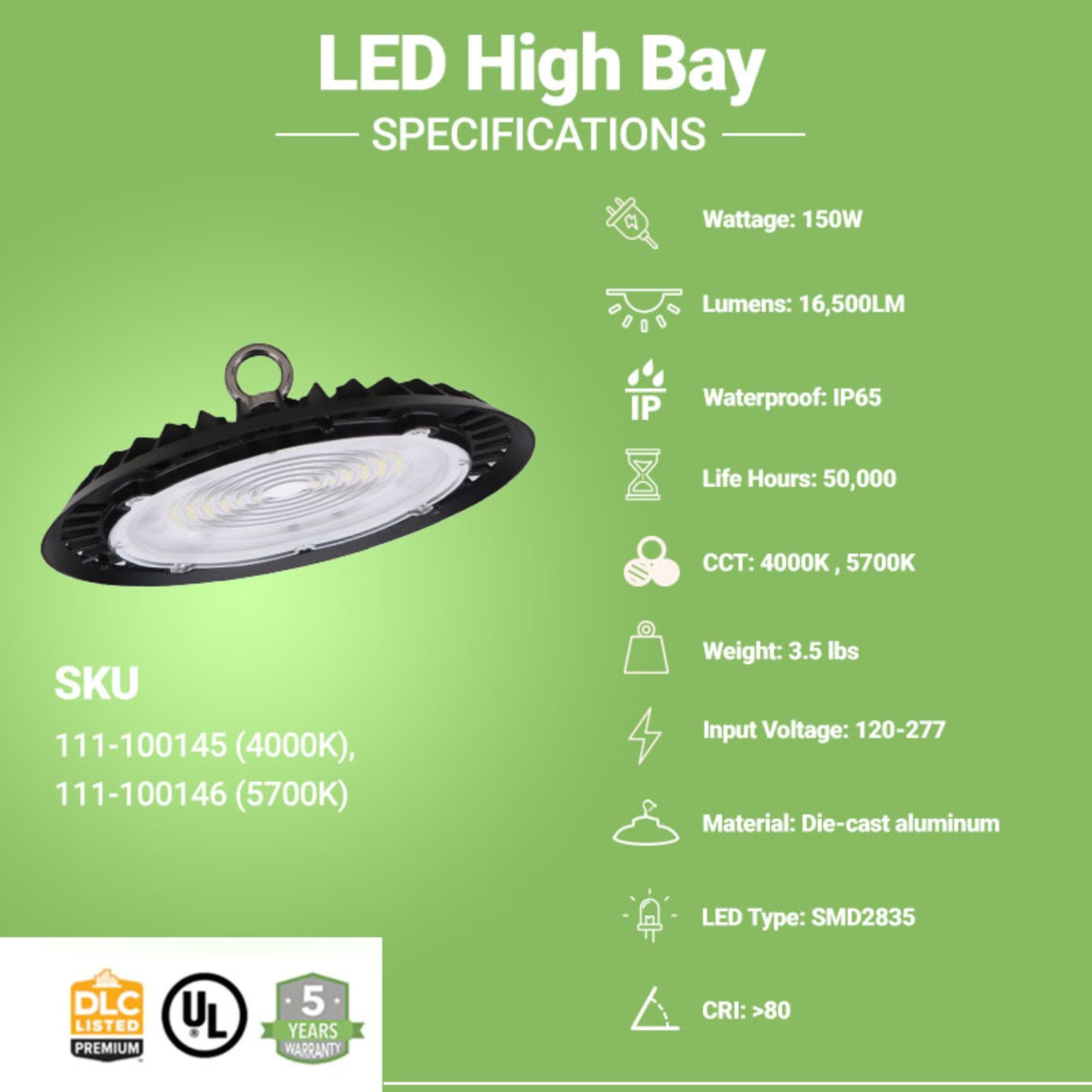
You can still compare fairly. LM-79 measures the complete luminaire, so optical losses are already inside the efficacy figure. Two fixtures built on the same LED bin and driven at the same current can be compared directly in lm/W: the difference is optic plus driver. If the bins differ, the comparison collapses — which is why the LED part number belongs in the same table as the efficacy.
Then look at intensity, not just lumens. Candela per kilolumen at nadir tells you how the light is concentrated. Beam angle is measured at 50% of peak intensity and field angle at 10%; a narrow beam angle with a wide field angle is a soft-edged optic, and it behaves very differently on a rack face than the beam number suggests.
Reflector efficiency depends on how it was made
“Reflector” covers everything from a stamped steel shell to a folded, coated aluminium optic, and the spread in performance is larger than the spread between reflector and lens. Published luminaire-maker data puts typical efficiency by construction in these bands:
| Reflector construction | Typical optical efficiency | Where it shows up |
|---|---|---|
| Unfinished stamped, drawn or hydroformed | 68–80% | Low-cost high bay and flood bodies |
| Polished or anodised spun, stamped or drawn | 78–86% | Mid-market industrial fixtures |
| Metallised coated injection moulded | 80–88% | Complex shapes, tight tooling budgets |
| Folded coated aluminium (enhanced specular) | 90–97% | Premium wide distributions |
The practical lesson: a 20-point spread inside one technology is normal. When someone claims “reflectors are 95% efficient”, ask which construction, and ask for the LOR rather than the surface reflectance. A coating that reflects 95% of light still loses light that never hits it.
Where a reflector is the better engineering choice
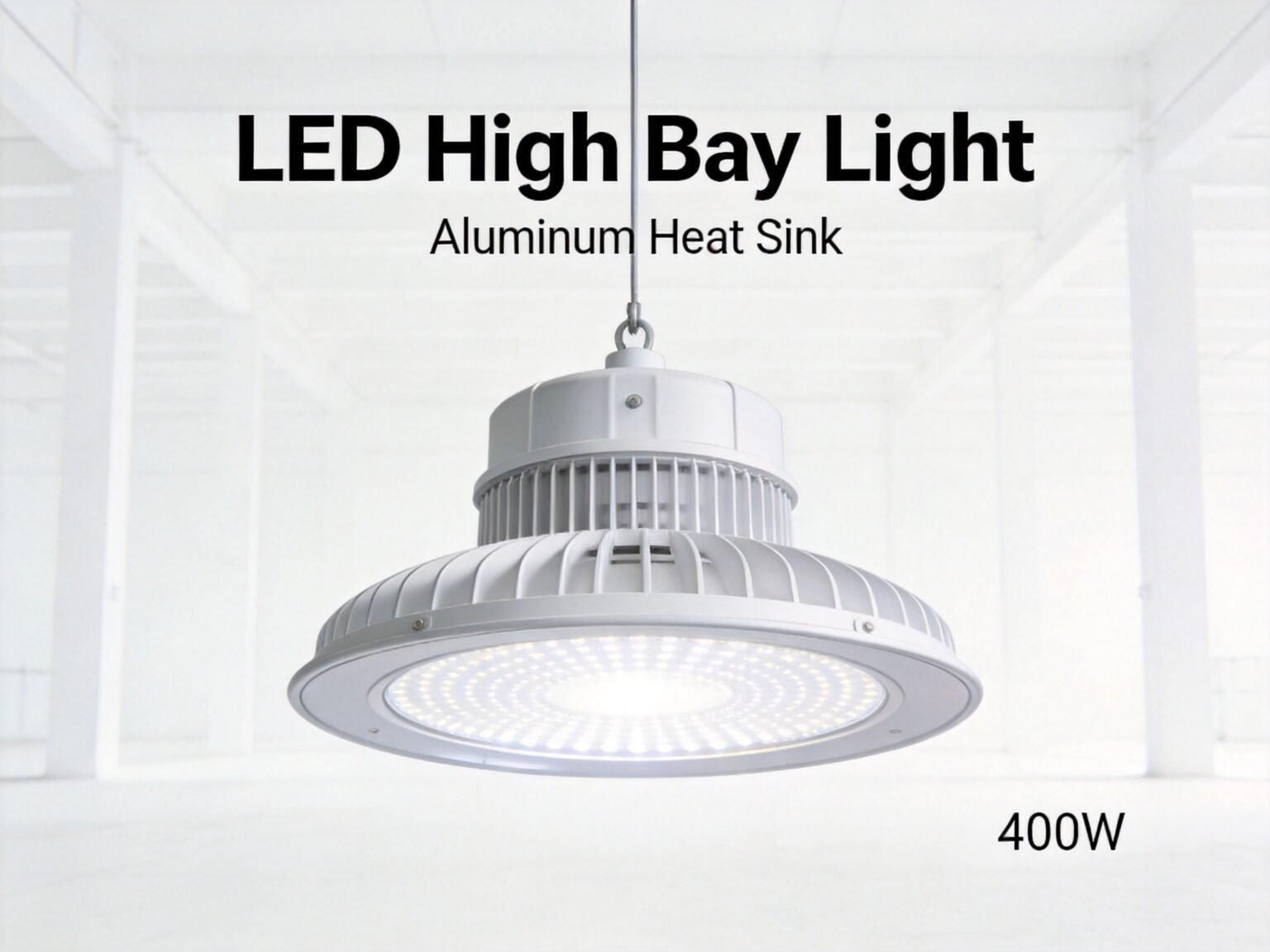
Large emitting areas are the classic case. A multi-die COB array or a long linear module presents a source that a lens would have to surround at considerable size and cost; a reflector captures that broad output efficiently and at lower tooling cost. This is why wide-beam high bays and linear industrial bodies still use reflectors.
Heat is the second argument. An aluminium reflector sits in the thermal path and does not care about 80 °C; a plastic lens 5 mm from the LED package does. In high-ambient plants — foundries, boiler houses, roof-level mounting in summer — that difference decides service life more than two points of optical efficiency.
Wide distributions are the third. A 90° to 120° reflector throws light onto rack faces and vertical surfaces with softer edges and fewer hard shadows than a narrow lens. If the layout depends on vertical illuminance for label reading, a wide reflector often wins the calculation even with lower peak intensity.
The cost is dirt. An open reflector cavity collects dust on the reflecting surface, and dust on a specular surface does not just dim the output — it scatters light and produces veiling glare. The datasheet LOR is a clean-luminaire number; the installed performance is not.
Where a lens wins
Narrow beams and sharp cut-offs are lens territory. A TIR optic captures high-angle rays that a reflector would let escape, then redirects them into the beam, which is why tight distributions above 10 m mounting height are usually lens designs. The same geometry gives a defined beam edge, useful when the light must stay off a walkway or a neighbouring property.
Sealing is the bigger operational argument. A flat lens over a gasketed chamber produces an optical compartment that can be wiped, sprayed or washed down; a reflector cavity cannot. In food processing, pharmaceutical and washdown areas this is not a preference — it is the difference between a cleanable fixture and a contamination trap.
Compactness matters too. A lens sits directly over the LED, so fixture depth shrinks. That helps in low-ceiling warehouses and in retrofits where the plenum is shallow.
But a clear lens over a bare LED array can make glare worse, not better. The lens controls the beam; it does not reduce source luminance unless it is textured, frosted or recessed. “Lens” is not a synonym for “low glare”.
Glare is a room calculation, not a datasheet number
UGR is computed for an installation — room dimensions, reflectances, luminaire positions and the observer’s view — using the CIE unified glare rating method. EN 12464-1 sets the limits by task, and the levels are coarse by design: the tabular method classifies luminaires into bands rather than comparing decimals.
| Task type (EN 12464-1) | UGR limit | Typical industrial example |
|---|---|---|
| Precision work, technical drawing | ≤ 16 | Inspection benches, electronics assembly |
| Reading, control work, offices | ≤ 19 | Control rooms, quality labs |
| Industrial and craft work, reception | ≤ 22 | Machine shops, assembly lines |
| Rough work, storage, machine halls, stairs | ≤ 25 | Warehouses, plant rooms, circulation |
| Corridors and traffic areas | ≤ 28 | Service corridors, loading routes |
A single UGR value in a catalogue is calculated for a standard room with fixed reflectances and spacing. Guidance published by the German lighting industry association ZVEI is explicit that this figure is not suitable for evaluating luminaires in industrial halls, because the geometry and reflectances are nothing like the reference room. Two fixtures that both read “UGR 22” can produce very different glare in a 12 m high bay with dark racking.
The design levers all cost efficiency: deeper recess, higher shielding angle, prismatic structure, louvers, a diffuser. A lens that reaches UGR 19 by frosting typically gives up several percent of output versus the clear version. That trade is worth making in an inspection area and rarely worth making in a 12 m warehouse aisle.
Cleanability and the maintenance factor nobody budgets for
Maintained illuminance is the number the design has to hold at the end of the maintenance cycle, and it is calculated with a maintenance factor built from lumen depreciation, luminaire dirt depreciation, room surface dirt and survival. The optic choice drives the dirt terms, and the cleaning interval drives them again.
An open reflector in a woodworking or cement plant accumulates dust on the upper surface within months. The loss is not linear: a thin dust film on a specular surface costs more light than its area suggests, because it converts directed reflection into scatter. A sealed lens keeps that dust outside the optical chamber, where normal housekeeping removes it.
Sealing has its own failure mode. A lens that breathes — no gasket, or a gasket that hardens — pulls humid air in during thermal cycling and fogs the inside surface. That condensation cannot be wiped away, because the chamber is closed. If a fixture claims IP6X dust tightness, ask how it vents pressure without admitting water; the answer is usually a membrane breather.
| Environment | Optic that usually wins | Reason |
|---|---|---|
| Clean warehouse, 8–12 m, rack faces | Wide coated reflector or hybrid | Vertical illuminance and soft edges at lower cost |
| Food processing, washdown | Sealed flat lens, IP6X + IPX5 or better | Cleanable surfaces, no exposed cavity |
| Foundry, cement, woodworking | Sealed lens with smooth outer face | Dust stays out of the optical path |
| High bay above 12 m, narrow aisle | Narrow TIR lens | Beam control and cut-off where spill is costly |
| Chemical or coastal atmosphere | Lens plus coated housing | Anodised aluminium corrodes in chloride and ammonia |
Material traps that surface in year three
Polycarbonate is the default lens material because it survives impact, but unstabilised grades yellow under UV and heat. A lens sitting centimetres from an LED at high junction temperature ages faster than the datasheet suggests, and yellowing costs both lumens and colour consistency. Specify UV-stabilised optical PC and ask for the lens temperature at maximum ambient.
PMMA has better clarity and UV stability but is brittle and stress-cracks in contact with solvents and some cleaning chemicals. Silicone handles high temperature and stays flexible, at a price. Glass solves yellowing and chemical resistance but adds weight and breakage risk on a high bay.
The reflector has its own chemistry. Anodised aluminium performs well in clean indoor air and poorly in ammonia-rich livestock buildings, chloride-heavy food plants and coastal installations. If the environment is aggressive, the coating specification matters more than the reflectance number.
Comparing two fixtures in twenty minutes
- Open the IES file and check the luminaire efficacy — reject any comparison without one.
- Compare cd/klm at nadir at the same mounting height, not just total lumens.
- Check beam and field angle together; a narrow beam with a wide field is a soft optic.
- Run UGR for your room in DIALux or Relux; ignore the catalogue UGR figure.
- Ask for LOR, or derive it from efficacy against a known LED bin.
- Confirm IP first digit 6 for dust-tight claims, and the second digit against the actual cleaning method.
- Read the maintenance instructions and the warranty exclusions on lumen depreciation.
None of this requires a laboratory. It requires the photometric file, the LED part number and ten minutes with a calculator — the same three inputs that separate a specification from a brochure.
Frequently asked questions
Is a lens always more efficient than a reflector?
No. In narrow beams a well-designed TIR lens usually captures more light than a reflector of the same diameter, but in wide distributions a folded coated aluminium reflector can reach the low 90s. The construction matters more than the category.
Can I compare the UGR numbers on two datasheets?
Only as a rough screen. Datasheet UGR is calculated for a standard room, and that geometry does not represent an industrial hall. Run the calculation with your room dimensions, reflectances and spacing before you rely on the number.
Does a sealed lens really reduce maintenance cost?
It reduces cleaning frequency inside the optical chamber, which is the part you cannot easily reach. Whether that pays back depends on the dirt load and the access cost — in a washdown plant it usually does, in a clean warehouse the difference may be small.
Why does my fixture lose more light than the L70 curve predicts?
Because L70 describes the LED, not the luminaire. Dust on the optic, yellowing of the lens and dirt on room surfaces all reduce delivered light. Those losses belong in the maintenance factor, and the optic choice changes them.
Is a reflector better for heat?
Usually, when it is aluminium and coupled to the housing. It adds surface area and does not degrade at LED temperatures. A plastic lens close to the source is the more thermally sensitive part and needs a design that keeps it cool.
