

Direct answer: A mains-powered LED luminaire for the EU needs evidence under two directives — the EMC Directive 2014/30/EU and the Low Voltage Directive 2014/35/EU — backed by a specific set of reports: EN 55015 for emissions, EN 61547 for immunity, EN 61000-3-2 and EN 61000-3-3 for power quality, and EN 60598-1 with EN 61347-2-13 for electrical safety. Both directives are self-declaration regimes, so the test report is the only thing standing between your shipment and an inspector who disagrees. A report with the wrong model number, an undated standard edition or a lab outside its accreditation scope protects nobody — it just documents the non-compliance.
After fifteen years of reviewing supplier paperwork, I can tell you the fixture usually passes the tests. It is the document describing the tests that falls apart. Here is what each report actually covers and how to tell a real one from a recycled one.
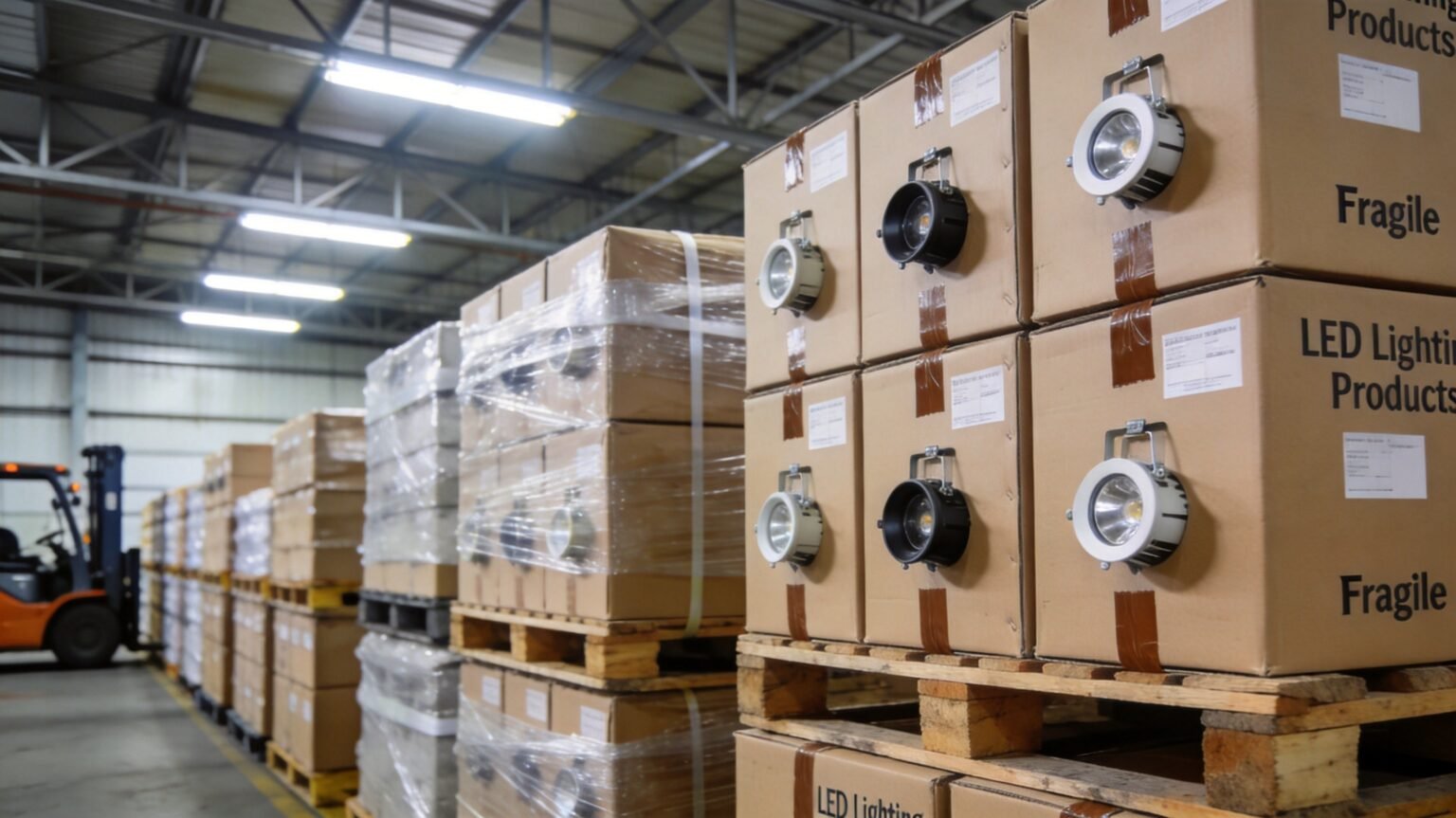
The two directives behind the paperwork
CE marking a luminaire is not one exercise — it is a stack, and every applicable act must appear on the Declaration of Conformity. For a 220–240 V AC luminaire without radio features, the stack is built on two directives:
| Directive | Scope | Evidence |
|---|---|---|
| EMC Directive 2014/30/EU | Emissions the fixture sends out and immunity to interference it receives | EN 55015, EN 61547, EN 61000-3-2, EN 61000-3-3 |
| Low Voltage Directive 2014/35/EU | Electrical safety for equipment rated 50–1,000 V AC or 75–1,500 V DC | EN 60598-1 and the relevant EN 60598-2 part, EN 61347-2-13 for the driver, plus EN 62493 and EN 62471 assessments |
Add radio — Bluetooth, Zigbee, Wi-Fi dimming — and the Radio Equipment Directive 2014/53/EU takes over as the umbrella act, bringing spectrum, radio and, since 2025, cybersecurity assessment requirements with it. The EMC evidence does not disappear under RED; it gets absorbed into the radio test plan.
What each EMC report actually covers
Four harmonised standards carry the EMC side, and they are not interchangeable:
- EN 55015 (the European edition of CISPR 15) sets the emission limits and measurement methods for lighting equipment: conducted disturbance at the mains terminals from 9 kHz up to 30 MHz, radiated disturbance from 30 MHz to 300 MHz, and magnetic field measurements for certain equipment. LED drivers with switching supplies are exactly what this standard was written to police.
- EN 61547 is the immunity counterpart — how the fixture behaves when the interference comes from outside. The current edition, published in 2020, raises the requirements for road and street lighting equipment, so an older report may no longer reflect what a current one demands. Its main test categories look like this:
- EN 61000-3-2 limits harmonic currents drawn from the mains. Lighting equipment above 25 W must meet the Class C limits — this is where power factor correction in the driver earns its cost — while products at or below 25 W are assessed under the standard’s separate provisions for smaller ratings.
- EN 61000-3-3 limits voltage fluctuations and flicker the fixture impresses back on the supply.
| EN 61547 immunity test | Base standard | Typical level for general lighting |
|---|---|---|
| Electrostatic discharge | IEC 61000-4-2 | ±4 kV contact, ±8 kV air; higher for road and street lighting |
| Radiated RF field | IEC 61000-4-3 | 3 V/m across 80 MHz to 1 GHz |
| Fast transient burst | IEC 61000-4-4 | ±1 kV on AC power ports, lower on signal ports |
| Surge | IEC 61000-4-5 | Set per equipment class; road and street lighting faces the harshest levels |
| Conducted RF injection | IEC 61000-4-6 | 3 V from 150 kHz to 80 MHz |
| Power-frequency magnetic field | IEC 61000-4-8 | 3 A/m at 50/60 Hz |
| Voltage dips and interruptions | IEC 61000-4-11 | 70% residual voltage for 10 cycles; short interruptions of half a cycle |
Pass criteria range from “operates normally through the event” to “degrades but recovers afterwards”. Ask which criterion each test was judged against — a report that only says “pass” without the criterion is hiding something.
When a supplier hands you “the EMC report”, check that all four standards appear. A single EN 55015 report is not an EMC package, however official the letterhead looks.

The LVD side: safety, the driver and the human body
Electrical safety evidence is anchored in EN 60598-1, the general requirements and tests standard for luminaires, together with the relevant Part 2 section for the luminaire type. It covers the tests that decide whether the fixture is physically safe: insulation resistance, electric strength, creepage and clearance distances, protection against electric shock, IP verification, thermal behaviour and mechanical construction.
Two companion assessments belong in the same file. EN 62493 assesses the electromagnetic fields a luminaire emits against human exposure limits, which matters because LED drivers sit centimetres from where people work. EN 62471 assesses photobiological safety — the blue-light hazard question for bright sources. Neither is optional paperwork in a credible technical file; both are the first things a serious distributor’s compliance team asks for.
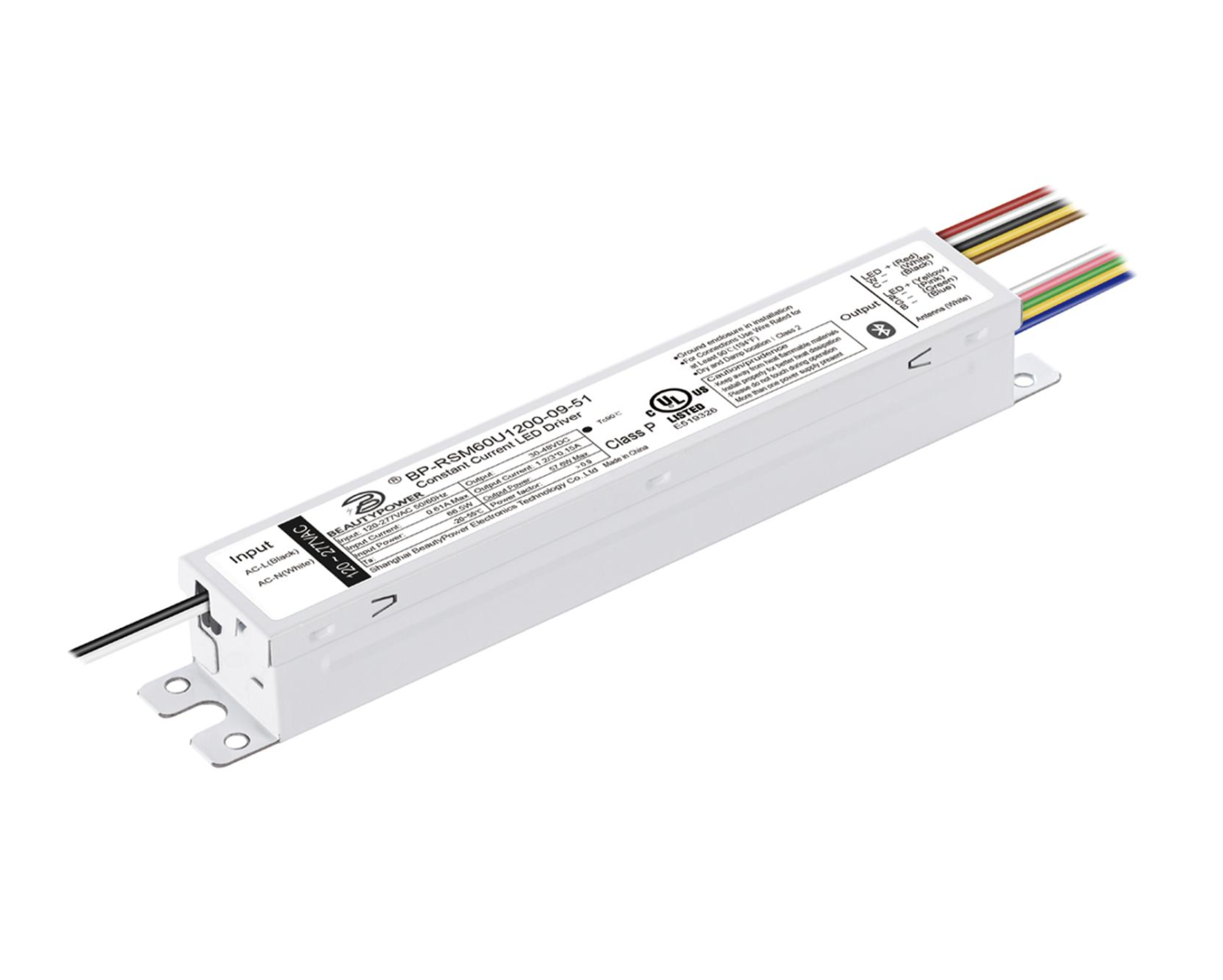
The driver itself carries a separate safety report under EN 61347-2-13, the LED controlgear standard. Keep it: the driver’s compliance supports the luminaire’s file, but it never replaces the luminaire’s own assessment.
How to tell a real test report from a recycled one
Reports are recycled more often than fixtures are. The patterns are consistent:
- The laboratory is not accredited, or its ISO/IEC 17025 accreditation scope does not include the cited standard — check the accreditor’s public directory, including bodies such as NVLAP, A2LA, UKAS, CNAS and their ILAC-MRA peers
- The report date falls outside the lab’s accreditation validity, or the report was issued by one lab but carries another lab’s template formatting
- The model number on the report differs from the model on your purchase order, or one report quietly covers a whole family of wattages that could not plausibly share the same measurements
- Standard editions are undated or outdated — an EN 61547 report to the 2009 edition does not demonstrate current immunity levels for road lighting
- Test setup photographs, sample serial numbers and ambient conditions are missing — genuine reports document how the fixture was actually measured
- The claimed results are identical across unrelated models, which happens when someone edits a PDF instead of running a test
Why the model number matters more than the CE mark
The CE mark costs nothing to print and proves nothing on its own — it is a self-declaration, signed by the manufacturer, under the manufacturer’s sole responsibility. What gives the mark substance is the chain behind it: test reports tied to the exact model, a Declaration of Conformity listing every applicable act with dated standards, and a technical file that can be produced on request.
That chain breaks at the model number. Market surveillance authorities in the EU routinely ask importers to connect the product in front of them to the evidence in the file, and a report for a different model — even a visually identical one — fails that connection. When you audit a supplier, match three things line by line: the model on the report, the model on the datasheet, and the model on the carton. If any two disagree, the paperwork is decorative.
Building the technical file: what to keep and for how long
Under the Low Voltage Directive, the manufacturer must keep the technical documentation and the Declaration of Conformity available for 10 years after the last unit is placed on the market. As an importer, you are treated as the manufacturer when you put your own brand on the product — which means the obligation lands on you, not on the factory that made it.
A file that survives scrutiny contains: the DoC signed by the manufacturer, the full EMC and safety reports for the exact model, the driver’s controlgear report, the EN 62493 and EN 62471 assessments, RoHS evidence, labelling artwork and installation instructions. Keep test reports tied to production: if the driver, LED or housing changes, the reports for the old configuration no longer describe the product being shipped, and the file needs updating before the next container, not after an inspection.
Frequently asked questions
Does CE testing for luminaires require a third-party certificate?
No. The EMC and Low Voltage Directives are self-declaration regimes — no notified body certificate is legally required for a luminaire without radio functions. Accredited laboratory reports are the evidence that makes the self-declaration credible, which is why serious buyers treat them as mandatory.
Do EMC and LVD test reports expire?
There is no statutory expiry date. Reports remain valid while the design is unchanged, and the technical file must be kept for 10 years after the last unit is placed on the market. A design change — a different driver, LED package or housing — invalidates the evidence and requires retesting.
The driver already has CE marking. Is the luminaire covered?
No. The driver’s report supports the luminaire’s file, but the assembled luminaire must have its own EMC and safety evidence, because the fixture’s housing, wiring and thermal environment change how it behaves. Buying on a driver’s CE mark alone is one of the most common importer mistakes.
What levels does EN 61547 actually test?
It applies the IEC 61000-4 series base standards: electrostatic discharge, radio-frequency electromagnetic fields, fast transients, surge, conducted RF injection, power-frequency magnetic field, and voltage dips and interruptions, each with pass criteria tied to whether the fixture keeps operating or recovers. Levels depend on the port and equipment type, and the 2020 edition sets higher requirements for road and street lighting.
We are adding a wireless control module. What changes?
The Radio Equipment Directive 2014/53/EU becomes the governing act, adding radio spectrum and radio performance testing to the EMC and safety package, and connected products also face its cybersecurity assessment requirements. Ask your test lab for a RED test plan before you finalise the module choice — retrofitting compliance after the housing is tooled is expensive.
This article is a procurement guide, not legal advice. Confirm requirements for your specific product and market with a qualified compliance provider.
