
Tunable White Lighting in 2026: The Practical Guide for Commercial Buyers
SEO Meta: Tunable white LED lighting systems for commercial and office spaces. How to spec CCT-tunable fixtures in 2026.
I got a call last month from a facilities manager in Munich. Their new “human-centric” office lighting installation was making employees nauseous. The LED panels were cycling through color temperatures automatically, and nobody had programmed the transition speed.
Result: 40% of the workforce got headaches within two weeks.
This is what happens when tunable white lighting gets sold without proper commissioning. The technology is legitimate—the implementation was an expensive disaster.
Let me give you the practical guide to tunable white lighting that I wish someone had given me five years ago.
What Tunable White Actually Means (And What It Doesn’t)
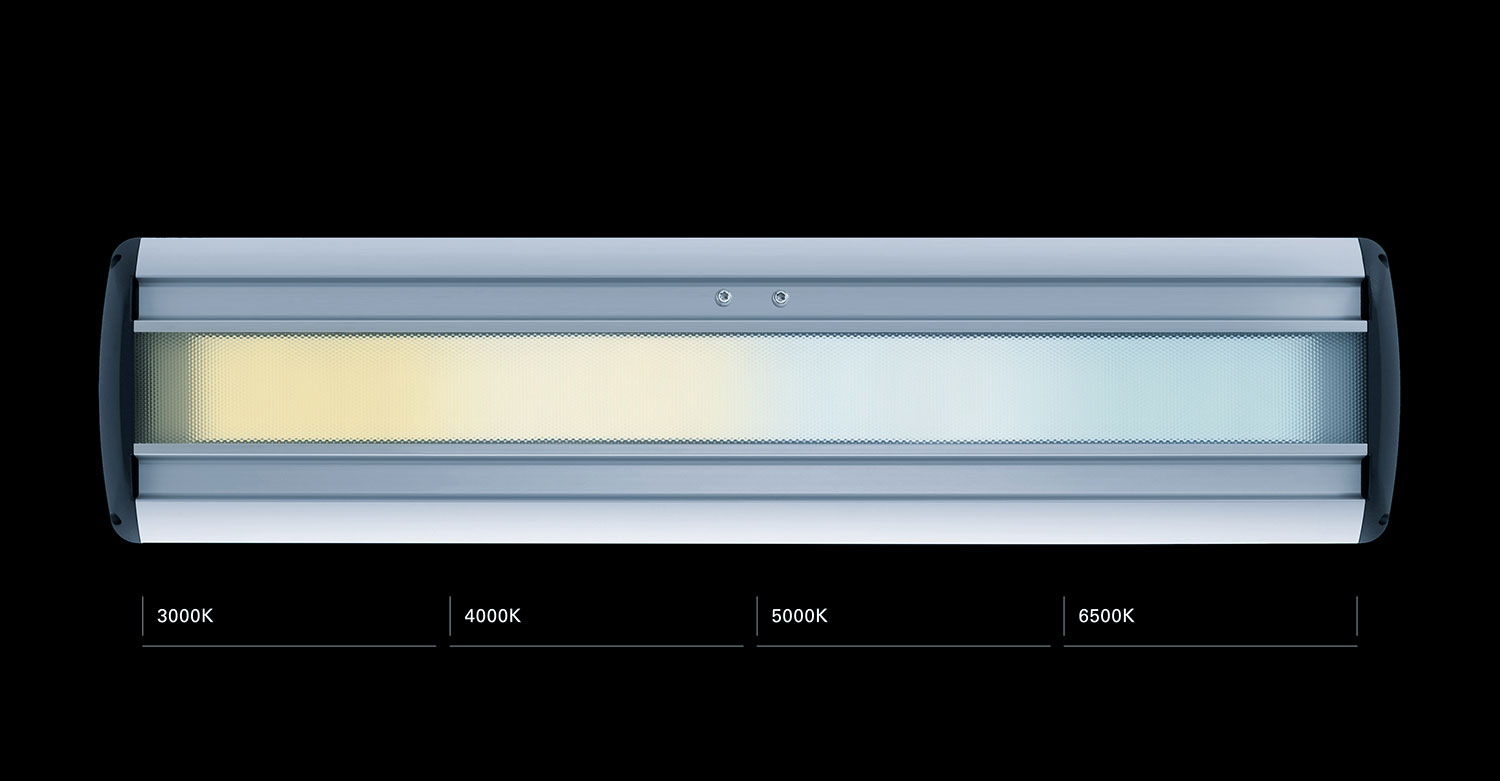
Before we go further, let’s be precise. “Tunable white” means fixtures that can shift color temperature dynamically—typically from 2700K (warm) to 6500K (cool daylight).
This is NOT the same as RGB color mixing. You can’t get purple or green from tunable white. You’re limited to the white spectrum.
What tunable white DOES:
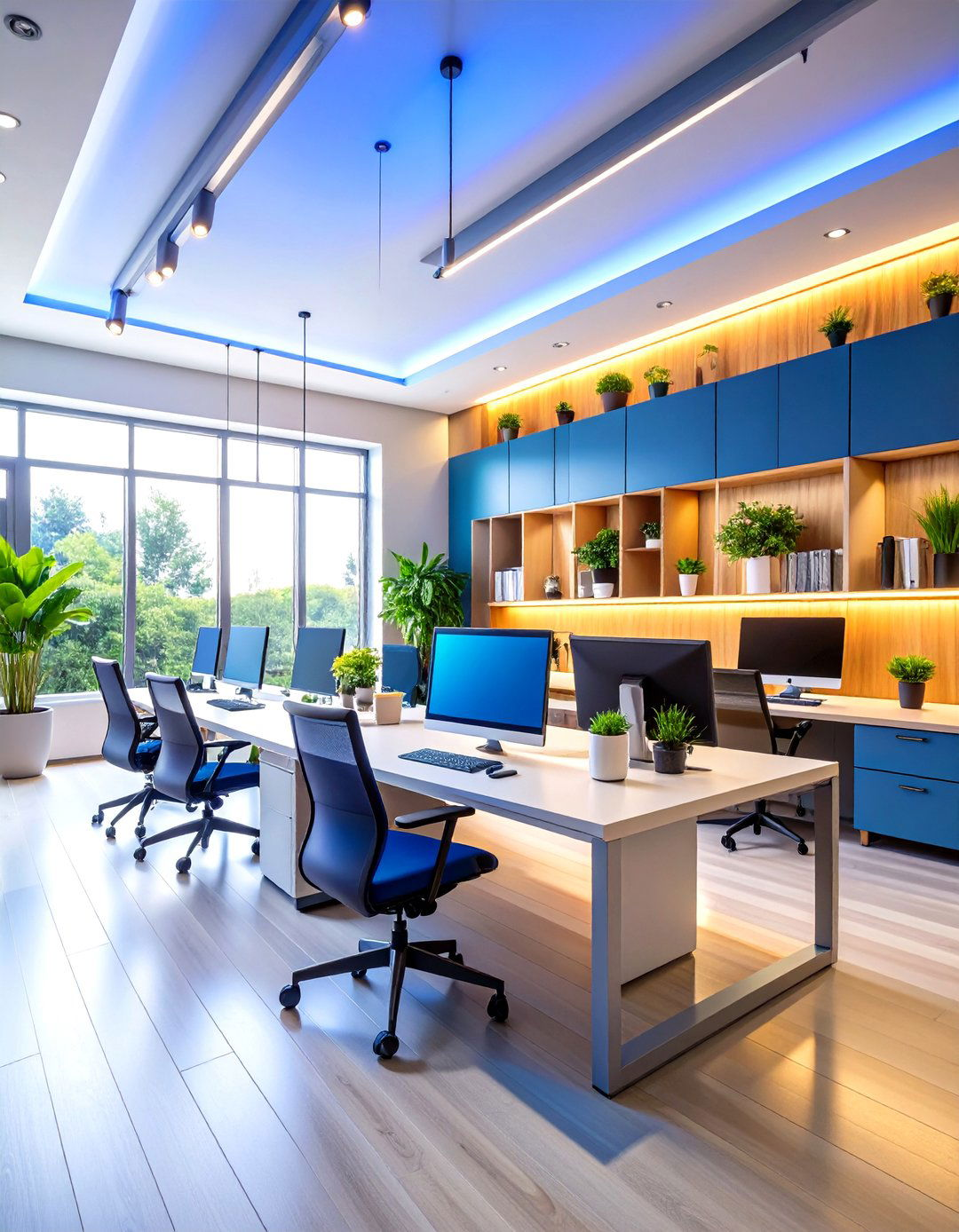
– Mimics natural daylight progression (warm morning → neutral midday → warm evening)
– Supports circadian rhythms in work environments
– Allows single fixture to serve multiple use cases
– Reduces energy consumption vs. separate warm/cool fixtures
What tunable white DOESN’T:
– Replace RGB for decorative/colored lighting effects
– Automatically improve productivity (it requires proper programming)
– Work the same in every application
The Two Tunable White Architectures You Need to Understand
Architecture #1: Two-Channel (Warm + Cool LEDs)
This is the most common approach. Each fixture contains:
– Warm white LEDs (typically 2700K-3000K)
– Cool white LEDs (typically 5000K-6500K)
The driver dims each channel independently to achieve the target color temperature. Simple, reliable, cost-effective.
Pros:
– Proven technology (10+ years in market)
– Good color mixing when quality drivers are used
– 15-25% cheaper than three-channel systems
Cons:
– Limited color temperature range (can’t reach true daylight at 6500K consistently)
– Color rendering can suffer at extreme CCT settings
– Dimming range may be limited on some systems
Architecture #2: Three-Channel (Warm + Neutral + Cool)
Higher-end systems add a neutral channel (typically 4000K). This improves:
– Color consistency across the CCT range
– CRI/Ra values at all color temperatures
– Smoother dimming transitions
Pros:
– Better color quality throughout range
– More natural transitions between CCTs
– Higher CRI achievable (Ra 90+)
Cons:
– More expensive (typically 30-40% premium)
– More complex controls
– Requires precise calibration
My practical recommendation: For most commercial applications, two-channel is sufficient. Three-channel makes sense for healthcare, high-end hospitality, or applications where CRI consistency is critical.
The Control Systems That Actually Work
Here’s where tunable white projects succeed or fail. The fixture is only 30% of the equation. Controls are 70%.
Option 1: DALI DT8
The gold standard for tunable white. DALI Type 8 (DT8) is a standardized protocol for color temperature control. Every major lighting manufacturer supports it.
Why DALI DT8 wins:
– Vendor-neutral (mix brands freely)
– Precise control (0.1% dimming resolution)
– Simple wiring (same 2-wire bus as standard DALI)
– Proven in thousands of installations
The catch: Requires DALI control gear and a DALI-aware controller. Budget $30-50 per fixture for the control infrastructure.
Option 2: Casambi
Wireless control with excellent tunable white support. Growing rapidly in Europe, strong in new builds where running control wiring is expensive.
Why Casambi works:
– No additional wiring (uses existing 230V/120V infrastructure)
– Excellent mobile app commissioning
– Mesh networking for large installations
– Good for renovation projects
The limitation: Less precise than wired DALI for some applications. Suitable for 90% of commercial projects, but I wouldn’t use it for museum or healthcare lighting.
Option 3: 0-10V with Dual Channels
Budget option for simpler applications. Requires separate dimming channels for warm and cool LED strings.
When to use:
– Small installations (< 20 fixtures)
– Budget-constrained projects
– Applications where precise CCT control isn’t critical
The problem: 0-10V is analog, which means signal degradation over distance and potential compatibility issues between manufacturers.
The Commissioning Mistakes That Kill Tunable White Projects
Back to that Munich office. What went wrong?
Mistake #1: Letting Fixtures “Auto-Tune”
Automatic color temperature schedules sound great until you realize: every person has different circadian sensitivity. A 35-year-old and a 55-year-old have very different responses to 6500K light at 9 AM.
Proper commissioning requires:
1. Understanding the space usage (morning-only? all-day? shift workers?)
2. Setting gradual transitions (30-60 minutes between CCT changes)
3. Providing manual override capability
4. Programming different schedules for different zones
Mistake #2: Ignoring the Correlation with Daylight
In spaces with significant daylight penetration, tunable white works WITH natural light. The fixture should reduce intensity and warm up as daylight increases—not fight against it.
This requires:
– Photosensors or daylight harvesting integration
– Coordination between electric lighting and daylight
– Commissioning at different times of day
Mistake #3: Specifying 6500K Without Explaining It
6500K is blue-white. It’s what you see at noon on a clear day. In a workspace, it’s appropriate for:
– Healthcare surgical areas
– Inspection/quality control rooms
– Art studios (for accurate color evaluation)
It’s NOT appropriate for:
– General office work (creates visual fatigue over 4+ hours)
– Meeting rooms (creates harsh atmosphere)
– Reception/waiting areas
When I specify tunable white, I typically cap the “cool” setting at 5000K for general work areas. The exception is when there’s a specific operational requirement for 6500K.
2026 Pricing: What Should You Actually Pay?
Tunable white fixture pricing has dropped significantly. Here’s my current market assessment:
| Fixture Type | Standard Fixed CCT | Tunable White (2-ch) | Tunable White (3-ch) |
|---|---|---|---|
| 2×2 Panel | $45-65 | $65-90 | $85-120 |
| Linear Trunking | $35-50 | $55-80 | $75-100 |
| Downlight | $30-50 | $50-75 | $70-95 |
Control system costs (per fixture):
– DALI DT8 gear: $25-40
– Casambi: $20-35
– 0-10V dual channel: $10-20
For a typical 200-fixture office project, expect:
– Tunable white fixtures: $12,000-18,000
– Control infrastructure: $5,000-8,000
– Commissioning: $3,000-6,000
– Total premium over fixed CCT: 40-60%
The energy savings (15-25% reduction) typically recover the premium within 3-4 years in European energy cost environments.
When Tunable White Makes Sense (And When It Doesn’t)
Tunable White Makes Sense:
– Healthcare facilities (recovery rooms, patient wards)
– Educational institutions (classrooms, study areas)
– Office spaces with shift workers or varying schedules
– Senior living facilities
– High-end hospitality (spa, wellness areas)
– Sports facilities (gymnasiums with multiple uses)
Fixed CCT is Better:
– Single-use spaces with consistent needs
– Budget-constrained projects
– Applications where simple operation is critical
– Spaces with significant natural light (let nature do the work)
– Short-term leases (can’t recover premium)
The Specification Checklist for Tunable White Projects
If you’re spec’ing tunable white in 2026, demand these from your supplier:
Fixture Requirements:
– [ ] Color temperature range: 2700K-6500K (or 3000K-5000K for general use)
– [ ] Minimum CRI: Ra > 90 at all CCT settings
– [ ] TM-30 metrics: Rf > 85, Rg 90-110
– [ ] Dimming range: 1% minimum, 0.1% preferred
– [ ] SDCM: < 3 across all fixtures (critical for consistency)
– [ ] Driver: Programmable, not dip-switch selectable
Control Requirements:
– [ ] Protocol: DALI DT8 or equivalent wireless
– [ ] Interface: App and/or wall panel
– [ ] Scene capability: Minimum 4 scenes per zone
– [ ] Manual override: Yes, for all CCT and dimming functions
– [ ] Integration: BACnet or KNX if building automation exists
Commissioning Requirements:
– [ ] Written commissioning protocol provided
– [ ] Minimum 4 hours on-site commissioning included
– [ ] Staff training for basic operations
– [ ] Documentation of all settings and schedules
My Practical Recommendation
After implementing tunable white in 15+ commercial projects, here’s my current approach:
For most clients: Start with tunable white in high-impact zones only—reception, main circulation areas, multi-purpose rooms. Keep private offices and focused work areas at fixed 3000K or 4000K.
This gives you:
– The circadian benefits in areas where people pass through regularly
– Consistency in spaces where focused work happens
– A lower overall project cost
– A pilot you can expand based on results
The technology is mature. The pricing is reasonable. The implementation requires expertise—but that’s true of any lighting system worth having.
At YoubeeLight, we’ve supplied tunable white systems for healthcare, office, and hospitality projects across Europe. If you’re evaluating tunable white for a commercial project, I’m happy to review your specifications and provide a practical recommendation—no sales pressure, just honest feedback based on what we’ve seen work.
Need tunable white fixtures or want to discuss your project specifications? View our LED catalog or contact our team.
