
Food Retail Lighting: What Every Supermarket, Bakery, and Butcher Buyer Needs to Know
Most lighting suppliers talk about lumens, CCT, and CRI. That’s not what you need to hear if you’re stocking a grocery chain or opening a specialty food store.
After 15 years in commercial lighting, I’ve seen the difference lighting makes in food retail firsthand. Walk into a high-end bakery with perfect lighting and you suddenly want everything on the shelf. Walk into a discount supermarket and the produce looks washed out. Same vegetables, different reaction. That’s not accident.
Why Food Retail Lighting Is a Different Beast
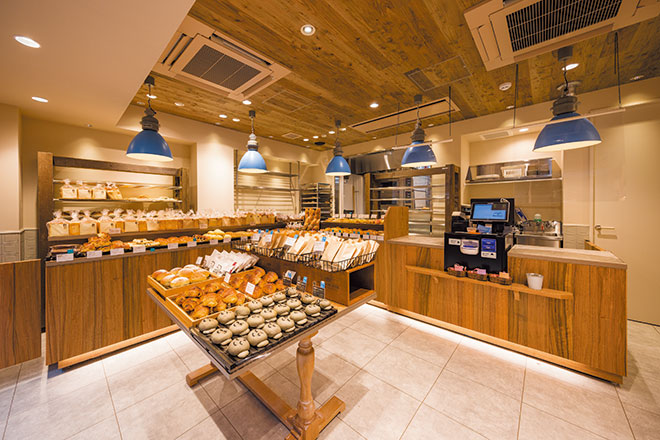
Regular commercial lighting focuses on general illumination. Food retail lighting is about one thing: making products look irresistible at the point of sale.
The challenge? Different food categories need completely different lighting approaches. You can’t throw up the same fixture across your produce section, bakery, and meat counter and expect results.
This is where most buyers go wrong. They treat food lighting as a commodity and end up with produce that looks tired by noon, bread that turns stale-looking under the wrong color temperature, and meat cases that can’t pass health inspections.
The Three Lighting Zones You Actually Need
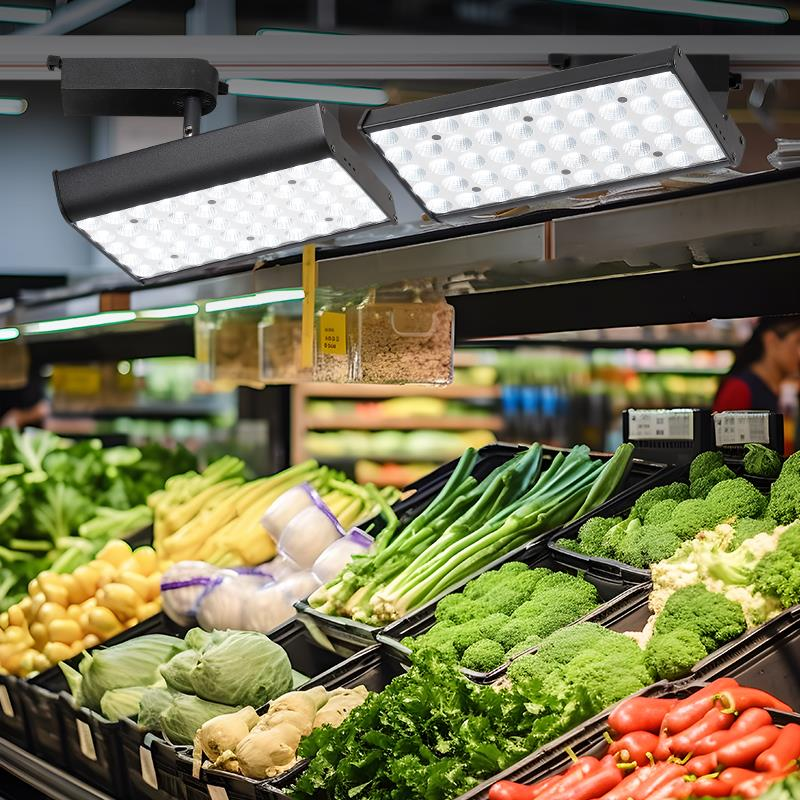
Fresh Produce: Bright, Cool, and Accurate
Your produce section is doing 40% of the visual selling in most grocery formats. If those vegetables don’t look like they were picked this morning, you’re leaving money on the table.
What works: High CCT LEDs (4000K-5000K) with excellent CRI (90+) in the R9 spectrum. The R9 value matters here—this measures how reds reproduce under your light source. Poor R9 makes tomatoes look orange and greens look brown.
Real numbers: Look for fixtures delivering 80-100 foot-candles at shelf level. Anything less and your produce starts looking exhausted within hours of display.
Common mistake: Using warm 3000K lights in produce. It makes everything look like it’s been sitting out since yesterday. I learned this the hard way on a European supermarket project where the client’s “warm and inviting” lighting choice killed their produce margin by 15% in the first quarter.
Bakery and Deli: Warm But Not Yellow
Bakery lighting walks a tightrope. You want warmth and appetite appeal, but too warm turns fresh croissants into day-old leftovers.
The sweet spot: 2700K-3000K with CRI above 90. This range makes golden crusts and creamy pastries look exactly right.
Pro tip: Separated display cases often need different fixtures than your main bakery lighting. Glass reflections and heat from case lighting change the effective color temperature by 200-400K at product level.
What to avoid: Anything below 2700K. Your customers will perceive baked goods as stale even when they’re fresh from the oven.
Meat and Butcher: The High-Stakes Game
Meat lighting is where small buyers make expensive mistakes. Federal and state regulations often specify minimum lighting levels for meat display cases. Get this wrong and you’re failing health inspections before you open.
Requirements: Typically 50+ foot-candles for meat display. Color temperature around 3000K-3500K works best for red meats. But here’s where it gets complicated—different regulations apply to fresh meat versus processed meats versus poultry.
The twist: Some high-end butchers use specialized 2750K “meat spectrum” LEDs that make beef look incredibly rich. These aren’t standard products. You typically need to source these from specialty manufacturers or work with a supplier who can specify custom binning.
Watch out for: Plastic film packaging under strong LED lighting can create color distortion. Test your actual product under your planned lighting before committing to a full order.
The Humidity and Temperature Problem Nobody Talks About
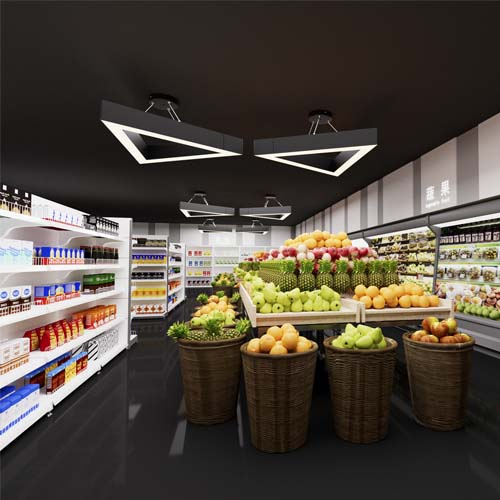
Food retail environments are hostile to standard LED fixtures. Between refrigeration case condensation, steam from hot food stations, and high-humidity produce areas, you’re looking at environments that will kill inferior fixtures in 12-18 months.
What you actually need: Fixtures rated for damp locations (at minimum) with anti-corrosion coatings if you’re anywhere near seafood or fresh meat sections. The temperature range should extend from -20°C to 40°C minimum if you’re lighting walk-in coolers and display cases in the same project.
The real cost: A fixture that costs $15 less per unit but fails at 18 months instead of 8 years costs you more in maintenance labor than you saved. In food retail, maintenance often means taking down displays, losing sales during service time, and in some cases, product loss from temperature exposure during fixture changes.
Practical Specs Every Buyer Should Know
| Requirement | Produce | Bakery | Meat |
|---|---|---|---|
| CCT | 4000K-5000K | 2700K-3000K | 3000K-3500K |
| CRI | 90+ (R9 > 50) | 90+ | 85+ |
| Foot-candles | 80-100 | 50-80 | 50+ |
| IP Rating | IP44 minimum | IP44 minimum | IP54 for open cases |
| Temp Range | -20°C to 40°C | 10°C to 40°C | -20°C to 30°C |
Sourcing Tips That Actually Matter
Don’t buy fixtures labeled “food lighting” — it’s a marketing term with no standard definition. Instead, specify by the actual requirements: CCT, CRI, R9 value, operating temperature range, and IP rating.
Request photometric tests for your specific mounting height and reflectivity. Fixture performance on paper rarely matches real-store results due to ceiling reflectivity, shelf colors, and display geometry.
Test before container orders. Most reputable suppliers will send samples. Take photos of your actual product under the lights before committing. What looks perfect in a white-room test fixture looks different next to your red pepper display.
Consider modular fixtures for large installations. Linear LED systems let you swap components if one section needs adjustment. Rigid fixtures force you to replace entire units when specifications change.
The Bottom Line
Food retail lighting is not a place to cut costs, but it’s also not a place to over-specify. Know your three zones, understand your temperature and humidity environment, and demand real photometric data before ordering.
The suppliers who’ll serve you best are the ones who ask about your product mix, your display case specifications, and your maintenance constraints—not the ones who just quote the lowest price on a 4000K linear fixture.
At YoubeeLight, we spec and supply LED fixtures for food retail applications across North America and Europe. Our team has experience with supermarket chains, specialty food stores, and warehouse club formats. If you’re planning a new build or retrofit, our LED catalog includes damp-rated and temperature-extended options suitable for food retail environments.
