
Most procurement managers I talk to still treat lighting controls as an afterthought. They spec the luminaires first, then ask the electrician to “add some dimmers.” Three months after occupancy, they’re dealing with complaints about harsh lighting, excessive energy bills, and occupants manually overriding everything.
That’s a $200,000 lesson I watched a Frankfurt office project learn the hard way.
The Real Cost of Control System Neglect
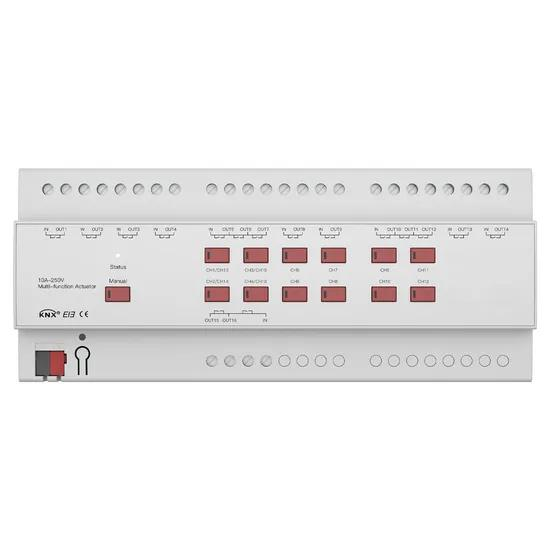
Here’s what nobody tells you upfront: the control system typically costs 15-25% of your total lighting budget, but it determines whether you hit your energy savings targets or just pretend to.
When you buy LED luminaires without specifying the control protocol, you’re essentially buying a car without a steering wheel. Yes, it has wheels and an engine. No, you can’t actually direct where it’s going.
I’ve seen European projects where the lighting performs 40% worse than modeled because nobody specified how the luminaires would actually communicate with each other. The spec said “DALI-compatible.” The installed system was 0-10V. Nobody caught it until commissioning.
Why DALI Has Become the Default (And When It’s Wrong)
DALI (Digital Addressable Lighting Interface) is now the dominant protocol for commercial projects in North America and Western Europe. Here’s my take after specifying it on dozens of projects:
DALI works when:
– You need individual luminaire addressing
– Zoning flexibility matters (open offices that get reconfigured)
– Integration with building management systems is required
– Energy code compliance needs documented verification
DALI is overkill when:
– You’re lighting a warehouse with 50 identical high-bays in 5 zones
– Budget is tight and a simple occupancy sensor network suffices
– The building will be demolished in 10 years anyway
I had a client in Belgium who insisted on full DALI for a 15,000 sqft distribution center. After I walked through the actual operational needs, we switched to a basic occupancy-sensor-and-relay setup. Saved €85,000 in control gear. The building performs identically.
The protocol you choose shapes your maintenance reality for the next decade.
The KNX Question: Enterprise-Grade or Overcomplicated?
KNX is the heavyweight champion when you need building-wide integration—lighting, HVAC, blinds, security all speaking the same language. Major European manufacturers (ABB, Siemens, Schneider) all support it.
But here’s the uncomfortable truth: KNX requires specialized commissioning. Finding qualified KNX programmers in the US is still difficult outside major metros. Your fancy system becomes a maintenance nightmare if the original integrator leaves.
For most commercial projects under 50,000 sqft, I now recommend starting with DALI and using BACnet/IP as the integration layer. Same benefits, wider contractor pool, easier troubleshooting.
When KNX makes sense: large hospitality properties, hospital campuses, multi-building corporate facilities where you’re already committed to a major building automation platform.
Specifying Controls That Actually Get Commissioned
This is where most projects fail. The spec looks great on paper. The as-built reality is different.
Demand these three things in your specification:
-
Sequence of Operation documentation before equipment ordering
Vague specs produce vague systems. Require the integrator to submit a written sequence that explains exactly what happens at 6am, 12pm, 6pm, and midnight. Who controls what? What overrides what? -
Fixture-level reporting capability
Energy codes in California, New York, and several EU jurisdictions now require fixture-level monitoring. If your DALI system can’t report individual luminaire status and consumption, you’ll fail compliance checks. -
Commissioning timeline in the contract
I include a requirement that the control system be fully commissioned within 30 days of occupancy—not “deficiencies resolved within 30 days of substantial completion.” These are different things.
What This Means for Your Supplier Selection
When sourcing luminaires for controlled projects, the questions that matter:
- Does the driver support your chosen protocol out of the box, or is it an add-on module?
- Can the manufacturer provide compliant control gear from the same source?
- What’s their commissioning support process?
At YoubeeLight, we specify DALI drivers as standard on our commercial track and downlight ranges. Our project team supports the commissioning process—because a luminaire that can’t communicate with the control system is just an expensive light bulb.
The procurement managers who get this right aren’t buying luminaires. They’re buying lighting performance. There’s a difference, and it shows up in the operating costs for 15 years.
Ready to spec smarter? Browse our commercial lighting catalog or contact our project team to discuss your control strategy before you finalize your luminaire selection.
