
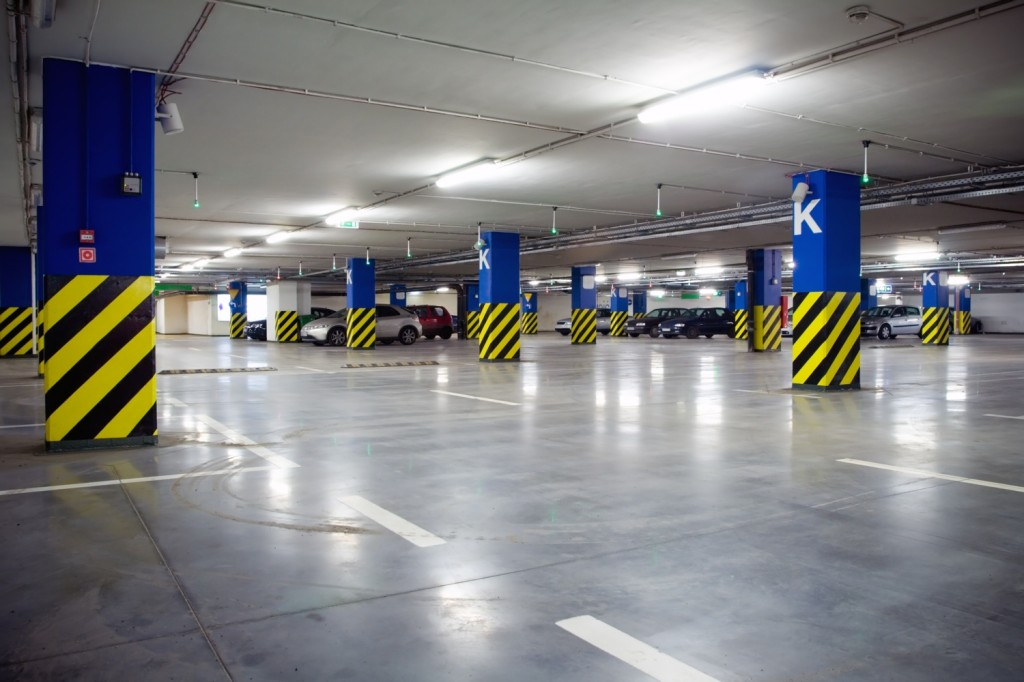
Parking Garage Lighting: The Retrofit Project Nobody Wants—But Everyone Needs
Every lighting project has its unglamorous workhorse. For me, it’s parking garages.
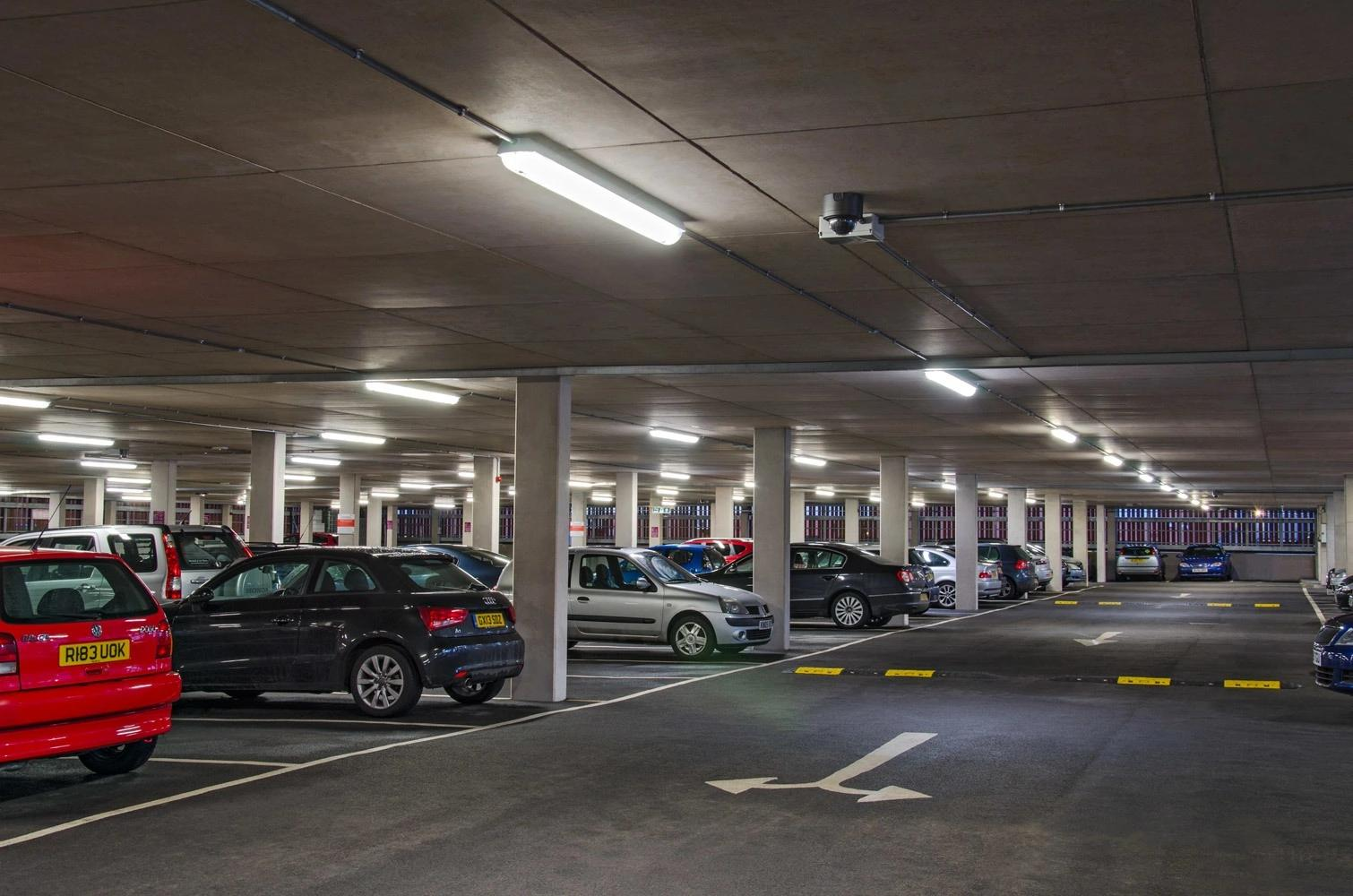
No one writes case studies about beautiful parking garage lighting. No one tours parking structures to admire the fixtures. But ask any facilities manager about their maintenance headaches, and parking garage lighting will come up in the first five minutes.
That’s exactly why it’s such a compelling retrofit opportunity.
Why Parking Garages Break Traditional ROI Logic
In most commercial lighting retrofits, the math is straightforward: replace old fixtures, save energy, calculate payback period, done.
Parking garages add friction:
Height matters. Most parking structures have 8-10 foot ceilings—low enough that fixture maintenance becomes a real labor cost. Fixtures that need servicing every two years aren’t just an annoyance; they’re a budget line item that quietly eats into energy savings.
Dust and contamination. Open parking structures accumulate grime faster than interior spaces. Fixtures lose effective output faster. Spec’ing fixtures without accounting for this “depreciation factor” leads to disappointing performance after year two.
Vandalism risk. If your parking structure isn’t isolated from public access, expect some fixture damage. I’ve seen projects where 5% of fixtures were damaged or removed within the first year.
Regulation complexity. Depending on jurisdiction, parking garages may need emergency lighting, specific illumination levels for ADA compliance, and in some cases code-mandated uniformity ratios that aren’t always obvious.
These factors don’t make parking garage retrofits impossible—they make them require smarter specification.
The luminaire selection problem
Here’s where buyers often go wrong: they spec a standard low-bay fixture and wonder why results disappoint.
Parking structures have specific needs:
IP rating: If the structure is open-sided (no walls separating levels), fixtures need IP65 minimum. Water from rain or car wash operations will kill IP44 fixtures. The cost difference is maybe $10-20 per fixture. The maintenance cost difference is substantial.
Optical distribution: Traditional parking garage fixtures used linear fluorescents or metal halide, creating fairly uniform horizontal illumination. Modern LED parking fixtures typically use round or square distributions that need different spacing calculations.
For single-level structures, symmetric distributions work. For multi-level structures with ramp transitions, asymmetric distributions may better serve the actual traffic flow patterns.
Glare control: Particularly in structures with residential units or where people are walking to vehicles at night, upward glare into driver’s eyes creates safety issues. Fixtures should have some cut-off characteristics if they’re mounted at eye level.
The Smart Lighting Opportunity Nobody Talks About
This is where parking garage lighting gets interesting.
Parking structures are perfect smart lighting candidates—contained environments with consistent traffic patterns and existing electrical infrastructure.
Common smart features that make sense here:
Occupancy sensing: Structures with intermittent use (office building parking, event venues) can reduce light levels in empty sections. The key is tuning: nobody wants to walk into a dark zone while their car is parked two rows away. Most systems handle this with a “hold mode” that keeps recently occupied zones lit at intermediate levels.
Daylight harvesting: Top-level parking structures with natural light access can use photosensors to reduce artificial light during bright periods. This isn’t just energy savings—it often improves the user experience, since natural-light supplemented parking feels less oppressive.
Scheduling flexibility: Dimming to 50% output during low-traffic hours (late night, early morning) can save 30-40% on energy costs while maintaining safe illumination levels. The trick is ensuring your dimming driver is reliable—cheap drivers often fail in the dimmed state.
Integration with parking guidance systems: Some newer projects integrate lighting with occupancy detection for real-time space availability. This is more complex but creates genuine operational value for larger facilities.
Emergency Lighting Integration
One detail that frequently gets value-engineered out: proper emergency lighting integration.
Most parking structures require code-compliant emergency egress lighting. In the past, this meant separate battery-backed fixtures or generator connections.
Modern LED drivers often include emergency options—either integral battery packs or remote emergency drivers. When specifying for a new project or major retrofit, ask your supplier about:
- How the emergency driver integrates with the dimming system (does emergency mode override the dimming?)
- Runtime requirements (90 minutes is standard, but some jurisdictions require longer)
- Test and maintenance requirements (self-testing emergency fixtures exist but cost more)
For multi-level structures, emergency lighting planning gets complex quickly. This is worth spending time on during design—the last thing you want is a fire marshal inspection finding during final occupancy.
Maintenance Reality Check
Before finalizing your retrofit specification, think through the maintenance model.
Who maintains the structure? If it’s an HOA or smaller management company, simplicity wins. Fixtures that are easy to access, have long rated life (100,000+ hours), and come from suppliers with reliable replacement programs reduce long-term headaches.
What happens when fixtures fail? Specify fixtures from manufacturers that maintain replacement stock. I’ve seen projects where the original fixture is discontinued two years in, forcing either a full re-specification or a mismatched “close enough” replacement.
Cleaning schedules: If your facility doesn’t have regular cleaning, spec fixtures with smooth, non-porous surfaces that resist dust accumulation. Some LED fixtures are designed for easy lens removal for cleaning—worth considering if maintenance access is difficult.
Energy Code Compliance: It’s Getting Tougher
The US DOE regularly updates energy codes, and parking structures are increasingly targeted.
ASHRAE 90.1 (the common commercial energy standard) has progressively tightened parking structure requirements. Current versions mandate automatic daylight-responsive controls for top levels and require specific control functionality.
If you’re retrofitting an existing structure, check with your local authority having jurisdiction about applicable code versions and any “existing building” exemptions. Some jurisdictions require compliance on retrofit projects; others only require it on new construction.
Getting ahead of code requirements in your specification means not facing surprise compliance issues during inspection.
The Practical Spec
For buyers putting together parking garage retrofit packages:
Fixture basics:
– IP65 or higher (for open structures)
– Minimum 130 lumens per watt (efficacy matters enormously at scale)
– 5000K color temperature (studies show this improves perceived brightness and safety)
– Minimum 70 CRI
– Bi-level or continuous dimming capability
– 100,000 hour L70 rating
Controls:
– 0-10V dimming standard
– Optional: occupancy sensors with programmable standby levels
– Optional: photosensors for daylight harvesting
– Networkable options if integrating with BMS
Documentation:
– LM-79 photometric test reports
– TM-21 projected life calculations
– Warranty: minimum 5 years, 10 preferred
The Scale Reality
Here’s what makes parking garage lighting compelling at scale: these projects are almost always about volume.
A 500-space parking structure might have 200-300 fixture points. At that scale, even a $20 per fixture cost difference becomes significant. But so does fixture reliability—a 2% annual failure rate means 5-6 fixture replacements per year, every year.
Working with a supplier who understands parking structure applications, can provide consistent quality across large orders, and maintains replacement stock availability changes the total cost of ownership calculation significantly.
If you’re evaluating LED parking garage retrofits and want to discuss fixture specifications, controls integration, or sourcing options for larger project volumes, contact our team. We’ve supplied parking structure lighting for commercial properties across North America and can walk through IP considerations, controls options, and long-term maintenance planning.
Related Reading:
– Industrial LED Lighting Solutions
– About YoubeeLight Manufacturing
