
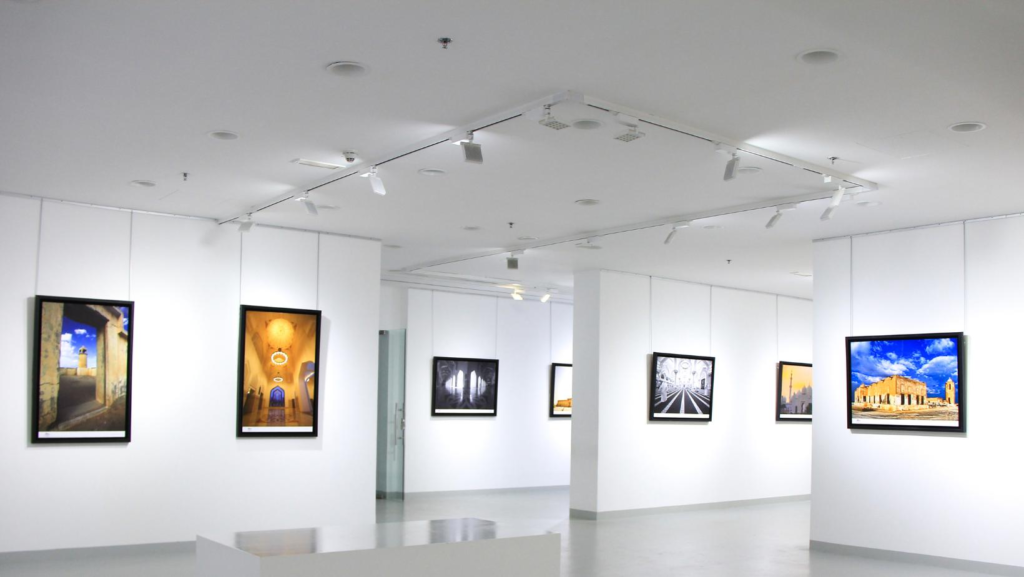
Museum & Gallery LED Lighting: Why Your Art Deserves Better Than a Ceiling Box
After 15 years visiting factories across China, one thing still surprises me: most lighting buyers treat a museum the same as an office building. Put in some fixtures, dial the color temperature, call it done.
That’s a mistake. A $2 million painting doesn’t care about your fixture spec sheet. It cares about how the light hits the canvas—and that requires a completely different approach.
The CRI Trap in Museum Lighting
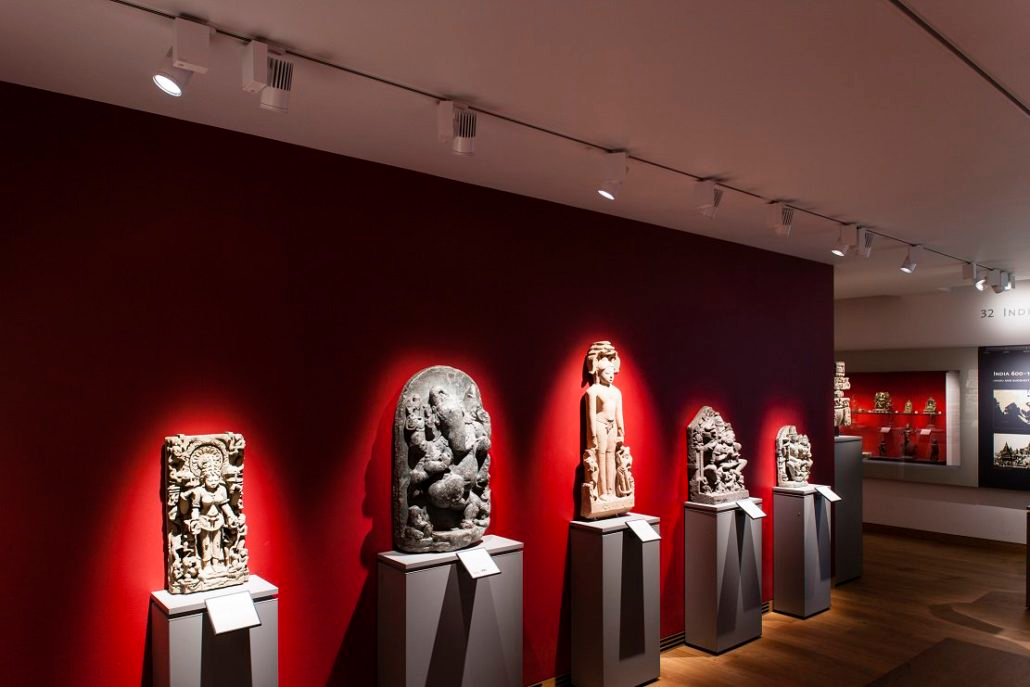
Here’s what most procurement specs still say: “CRI > 90.”
That number will get you into the game, but it won’t win it.
CRI (Color Rendering Index) measures how faithfully a light source reveals eight pastel colors. Art doesn’t care about those eight colors. Art cares about your collection’s specific pigments.
A Vermeer needs different rendering than a Rothko. Pre-Raphaelite reds behave differently under 3000K versus 4000K. The museum lighting pros know this—museum-grade fixtures often specify TM-30, which evaluates 99 color samples and provides fidelity and gamut indices.
When you’re sourcing fixtures for a gallery project, ask your supplier:
– Can you provide TM-30 reports, not just CRI?
– What’s the R9 value (deep red fidelity)? This matters enormously for warm-toned art.
– How does the spectrum handle indigo and ultramarine blues?
Most budget manufacturers will stare at you blankly. The ones who can’t answer these questions shouldn’t be touching your museum project.
Color Temperature Isn’t One-Size-Fits-All
The “warm white vs. neutral white” debate that dominates office lighting discussions barely scratches the surface here.
Contemporary art galleries often prefer 4000K—crisp, clinical, lets the work speak without romanticizing it.
Historical museums and classical art collections typically sit in the 2700K-3000K range, matching the candlelight era when many masterpieces were created.
But here’s the nuance that separates good museum lighting from great: museums increasingly use tunable white systems that shift color temperature throughout the day, mimicking natural daylight cycles. This isn’t just aesthetic—there’s research suggesting it affects visitor alertness and engagement.
For a lighting buyer sourcing for a gallery renovation, tunable white adds complexity and cost. But for permanent installations in major institutions, it’s becoming the standard expectation.
UV and IR: The Damaging Duo
This is the part nobody talks about until damage appears.
Ultraviolet and infrared radiation cause real, cumulative damage to artworks. Textiles fade. Paintings yellow. Paper becomes brittle.
Museum-grade LED fixtures typically emit near-zero UV and minimal IR. But “LED” doesn’t guarantee this—it’s a function of the fixture’s optical design, not just the technology.
If you’re specifying fixtures for a museum with sensitive collections (textiles, works on paper, anything pre-20th century), demand:
– UV output < 10 μW/lm
– IR emission data
– Thermal testing at the fixture head, not just ambient ratings
This is where Chinese manufacturers have genuinely closed the gap. Several factories we work with now produce museum-grade fixtures with documentation that would satisfy the Getty’s conservation team.
Beam Control: More Important Than Wattage
Here’s a common spec failure: buyers focus on lumens and wattage, then get mediocre results.
Museum lighting lives or dies on beam control.
The difference between a 15-degree and 25-degree beam angle can turn a painting into a feature or a distraction. Wall wash uniformity affects how visitors perceive space and scale. Glare control—particularly from reflective surfaces in contemporary galleries—determines whether people can actually see the work.
When evaluating track lighting systems for museums, pay attention to:
– Cutoff shields and snoots: Essential for preventing spill light that washes out adjacent works
– Dimming range: Museums typically operate at 10-100% with smooth, flicker-free dimming down to the lowest setting
– Adjustability: Gimbal mechanisms should allow precise aiming without drift
The adjustability point matters practically. Museums frequently rehang exhibitions. Fixtures that are hard to reposition create labor costs and increase the risk of damage during adjustment.
The Retrofit Reality
Not every museum project is new construction. A lot of what crosses my desk is retrofit work—replacing outdated halogen systems with LED in existing buildings.
This is where things get complicated.
Halogen systems often used magnetic transformers. LED replacements may not be compatible. Ceiling void depths may not accommodate new LED drivers. Existing track systems may be proprietary.
Before specifying any LED retrofit for a museum, do a physical site survey. Not just “we measured the ceiling height”—actually check the void space, the existing track type, the mounting infrastructure.
I’ve seen projects where the LED fixture cost was $50 per unit, but the installation and infrastructure work cost $500 per point. That math only works if you know it upfront.
What You Should Actually Specify
If you’re a buyer preparing a museum lighting tender, here’s the practical shortlist:
Fixture basics:
– TM-30 fidelity index > 90
– R9 value > 50
– UV < 10 μW/lm
– Dimming range: 0-10V, DALI, or Casambi (specify your system)
– Beam angle options: 15°, 24°, 36°, 50° (or zoomable)
– 5-year warranty minimum
Documentation requirements:
– LM-80 test reports for LED modules
– TM-30 calculation files
– Photometric data (IES/LDT files)
– Manufacturing ISO certification
Questions that separate serious suppliers from order-takers:
– Do you have reference projects in museums or galleries?
– Can you provide custom color temperature binning for consistency across large fixture orders?
– What’s your protocol for fixture replacement if one fails—do you guarantee color matching within a specific tolerance?
The Real Cost Question
Museum lighting is expensive. There’s no way around it.
A professional museum-grade track fixture might run $300-800 per head, versus $50-100 for commercial equivalent. Multiply that by a 50-fixture project and you’re looking at real money.
But here’s the context: a single damaged artwork, a visitor complaint about glare, or a curator who can’t achieve the vision they were hired to create—those costs dwarf the fixture premium.
I’ve watched institutions spend millions on collection acquisition and then quibble over $50 per lighting point. That math doesn’t add up.
The buyers who get this right understand they’re not buying fixtures. They’re buying visual integrity for irreplaceable objects.
If you’re evaluating suppliers for a museum or gallery project and want to discuss fixture specifications or Chinese manufacturing capabilities for museum-grade products, contact our team. We’ve supplied lighting for gallery projects across Europe and North America and can walk through TM-30 compliance, beam control options, and documentation requirements for conservation-sensitive applications.
Related Reading:
– Commercial LED Track Lighting Solutions
– About YoubeeLight Manufacturing
