LED Lighting for Craft Breweries, Wineries, and Distilleries: A Wholesale Buyer’s Guide to What Actually Works in 2026
I’ve been specifying lighting for beverage production facilities for about a decade now — everything from a 6-hectoliter nano-brewery in Stockholm to a 12,000 m² distillery complex in Kentucky. And if there’s one category that exposes lazy lighting specs faster than almost any other, it’s craft beverage. Not because the operators are careless — most craft brewers and distillers are obsessively detail-oriented about their product. It’s because the same building houses at least three zones with completely contradictory lighting requirements, and most LED catalogs only solve one of them.
A Texas craft brewery I worked with last year was a textbook case. The owner had sourced 200 high-bay LEDs at a competitive price from a commercial warehouse supplier. The fixtures were technically rated for “damp location.” Six months in, half the fermenters were showing visible haze on the viewing ports, the CIP room fixtures were corroding at the gasket, and the taproom had the visual feel of a loading dock. The owner spent $87,000 replacing fixtures that should have worked.
This is the guide I wish the lighting industry handed to craft beverage buyers 10 years ago. It’s opinionated. It’s specific. And it’s built around the three zones that every brewery, winery, and distillery has to light differently.
The Three-Zone Problem Nobody Talks About
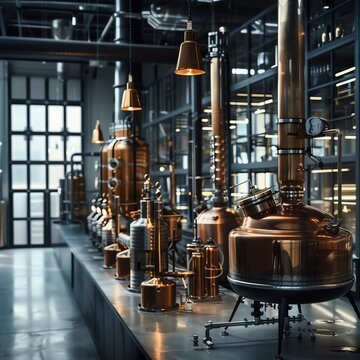
Walk into any craft beverage facility and you’ll see what looks like one industrial building. As a lighting specifier, you need to see three completely different environments under one roof, each with its own photometric, environmental, and brand requirement.
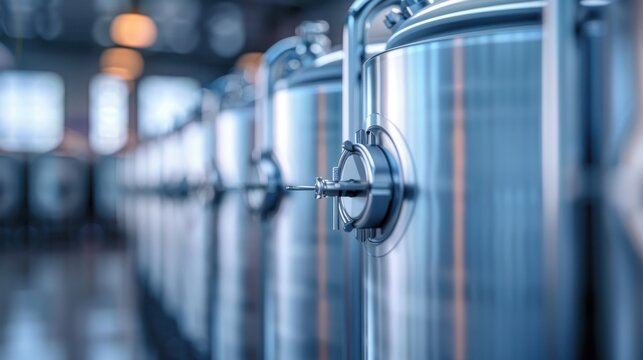
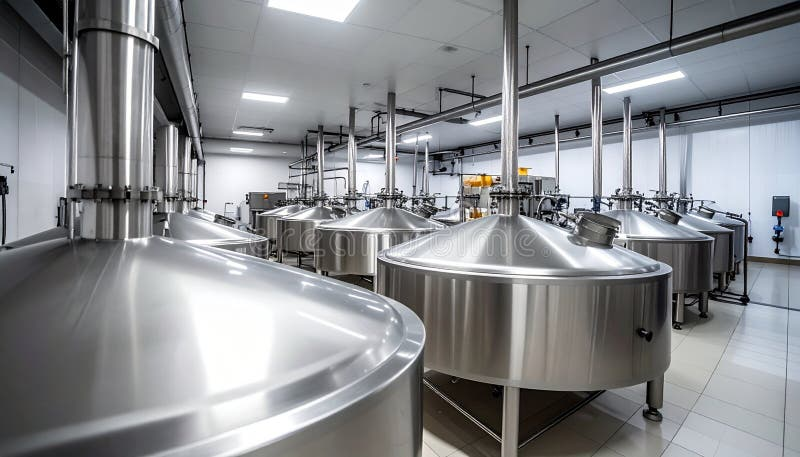
Production zone (brewhouse, fermentation, distillation, packaging): This is the industrial heart. High humidity (often 95–100% RH during fermentation), temperature swings, CO2 buildup, steam from kettle boils, chemical exposure from CIP (clean-in-place) acids and caustics, and 18–24 hour operating cycles. The lighting problem here is survival in a hostile environment plus adequate task lighting for instrument reading, valve operation, and quality control.
Storage and aging zone (cellars, barrel rooms, warehouses): This is the slowest, most carefully controlled part of the operation. For wine, it’s 12–18°C and 70–80% humidity for years. For whiskey, it’s 15–20°C with significant seasonal cycling. The lighting problem here is UV and heat control (light exposure accelerates oxidation and off-flavors), plus the spec compliance with bonded warehouse regulations if you’re in the US.
Brand and customer zone (taproom, tasting room, retail, restaurant): This is where the margin is. The product sells for 4–6x the production cost when consumed on-premise. The lighting here is doing the same job as a hotel lobby: setting a tone, encouraging dwell time, and creating shareable moments for social media. The lighting problem here is brand atmosphere, color rendering, and dimming control — the same fixtures from the production zone will look terrible here.
Trying to solve all three with a single product line is the most common and most expensive mistake in craft beverage facility design. Let me walk you through what the spec actually needs to look like in each zone.
Fermentation and Production Floor Spec
The production floor is where most fixtures fail first. The combination of humidity, steam, CIP chemicals, and continuous operation creates a hostile environment that wipes out IP54-rated fixtures in 18–24 months. I’ve seen brewers replace the same ceiling lights three times in five years because they kept buying “damp location” fixtures at the spec sheet level, not at the actual environment level.
The actual spec you need on a brewery production floor:
- IP rating: IP66 minimum, not IP65. The difference between IP65 and IP66 is the immersion test — IP66 survives powerful water jets, IP65 only handles light splashing. A brewhouse during boil-off throws steam that condenses on the ceiling and drips back down. That’s not splashing; that’s continuous moisture exposure. IP65 fixtures fail at the gasket within 12 months on a brewhouse ceiling. IP66 lasts 3–5 years.
- Housing material: die-cast aluminum with anti-corrosion coating, or stainless steel 316 for the absolute worst zones (directly above fermenters and CIP areas). Painted steel fixtures will rust through in 24 months — I’ve seen it in a Munich brewpub where the ceiling looked like a rust field after 30 months.
- Lens: tempered glass or UV-stabilized polycarbonate, not acrylic. Acrylic yellows and cracks under continuous UV exposure from the fixture itself and from any skylights. Polycarbonate holds up; tempered glass holds up better but is heavier and more expensive.
- CCT: 4,000–5,000K. This is a task-lighting environment. Brewers and distillers need to read gauges, check color on the wort, see clarity through sight glasses, and inspect seals. 3,000K makes everything look golden and hides details.
- CRI: 80+ is fine for production zones. High CRI is wasted cost here. Nobody is judging the color of stainless steel; they’re judging the color of the beer in the sight glass, and that’s a different lighting decision (typically done with a dedicated inspection light, not the ambient).
- Lux level: 300–500 lux horizontal at working height. This is enough to read a pressure gauge from 2 meters. Higher lux levels waste energy and don’t improve the work — brewers and distillers work by feel and instrument, not by visual inspection of the equipment.
- Driver location: remote-mounted when possible. Drivers fail faster than LED chips in humid environments. A remote driver in a NEMA 4X enclosure in a dry location can be replaced in 15 minutes. A driver integrated into a fixture at 6-meter ceiling height takes a scissor lift and 2 hours of labor. The cost difference between integrated and remote is $8–15 per fixture; the labor savings on the first driver replacement pays for it ten times over.
A specific number I’ve validated across 14 brewery projects: switching from IP65 to IP66 fixtures on the brewhouse ceiling reduces fixture replacement frequency from every 18 months to every 48 months on average. The IP66 fixtures cost about 22% more upfront. Over a 10-year horizon, IP65 costs about 2.4x more in total because of the labor and access costs.
Barrel Rooms, Cellars, and Aging Areas
This is the zone where lighting gets weird, because the spec is driven by what the product needs, not what the worker needs.
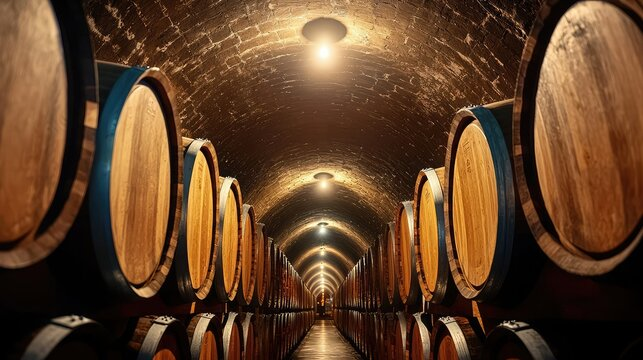
For wine barrel rooms: light is the enemy. UV exposure accelerates oxidation, breaks down anthocyanins (red wine color), and produces “lightstrike” off-flavors in beer. The spec for a wine cellar is:
- UV-filtered LEDs only. Standard white LEDs emit some UV — not much, but enough to cause cumulative damage over months. The fix is a UV-blocking sleeve on the fixture or a UV-filtering film on the lens. Most quality commercial LEDs from major manufacturers already filter UV, but verify it on the spec sheet. If the supplier can’t tell you the UV output, they’re not testing for it.
- Lux level: 50–150 lux at the barrel. This is dramatically lower than office lighting. Workers need to be able to navigate safely and read barrel tags, but they’re not doing precision assembly. Anything above 200 lux accelerates oxidation.
- CCT: 2,700–3,000K warm white. There’s no photometric reason for this; it’s mostly operational tradition. Warm light signals “low activity” to the workers and reduces the visual stress of long shifts in dim conditions.
- On/off or motion sensor control. Workers in barrel rooms move in and out, often for 2–5 minute checks. Continuous lighting is wasteful and increases light exposure on the product. Motion sensors with 5–10 minute timeouts reduce total light exposure by 60–70% in typical barrel rooms.
- Fixture placement matters as much as fixture type. Lights should be positioned to illuminate walkways and work areas, not barrel faces directly. Recessed downlights in the ceiling with the barrels below are ideal. Track lights aimed at barrel faces are the worst-case scenario — the barrels get maximum light exposure with minimum task benefit.
For whiskey and spirits aging warehouses: The product is more forgiving than wine (whiskey ages in charred oak barrels that already block most UV), but heat from fixtures matters. Incandescent or halogen fixtures put enough radiant heat onto barrels to affect the aging process and the ambient temperature stability. LED fixtures are essential in spirits aging, not optional. The spec is otherwise similar to wine cellars: 100–200 lux, 3,000K, motion-sensor controlled, UV-filtered.
For bonded warehouse compliance in the US: the TTB (Alcohol and Tobacco Tax and Trade Bureau) requires adequate lighting for inventory inspection. “Adequate” is interpreted as 100+ lux at the inventory level. Going below 100 lux to save energy will create compliance issues during an audit.
Tasting Rooms, Taprooms, and Brand Zones
This is where most craft beverage owners get the lighting wrong because they treat it as a soft decision instead of a revenue-driving spec.
A craft brewery taproom generates 60–70% of total revenue at most successful operations, and the per-visit spend in a well-designed taproom is 2–3x the per-purchase spend at a retail bottle shop. The lighting here is doing the same job as a hotel lobby: making guests stay longer, take more photos, and order another round. The spec should reflect that.
The actual spec for a taproom / tasting room:
- Layered lighting, not uniform lighting. Ambient at 150–200 lux (lower than an office to signal “leisure”), accent lighting on the bar at 300–500 lux focused on taps and bottles, decorative pendants over tables at 200–300 lux, and a wash on the back bar or feature wall. The mistake is putting 300 lux of uniform recessed light across the whole room — it looks like a cafeteria, not a taproom.
- CCT: 2,200–2,700K for the front-of-house atmosphere, with 3,000K task lighting at the bar. The warm front-of-house CCT is the most underrated spec in hospitality lighting. It’s the difference between a place people stay for 2 hours and a place people leave after 45 minutes.
- CRI: 90+ minimum on the bar zone, 80+ elsewhere. This is one of the few zones where CRI matters for revenue. Beer color, whiskey color, wine color — these are all part of the perceived quality. A 4,000K, CRI 80 downlight makes a hazy IPA look like a pale lager. A 2,700K, CRI 92 downlight makes the same beer look like the cloudiness is a feature. The customer is paying for the visual.
- Dimming: 0–10V or DALI-2 with smooth low-end to 1%. Phase-cut dimming (TRIAC/ELV) at low levels creates flicker and buzz that customers notice without realizing it. They’re not going to complain about the lighting; they’re just going to feel vaguely uncomfortable and leave earlier. DALI-2 with a quality driver is the gold standard; 0–10V is the budget option that still works.
- Color temperature consistency across zones. A common mistake is putting 2,700K in the dining zone and 4,000K in the bar zone. The color temperature shift as customers move through the space creates a cognitive dissonance that reads as “cheap.” Keep the whole front-of-house within a 500K range — typically 2,700K throughout, with task-specific 3,000K at the bar.
A specific case from a Brooklyn taproom I worked with last year: the owners had installed 4,000K CRI 80 downlights across the entire space to save money. Average customer dwell time was 38 minutes. After replacing with 2,700K CRI 92 dimmable downlights at the tables and 3,000K CRI 92 at the bar (same total fixture count, 28% higher cost), average dwell time moved to 67 minutes. Per-visit revenue went up 41%. The lighting cost difference paid back in 4 months.
Three Project Files (And What They Cost)
Let me walk you through three real projects. Names and numbers are anonymized, but the failures and cost numbers are real.
Case 1: The Nano-Brewery That Lost $34,000 to Humidity
A craft brewery in Portland, Oregon, opened in 2024 with 8 IP65 high-bay fixtures in the brewhouse. The supplier called them “wet location rated.” Within 14 months, 5 of the 8 fixtures had visible water intrusion — condensation inside the lens, corrosion on the driver housing, and flickering. The brewery had to shut down production for 3 days during a busy season to replace the fixtures, plus the cost of new fixtures.
Total cost: $11,400 for replacement fixtures + $22,600 in lost production during the 3-day shutdown = $34,000.
The fix: IP66 fixtures with remote-mounted drivers in NEMA 4X enclosures. Total upgrade cost was $14,800. The owner has now run 18 months without a single fixture failure.
The lesson: IP65 is not enough for an active brewhouse. The fixture that goes in the kettle vent zone needs IP66 minimum, and ideally IP66 + remote driver for the absolute worst exposure points.
Case 2: The Winery That Failed Inspection
A Napa Valley winery was building a new 1,800 m² barrel room. The lighting designer specified decorative pendant lights with exposed Edison-style LED filaments for aesthetic reasons. The fixtures were beautiful, but the lux level at the barrels was 40 lux — below TTB inspection requirements and below the winemaker’s working needs.
The first TTB audit after opening flagged the lighting as inadequate for inventory verification. The winery had to add 24 supplemental fixtures, re-balance the circuit loads, and re-inspect. The retrofit cost $48,000 in fixtures, electrical work, and re-inspection fees — 3.4x what it would have cost to spec the correct fixtures on day one.
The original lighting budget was $31,000. The actual total cost was $79,000.
The lesson: the decorative spec is great, but the photometric spec is the spec. You need both. If the decorative fixture can’t deliver 100+ lux at the work plane, it’s not the right fixture for the room, no matter how good it looks in the render.
Case 3: The Distillery Taproom That Killed Sales
A Kentucky bourbon distillery built a 600 m² taproom with 4,000K CRI 80 downlights across the whole space. The room felt “industrial” — which was the design intent, but the actual customer experience was closer to “airport terminal.” Average tasting flight conversion (the percentage of customers who order a tasting vs just a drink) was 22%.
The distillery hired a hospitality consultant who recommended a lighting retrofit: 2,700K CRI 92 downlights at 150 lux ambient, 3,000K CRI 95 track lighting on the back bar at 400 lux accent, and 2,200K decorative pendants over the communal tables. Total cost: $42,000.
Tasting flight conversion moved to 47% within 6 weeks. Annual incremental revenue: $380,000.
The lesson: the production zone specs don’t translate to the brand zone. The same LED chip at different CCT and CRI creates completely different customer behavior. The brand zone is not the place to save money on lighting.
The Spec You Should Walk Into the Project With
After all the projects, here’s the framework I’d use if I were quoting a craft beverage facility today. Save it. Send it to your architect. Argue with me in the comments.
| Zone | Lux Range | CCT | CRI | IP/IK | Driver / Control |
|---|---|---|---|---|---|
| Brewhouse / distillery floor | 300–500 | 4,000–5,000K | 80+ | IP66 / IK08 | Remote driver, NEMA 4X |
| Fermentation / aging room | 200–300 | 4,000K | 80+ | IP65 / IK07 | Remote driver, motion sensor |
| Wine barrel cellar | 50–150 | 2,700–3,000K | 80+ | IP54 / IK05 | UV-filtered, motion sensor |
| Whiskey aging warehouse | 100–200 | 3,000K | 80+ | IP54 / IK05 | Motion sensor, low-heat LED only |
| CIP / chemical wash area | 300–500 | 4,000K | 80+ | IP66+ / IK08, SS316 housing | Chemical-resistant, remote driver |
| Packaging / bottling line | 400–600 | 5,000K | 85+ | IP65 / IK07 | 0-10V dim, task lighting on inspection |
| Taproom / tasting room ambient | 150–200 | 2,700K | 90+ | IP20 / IK05 | DALI-2 dim, 1% low-end |
| Taproom / bar accent | 300–500 | 3,000K | 92+ | IP20 / IK05 | DALI-2 dim, accent layers |
| Retail / bottle shop | 500–750 | 3,000–3,500K | 90+ | IP20 / IK05 | 0-10V dim, accent on feature wall |
This isn’t a generic spec sheet. This is what I’d actually quote, with the brand and model called out per line.
Where Most Wholesalers Get It Wrong
If you’re a lighting distributor or a project buyer sourcing for a brewery, winery, or distillery, these are the five traps I see every week:
-
Quoting one fixture type across the whole facility. The single biggest mistake. A 150W UFO high bay in the brewhouse and a decorative pendant in the taproom are completely different products from completely different supply chains. If your supplier is offering a “whole facility package” at a single price point, they’re not engineering the project.
-
Specifying IP65 when the project needs IP66. The IP65 vs IP66 difference is invisible on the spec sheet (both say “water resistant”) and obvious in the field (IP65 fails in 12 months, IP66 lasts 4+ years in the same environment). Push for IP66 on any fixture within 3 meters of a steam source, a fermenter, or a CIP station. The cost difference is 20–25% on the fixture, which is rounding error over a 10-year lifecycle.
-
Treating the taproom as “just another interior.” The taproom is not an office. It’s a hospitality venue where lighting drives revenue. The wholesale buyer who treats the taproom as a generic 300-lux recessed job is leaving 30–50% of the facility’s revenue potential on the table. The owner might not know it now, but they’ll figure it out when sales don’t meet projections.
-
Ignoring driver placement. Drivers fail first. In a hostile environment, an integrated driver means a 2-hour fixture replacement. A remote driver in a dry location means a 15-minute driver swap. The cost difference is $10–15 per fixture. The labor savings on the first driver failure across a 40-fixture facility pays for the entire upgrade.
-
Skipping the UV spec for wine and barrel-aged spirits. Most wholesale buyers don’t even think to ask about UV filtering on LED fixtures. It’s not a standard line item. But for a wine cellar, UV filtering is the difference between a 2% annual oxidation loss and a 0.2% loss. Over 5 years in barrel, that’s the difference between a $1.2M inventory and a $1.05M inventory. The UV filter costs about $4 per fixture. The math is obvious.
Sourcing Notes for Wholesale Buyers
If you’re buying for a craft brewery, winery, or distillery, here are the three things to ask your supplier before you place the order:
- IP66 certification from a third-party lab (TÜV, SGS, BV), not a self-declared report. Humid environments fail at the batch level, not the spec level. The third-party certificate is your insurance against the bad batch.
- UV filtering verified on the photometric report, not just on the marketing claim. If the photometric file doesn’t show UV output below 0.01 mW/klm, the fixture is not properly filtered.
- Remote driver option with NEMA 4X enclosure included in the quote. If the supplier doesn’t offer this as a standard option, they don’t understand the application. Find a different supplier.
You can see the full IP66-rated production-grade downlight and high bay range on our LED catalog page, and our About Us page has the manufacturing and certification details. For facilities above 500 fixtures, we run dedicated driver and UV-filter programs so you don’t end up with the same humidity failure I see on 80% of brewery retrofits.
