
LED Lighting for Veterinary Clinics and Animal Hospitals: A Wholesale Buyer’s Guide to What Actually Works in 2026
I’ve been specifying lighting for animal care facilities for about eight years now, everything from a 1,800-square-foot feline-only clinic in Copenhagen to a 12,000-square-foot specialty veterinary hospital in suburban Chicago. And if there’s one category that exposes lazy commercial lighting specs faster than almost any other, it’s veterinary. Not because veterinarians are careless — most of them are obsessively detail-oriented about their patients. It’s because the same building houses at least four zones with completely contradictory lighting requirements, and most LED catalogs only solve one of them.
A specialty referral hospital I worked with outside Chicago in 2024 was a textbook case. The architect had specified a standard commercial LED panel package across the entire facility. The fixtures were technically rated for office use, came with a 5-year warranty, and looked fine at the punch-list walkthrough. Six months in, the surgeons were complaining that tissue color in the OR didn’t match what they were seeing on the ultrasound monitor, the boarding kennel dogs were barking 40% more at night than the previous fluorescent system, and the oncology ward was producing erratic readings on the in-house flow cytometer. The clinic spent $112,000 replacing about 60% of the fixtures within the first year.
This is the guide I wish the lighting industry handed to veterinary facility buyers five years ago. It’s opinionated. It’s specific. And it’s built around the four zones that every animal hospital has to light differently.
The Four-Zone Problem Nobody Talks About
Walk into any veterinary facility and you’ll see what looks like one small medical building with the same ceiling down every corridor. As a lighting specifier, you actually need to see four completely different environments under one roof, each with its own photometric, environmental, and code requirement.
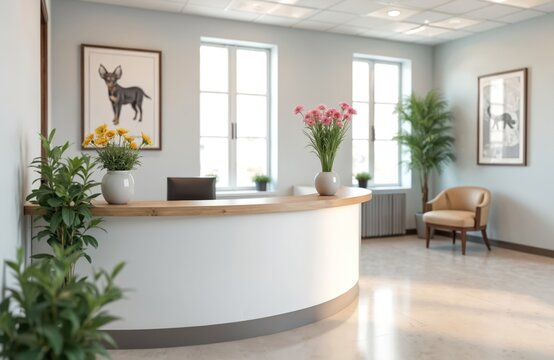
Reception and exam rooms: This is where the client experience happens. The reception area needs to feel warm, calm, and non-institutional — most pet owners are stressed when they walk in, and a cold hospital-feeling environment makes that worse. Exam rooms need 4,000K neutral white with high CRI so that veterinarians can assess skin, ear, and eye color accurately. This is the zone where the human and animal occupants have conflicting needs: the human wants warm, the animal needs high visibility.
Surgical and treatment suites: This is the medical heart. Operating rooms, dental suites, imaging rooms (radiology, ultrasound, CT). The lighting here is doing two things at once: providing shadow-free surgical illumination at 80,000–100,000 lux at the table (handled by dedicated surgical headlights, not the ceiling), and providing ambient illumination at 500–1,000 lux for circulating nurses, anesthesia management, and equipment operation. The color rendering requirement is 95+ CRI minimum — the difference between 80 CRI and 95 CRI in tissue color is the difference between “this looks normal” and “I can see the bleed clearly.”
Boarding, kennel, and recovery areas: This is where most specs fail. The lighting here needs to do three things simultaneously: provide adequate lux for staff to monitor animals, support a circadian rhythm that doesn’t disrupt sleep cycles, and avoid creating shadows that increase stress in caged animals. A fluorescent flickering system at 100Hz will produce visible flicker to dogs (whose flicker fusion threshold is around 70–80Hz, much lower than humans), causing measurable behavioral stress. An LED system running at 100Hz PWM produces the same problem. The fix is high-frequency drivers (4,000Hz+) and color temperatures matched to a natural daylight curve.
Exterior, parking, and signage: This is the boring zone — but the zone that ADA, security, and pet-safety regulations care about. Adequate parking lot illumination (5–10 lux average), emergency egress lighting along exterior paths, and signage lighting that doesn’t create glare in drivers’ eyes.
Trying to solve all four with a single product line is the most common and most expensive mistake in veterinary facility design. Let me walk you through what the spec actually needs to look like in each zone.
Exam Room Spec: Color Accuracy Is the Whole Point
The exam room is where the spec is most often wrong, because most lighting designers spec the room like a medical office for humans. But there’s a critical difference: the veterinarian is looking at the animal’s tissue color, and most animals have fur, feathers, or scales that hide or distort the underlying tissue color. A red rash on a black Lab’s belly is hard enough to assess at 95 CRI; at 80 CRI it’s nearly impossible.
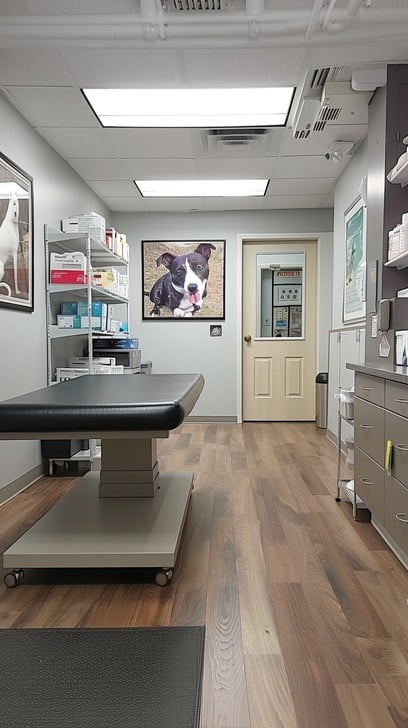
The actual spec you need for a general exam room:
- CRI 95+ minimum, with R9 > 80 (R9 is the deep red rendering index — the one that matters for tissue color, mucosal membrane color, and blood). Most 80-CRI commercial fixtures have R9 values around 0–20, which means red tissue looks gray. Most 95-CRI fixtures have R9 > 80, which means red tissue looks red. For a 2,000-square-foot clinic with eight exam rooms, the fixture cost difference is about $2,400 — which is the cost of one misdiagnosed ear infection.
- CCT 3,500–4,000K nominal. 3,000K makes everything look golden and hides details (especially jaundice detection in cats and dogs). 5,000K+ makes everything look harsh and increases client stress. 4,000K is the clinical sweet spot, and 3,500K is acceptable if the fixture has a high R9.
- UGR < 19, anti-glare diffuser. Animals are easily startled by glare events, and a sudden movement in an exam room can mean a bite or scratch. Anti-glare diffusers also reduce the specular reflections on stainless steel exam tables and anesthesia equipment.
- Vertical illuminance 300+ lux at the exam table. This is the metric most designers miss — they spec horizontal illuminance (500+ lux on the floor or table top) but ignore the vertical illuminance on the animal’s body, which is what the veterinarian actually sees. A fixture with a 120° downlight beam pattern will give you 600 lux on the table and 200 lux on the side of a 30cm tall dog. A fixture with a wider beam (or a wall-washer) will give you 600 lux on both.
- Color consistency SDCM ≤ 3. When a clinic has eight exam rooms, having all eight with the same color appearance matters for both client perception and for the vet’s color memory. SDCM ≤ 3 means the variation between fixtures is below the threshold of casual perception.
If you’re specifying for a specialty referral practice (oncology, dermatology, ophthalmology), push the CRI requirement to 97+ and the R9 to 90+. The fixture cost premium is about 30%, and the diagnostic value is significant.
Surgical and Treatment Suite Spec: Shadows Kill
Surgical lighting is its own product category and I won’t pretend to be a surgical light expert — most of these come from dedicated medical device manufacturers (Steris, Trumpf Medical, Rimsa, Maquet, etc.) and they don’t overlap with the commercial LED world. But the ambient and general illumination in a surgical suite is where the LED spec goes wrong, and it’s where most of the budget actually goes.
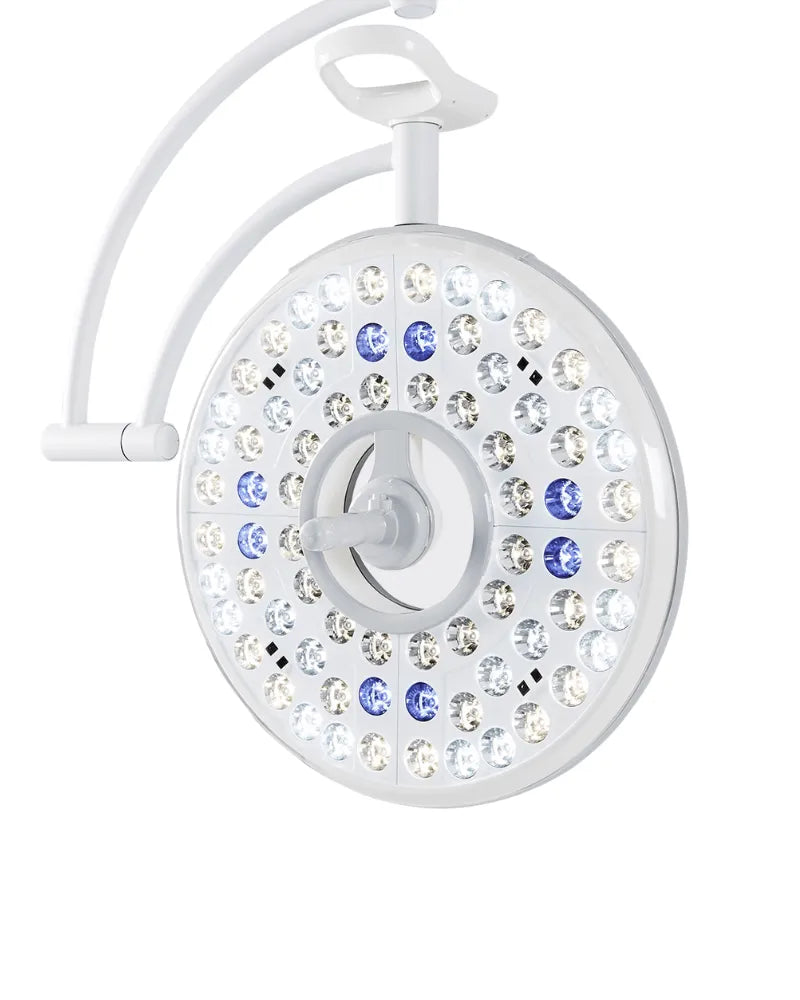
The actual spec for the ambient lighting in a surgical suite:
- CRI 97+ with TM-30 Rf > 95 and Rg 100 ± 3 (the TM-30 metrics are the modern color rendering standards; they catch issues that CRI misses). Tissue color, blood flow assessment, and the ability to distinguish between arterial and venous blood all require this level of color fidelity.
- 4,000K nominal, with optional 5,000K mode for procedures requiring more visual acuity. Most modern surgical suites have two-mode lighting — 4,000K for general anesthesia management and recovery, 5,000K for the procedure itself. Make sure the driver supports both modes and the transition is smooth (no flicker during the change).
- Sealed fixtures (IP65 minimum) for OR and treatment rooms because of the constant cleaning with quaternary ammonium compounds, hydrogen peroxide, and peracetic acid. The lens and gasket need to survive daily wipe-downs with harsh chemicals. Standard commercial fixtures will yellow and craze within 18 months.
- Magnetic-mount or quick-disconnect driver modules for fixtures above the sterile field. Driver replacement should not require a 4-hour shutdown and a ladder in the OR.
- Isolated power system compatibility. Most US surgical suites run on isolated power (per NFPA 99 and NEC 517), which means the LED driver needs to be compatible with line isolation monitors. Not all commercial drivers are — check with the manufacturer before specifying.
A 4,000-square-foot specialty hospital in suburban Chicago that I worked with in 2024 spec’d a $42,000 surgical lighting package including ambient ceiling fixtures, surgical headlights, and a backup battery system. The hospital saved $11,000 versus the original quote by switching from a Tier 1 medical brand to a Tier 2 brand with equivalent photometric data — but the savings disappeared within 18 months when the Tier 2 fixtures had a 12% driver failure rate and the manufacturer took 8 weeks to ship replacement parts. The lesson: spec the manufacturer you can actually get replacement parts from, not the one with the lowest first-cost.
Boarding, Kennel, and Recovery Spec: Circadian Lighting Is Real
This is the spec most veterinary facility buyers get wrong, and the one that has the most measurable impact on animal welfare. The science is clear: dogs, cats, and most small mammals have circadian rhythms that are heavily influenced by light intensity and color temperature. Disrupting those rhythms increases stress hormones, suppresses immune function, and — for boarded animals — measurably increases barking, aggression, and disrupted sleep.
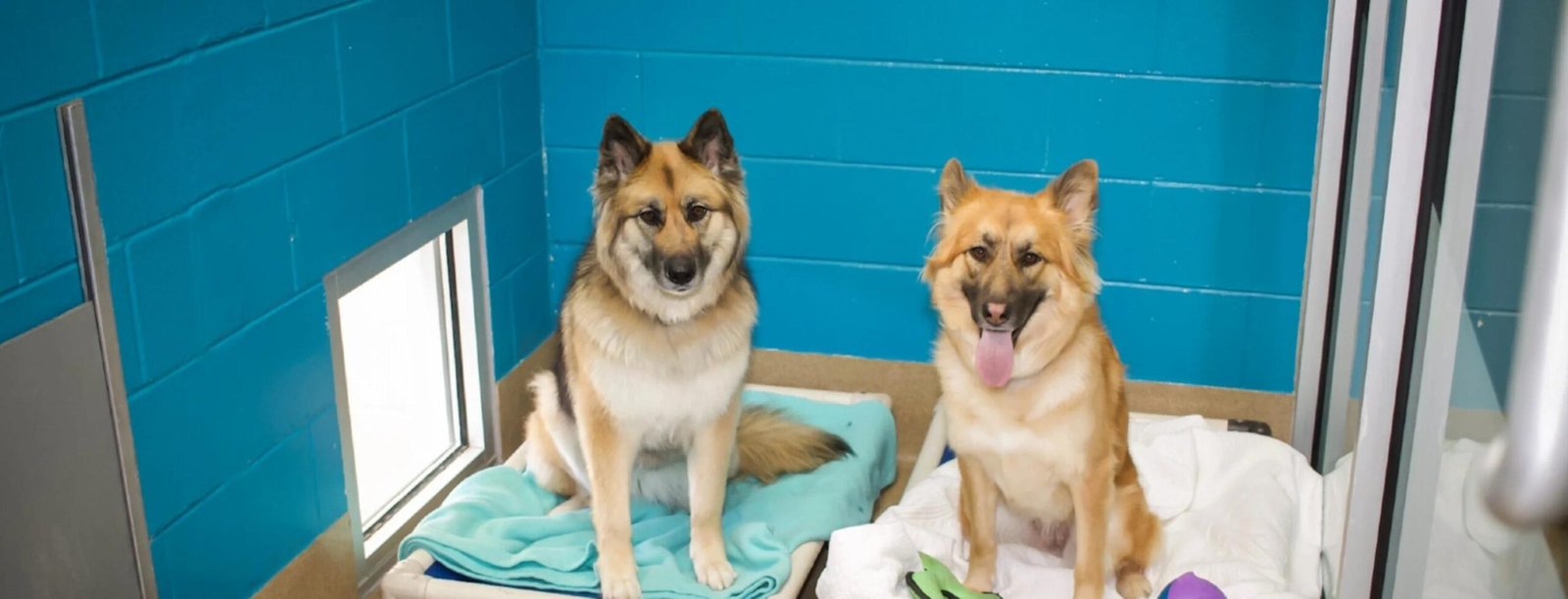
The spec that works:
- 4,000K daylight, full spectrum (CRI 90+), at 150–300 lux during the day, dimming down to 50 lux and 2,700K at night. This is a circadian-rhythm-supportive lighting system, and the cost premium over a basic on/off system is about 20%. The behavioral improvement (measured in barking incidents, kennel aggression, and post-op recovery time) is significant.
- High-frequency drivers (4,000Hz+) to eliminate visible flicker. Dogs have a flicker fusion threshold of 70–80Hz, cats around 80Hz, and many birds around 100–150Hz. A 100Hz LED driver will produce visible flicker to all of these species, causing measurable stress. A 4,000Hz driver is invisible to all of them.
- IP65-rated fixtures for the kennel wash-down areas. Kennels are hosed down daily, sometimes multiple times. Standard commercial fixtures will fail at the gasket within 12 months. IP65 (or IP66 in heavy wash-down zones) tri-proof lights with stainless steel or aluminum housings will survive 5+ years.
- Wall-washer beam distribution, not downlights. Downlights create shadows in kennel runs that increase animal stress and make it harder for staff to monitor the animals. Wall-washers or indirect lighting eliminate shadows and make the animals feel less exposed.
- Emergency lighting with battery backup along all egress paths. Most US jurisdictions require 90 minutes of emergency illumination along exit routes; EU jurisdictions require 1 hour per EN 1838. The spec mistake I see most often is spec’ing self-contained emergency fixtures (each with its own battery) instead of a central battery system — same mistake I see in data centers, same root cause, same fix.
A small boarding facility I worked with in 2023 in northern Germany (24 dog runs, 12 cat condos) spent about $18,000 on a circadian lighting system with DALI controls, and the owner reported a 35% reduction in overnight barking incidents within the first month. The control system cost an extra $4,000 versus basic on/off, and the behavioral improvement paid for it in reduced staff overtime within the first quarter.
Exterior and Parking Spec: The Boring Zone That Gets You Sued
The exterior lighting spec is where you get the most liability exposure for the least fixture cost. Most veterinary clinics have clients arriving at all hours, often with sick or injured animals, often in emotional distress. The exterior lighting needs to be safe, adequate, and welcoming.
The spec that works:
- Parking lot illumination: 5–10 lux average, with a uniformity ratio of 4:1 or better. This is per IES RP-8 (US) and EN 12464-2 (EU). The mistake I see most often is fixture spacing that’s too wide, creating dark spots between fixtures. The fix is closer fixture spacing at lower wattage, not wider spacing at higher wattage.
- Wall packs at all entry/exit doors, with 90+ CRI for accurate color rendering on security cameras. The camera sees the same scene as the human — if the camera can’t read color, the security footage is useless.
- Pole-mounted fixtures with full cutoff (0% uplight) to avoid light pollution complaints from neighboring residential properties. This is increasingly a code requirement, and the dark-sky-friendly approach is also the more neighborly approach.
- Emergency egress lighting along the path from parking to entrance with battery backup or central battery system. The path should be illuminated to at least 1 lux at all hours.
The cost of doing this right across a 50-stall parking lot and a 2,000-square-foot clinic is about $8,000–$12,000. The cost of one slip-and-fall lawsuit is several hundred thousand dollars. The math is obvious.
Where Most Buyers Get It Wrong
After a dozen veterinary projects, here are the five spec mistakes I see over and over:
-
Spec’ing 80 CRI for exam rooms. The cost difference between 80 and 95 CRI is trivial, and the diagnostic value is enormous. R9 specifically is the metric to watch — anything below R9 80 is a missed diagnosis waiting to happen.
-
Using standard commercial drivers in surgical suites. The driver needs to be IP65 sealed, quick-disconnect, isolated-power compatible, and supported by a manufacturer with documented medical device experience. Standard commercial drivers fail in 18–36 months in a surgical environment.
-
Ignoring animal flicker perception. A 100Hz LED driver is invisible to humans but visible to dogs, cats, and birds. The behavioral impact is measurable. Spec for 4,000Hz+ drivers in any space with animals.
-
Treating the kennel as a storage room. Boarding and recovery areas are clinical spaces, not storage spaces. The lighting spec should be circadian-supportive, high-CRI, and high-frequency. The cost premium is 20%, and the welfare benefit is significant.
-
Spec’ing self-contained emergency fixtures throughout. The battery replacement cycle is 4–6 years, and the labor cost in an active veterinary facility is enormous. Spec a central battery system for the main areas, self-contained only in stairwells and exterior egress paths.
The Wholesale Buyer’s Shortlist
If you’re sourcing veterinary lighting for a project in 2026, here’s the shortlist of specs to ask your supplier about:
- CRI 95+ with R9 > 80 for exam rooms, CRI 97+ with TM-30 Rf > 95 for surgical suites
- CCT 3,500–4,000K for exam, 4,000–5,000K for surgical, 2,700–4,000K dimming for boarding
- High-frequency drivers (4,000Hz+) in any space with animals
- IP65 fixtures in surgical suites, treatment rooms, and kennel wash-down areas
- UGR < 19 with anti-glare diffusers in exam rooms
- TM-30 reports available on request, not just CRI
- Manufacturer with documented veterinary or healthcare project references
- 5-year minimum warranty on the full fixture, with 48-hour replacement parts turnaround
YoubeeLight has been supplying commercial LED lighting to European and North American projects for over a decade, and our healthcare line includes high-CRI panel lights, IP65 tri-proof fixtures for wash-down zones, and circadian-tunable systems for boarding and recovery. You can browse our LED catalog for the full veterinary range, or check our company background for project references and certifications.
Final Word
Veterinary lighting is one of the few categories where the wrong spec produces measurable harm to living patients. The fixture cost is 8–12% of the total project lighting budget; the diagnostic accuracy, animal welfare impact, and client perception impact are unmeasurably larger. If you’re specifying a facility that needs to provide medical care to animals and a calm experience to their owners, spec the fixture that supports both, not the one that’s cheapest on the quote.
