
LED Fixture Lifespan: The Real Story Behind L70 B50 Ratings and What Actually Determines How Long Your Lights Last
Here’s a question I get constantly from customers: “How long will these last?”
The supplier’s answer is usually something like “50,000 hours!” printed in bold on the spec sheet. But here’s the uncomfortable truth: that number is almost meaningless without context.
Let me explain what actually determines LED fixture lifespan, because I’ve seen $200,000 worth of “50,000-hour” fixtures fail in less than three years. And I can tell you exactly why.
Understanding L70 B50: What the Rating Actually Means
When manufacturers advertise LED lifespan, they’re usually citing the L70 rating. But what does that actually mean?
L70 refers to the point at which a light source produces 70% of its original lumen output. So an L70 of 50,000 hours doesn’t mean the fixture stops working at 50,000 hours. It means that at 50,000 hours, the LEDs are producing 70% of their initial light output—and they’re still technically “working.”
The “B50” part refers to the failure statistic. B50 means that 50% of the fixtures will have reached the L70 threshold by that time. In other words, half your fixtures will be at 70% brightness by 50,000 hours, and half will still be brighter.
So when you see “L70 B50 50,000 hours,” here’s the translation: after 50,000 hours of operation, you should expect about half your fixtures to be putting out 70% or less of their original light output.
This is a depreciation rating, not a failure rating.
Now, for many commercial applications, 70% of original output is still perfectly functional. A parking garage at 70% light output is still adequately lit. But a hospital corridor? An athletic facility? You might have a problem.
The practical implication: when you’re specifying fixtures for a project, think about what the light levels will be at year 5, year 7, year 10—not just at installation.
The Three Factors That Actually Kill LED Fixtures
Here’s where things get interesting. The LED chips themselves are remarkably reliable. The failure modes are almost always elsewhere in the system.
Factor 1: Thermal Management
Heat is the enemy of LEDs. Not ambient heat necessarily, but the heat that builds up inside the fixture.
LEDs are solid-state devices, and their light output is inversely related to junction temperature. Run an LED too hot, and two things happen:
-
Lumen depreciation accelerates dramatically. For every 10°C increase in junction temperature, LED lifespan drops by approximately half. That “50,000-hour” fixture might only last 25,000 hours at elevated temperatures.
-
Failure becomes more likely. While LEDs rarely “burn out” the way incandescent bulbs do, they can fail due to thermal stress on the phosphor coating or the wire bonds connecting the LED chip to the circuit board.
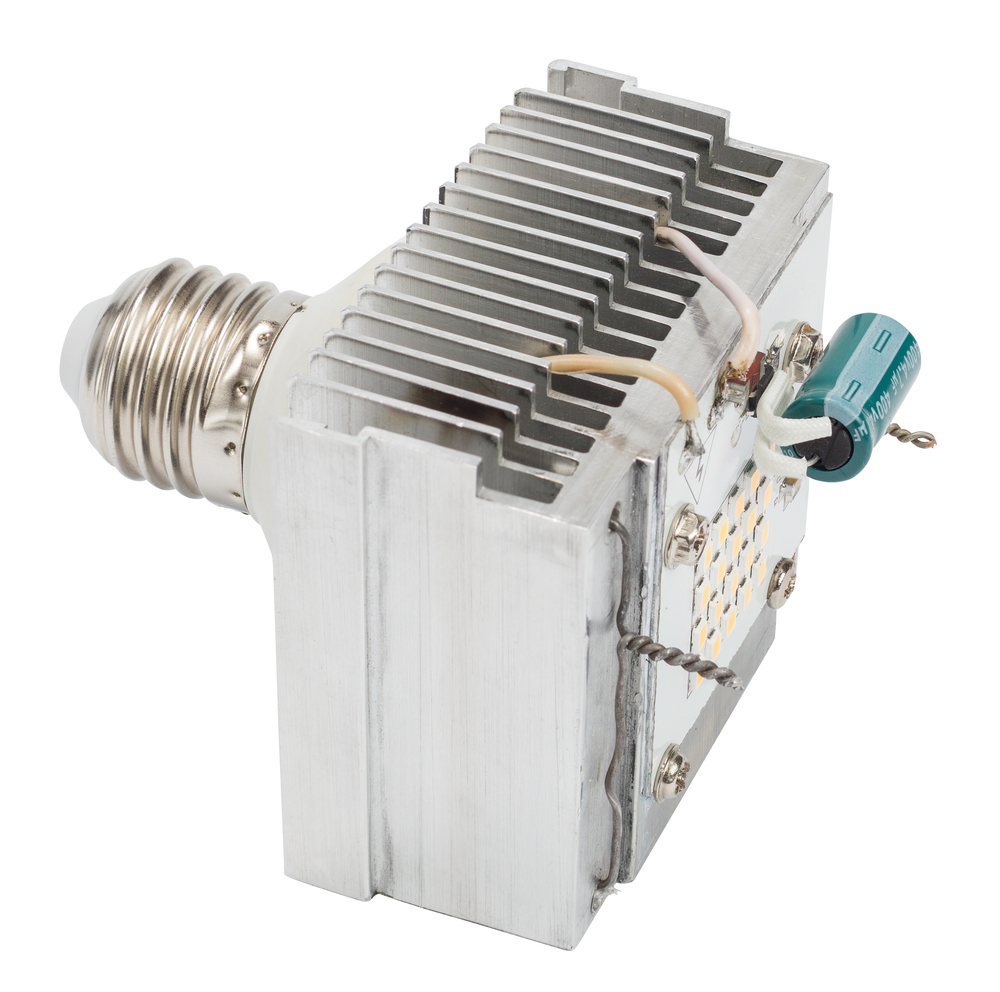
What this means for fixture design: thermal management is everything. Quality fixtures have proper heat sinks, adequate ventilation, and thermal隔离 (isolation). Cheap fixtures cut corners here.
I once investigated a batch of LED high bays that were failing at a rate of about 5% per year in a Midwest warehouse. The warehouse wasn’t particularly hot—ambient was maybe 85°F. But the fixtures had minimal heat sink surface area, and the thermal path from the LED board to the heat sink had thermal interface material that was clearly insufficient.
The fix was expensive: replacing the entire fixture batch with properly thermally-managed units. The lesson: the thermal design has to be right, or you’re paying for it later.
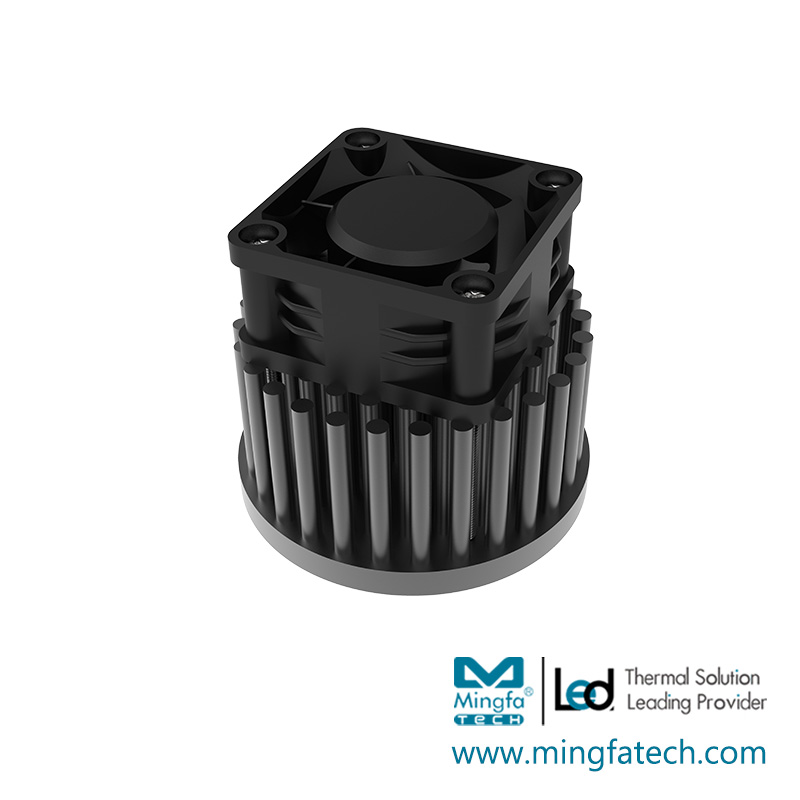
What to check: Look at the fixture’s ambient operating temperature rating. Quality commercial fixtures should be rated to at least 45°C (113°F). Check that the fixture has adequate thermal path design—good fixtures will have aluminum heat sinks with adequate surface area, not just token fins that look good in photos.
Factor 2: Power Supply (Driver) Quality
The LED driver is often the weakest link in the system. While LEDs themselves can last 50,000+ hours, electrolytic capacitors—the components that smooth out the power supply—typically degrade after 10,000-20,000 hours of operation at elevated temperatures.
Signs of driver failure include:
- Flickering (often intermittent at first)
- Dead fixtures (driver failure, not LED failure)
- Dimming performance degradation
- Color temperature shift
For projects where fixture longevity matters, I always recommend asking about the driver manufacturer. Drivers from Mean Well, Inventronics, and Tridonic have a track record of reliability. Drivers from unknown manufacturers—even if the LEDs themselves are quality—are a risk.
Also pay attention to operating temperature ratings on drivers. A driver rated for 70°C maximum ambient will fail faster than one rated for 85°C when installed in a warm environment.
Practical tip: In commercial installations, plan for driver replacement at year 7-10, even if the LEDs are still functioning. This is preventive maintenance, not reactive repair.
Factor 3: Environmental Factors
LED fixtures are more durable than legacy lighting in many ways, but they’re sensitive to specific environmental factors:
Humidity: High-humidity environments (swimming pools, coastal installations, greenhouse operations) require fixtures with proper sealing and sometimes conformal coating on circuit boards. Standard commercial fixtures with IP20 ratings will fail quickly in these environments. For humid applications, look for IP65 or higher ratings.
Vibration: Industrial environments with machinery vibration, or installations on bridges and parking structures, need fixtures rated for vibration resistance. Standard LED fixtures can experience accelerated failure from vibration-induced stress on solder joints and wire connections.
Chemical exposure: Agricultural operations, car washes, and industrial facilities may have chemical vapors that degrade plastic components and seals. Verify that fixture materials are compatible with the environment.
** insects and rodents:** This sounds funny, but it’s real. In some regions, ants and rodents will nest in fixtures or chew on wiring. I’ve seen fixture failures that were purely pest-related. Sealed fixtures and proper installation can help here.
How to Evaluate Fixture Reliability for Your Projects
Here’s my practical framework for evaluating LED fixture reliability:
Step 1: Read the TM-21 Report
TM-21 is the industry standard for projecting LED fixture lifespan based on LM-80 testing data. It’s more reliable than the marketing numbers.
The TM-21 report will show:
– The tested lumen maintenance at 6,000 hours (minimum required test duration)
– Projected L70 (and sometimes L80) lifespan based on statistical analysis
– The ambient temperature at which testing was conducted
Key question: Was the TM-21 testing done at the fixture level or just the LED chip level? Fixture-level testing is more relevant because it accounts for the actual thermal environment inside the housing.
Step 2: Verify LM-80 Testing
LM-80 is the test procedure for measuring LED lumen maintenance. Any credible manufacturer should be able to provide LM-80 test reports for their LED components.
Verify that the testing was done by an accredited lab. Self-reported testing is meaningless.
Step 3: Check the Warranty—Really Read It
Warranty terms matter more than warranty duration. A 5-year warranty with exclusions for labor, installation, or “acts of God” is worth less than a 3-year warranty with comprehensive coverage.
What you want in a warranty:
– Coverage of the full fixture, not just the LED array
– No-fuss replacement process
– Coverage of labor costs for replacement (or at least availability of no-charge replacement parts)
– Clear definition of “failure” (complete failure vs. lumen depreciation)
Also note warranty claim requirements. Some warranties require registration within 30 days of installation. Miss that window, and your warranty is void.
Step 4: Consider the Total Cost Model
Here’s the calculation I use for major projects:
Total Cost = (Purchase Cost) + (Installation Cost) + (Maintenance Cost) + (Energy Cost) – (Salvage Value)
Fixtures with higher upfront cost but better thermal design and driver quality will often win this calculation when you factor in maintenance and replacement costs.
As a rough example: A $150 fixture with a 7-year driver lifespan versus a $120 fixture with a 3-year driver lifespan. If you’re paying $200 in labor for each driver replacement, the $150 fixture is actually $10 cheaper over 10 years—before you account for the hassle and customer relationship risk of premature failures.
What This Means for Your Customers
When you’re spec’ing fixtures for commercial projects, have this conversation with your customers:
Question 1: What’s the maintenance scenario?
In hard-to-access locations (high ceilings, outdoor poles, industrial facilities), longer fixture lifespan matters more because each maintenance visit costs more. The math changes significantly when you’re paying for lifts and industrial electricians.
Question 2: What are the light level requirements at year 5 and year 7?
If your customer needs consistent light levels over a 10-year period, you might need fixtures with higher initial output than specified, or fixtures with better lumen maintenance characteristics.
Question 3: What’s the environment?
Hot ambient temperatures, humidity, vibration, and chemical exposure all affect fixture selection. Don’t just match the fixture type to the application—match it to the specific conditions.
Question 4: Who’s maintaining this?
If it’s your customer or their maintenance staff, make sure they understand the expected lifespan and maintenance schedule. If it’s a property management company with a maintenance contract, understand their approach.
The Bottom Line
“50,000 hours” is a marketing number. Real fixture lifespan depends on thermal design, driver quality, and environmental factors.
When you’re sourcing commercial LED fixtures, the questions that matter are:
- How was thermal performance validated?
- Who makes the driver, and what’s their track record?
- What’s the TM-21 projection based on?
- What does the warranty actually cover?
- Has this fixture been installed in similar conditions and performed?
At YoubeeLight, we publish thermal test data and driver specifications for all our commercial fixtures, and we maintain warranty terms that actually mean something. Because we’re not just selling fixtures—we’re building relationships that depend on those fixtures performing.
The spec sheet tells you what the supplier wants you to know. The test data tells you what’s actually true.
Need help evaluating fixture specifications for your next project? Reach out to our technical team | Browse LED Catalog for application support.
