
Commercial Lighting Certifications: What Wholesale Buyers Actually Need to Know About UL, CE, DLC, and Energy Star
If you’ve been sourcing commercial lighting from Asia for any length of time, you’ve probably gotten this question from your customer: “Is this certified?”
And if you’re like most importers, your first instinct is to say “Yes, we have CE,” thinking that covers everything. It doesn’t. In the commercial lighting game, different markets have different rules, and getting this wrong costs money—sometimes a lot of it.
Let me break down what these certifications actually mean for your business, because knowing the difference can be the difference between closing a deal and eating a container of non-compliant fixtures.
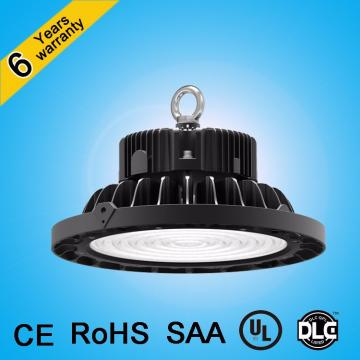
Why Certifications Matter More Than You Think
Here’s the thing about certifications: they’re not just stickers on a box. They’re legal requirements in most developed markets, they’re insurance against liability claims, and—increasingly—they’re table stakes for getting shelf space at major distributors.
I learned this the hard way about eight years ago. We had a container of linear LED fixtures headed to a warehouse project in the Midwest. The fixtures were solid, the price was right, and the customer was ready to install. Then the building inspector showed up.
The fixtures had CE marking only. In the US, CE is about as useful as a screen door on a submarine for commercial installations. You need UL—or its ETL/Intertek equivalent—on the fixture itself. We ended up having to pay for field evaluation by an approved testing lab, which cost more than our profit margin on the entire order.
That experience taught me to ask the certification question before I quote, not after.
The Big Four: What Each Certification Actually Covers
UL Listing – The US Standard
Underwriters Laboratories has been around since 1894, and their UL mark is still the gold standard for electrical safety in the North American market. When a fixture carries a UL mark, it means an independent testing lab has verified that the product performs safely under normal conditions.
For commercial lighting, UL listing is typically non-negotiable. You won’t get electrical permits without it in most jurisdictions, and your customer’s insurance company will have words if they ever need to file a claim on a building with uncertified fixtures.
The key thing to understand: UL listing is product-specific. A track light that’s UL listed doesn’t mean the LED driver inside is UL listed. Check the entire fixture, not just the visible components.
Practical tip: Look for the UL file number on your supplier’s documentation. You can verify it on the UL database at ul.com. If they can’t provide a UL file number, they don’t have legitimate certification.
ETL/Intertek – The UL Alternative
ETL Testing Laboratories, now part of Intertek, provides testing and certification services that are legally equivalent to UL in the US and Canada. Products with the ETL mark meet the same safety standards as UL-listed products.
The practical difference? Usually speed and price. ETL tends to be faster for factory audits and certification, and some factories find it easier to work with. Both are equally acceptable to inspectors and AHJs (Authorities Having Jurisdiction).
One caveat: make sure you’re getting the actual ETL Listed mark, not just “ETL tested” or “ETL approved.” The latter phrases don’t carry the same legal weight.
CE Marking – European Compliance, Not Safety Certification
This is where a lot of importers get confused, because CE looks like a certification mark but it’s actually a declaration of conformity.
CE marking says the manufacturer has assessed the product and believes it meets European Union health, safety, and environmental requirements. It does NOT mean an independent lab has verified this. The manufacturer is essentially saying “trust us, it’s compliant.”
For the EU market, CE is legally required, and without it your product will be stopped at customs. But here’s the catch: CE requirements vary by product category, and enforcement is inconsistent. A fixture that passes CE for one EU country might fail inspection in Germany.
Also worth noting: CE is NOT recognized in the US for commercial installations. I see some suppliers trying to use CE as a selling point for US customers. Politely correct them.
Real talk: CE is important for EU shipments, but don’t treat it as equivalent to UL or ETL. It’s a different framework with different enforcement mechanisms.
DLC (DesignLights Consortium) – The Efficiency Standard
DLC certification is specific to LED lighting products and focuses on performance—specifically luminous efficacy and quality of light. It’s not a safety certification; it’s a utility rebate qualification.
If your customers are working on commercial projects where utility rebates are available (and these programs are more common than you think, especially for LED retrofits), DLC qualification is essential. Projects that qualify for utility rebates typically see 20-40% of the lighting cost rebated, which can be the difference between a marginal project and a profitable one.
DLC has two tiers: Standard and Premium. Premium has higher efficacy requirements and qualifies for larger rebates. Your customers will often specify DLC Premium as a project requirement.
Key fact: DLC maintains a public database at designlights.org. You can look up any certified product there. If your supplier claims DLC qualification, verify it in the database.
Energy Star – Residential and Light Commercial
Energy Star is EPA’s program, and it’s primarily focused on residential products and light commercial applications. The efficiency requirements are stringent, and the testing protocols are rigorous.
For most commercial lighting wholesalers, Energy Star is less critical than the other certifications. It’s important for residential replacement bulbs, some residential fixtures, and certain light commercial applications (like offices under 5,000 square feet in some jurisdictions).
However, if you’re selling into the retail DIY channel or targeting residential contractors, Energy Star becomes much more important.
The Certification Combinations That Actually Matter
Now that you understand what each certification covers, here’s the practical question: what do your customers actually need?
US Commercial Projects:
– UL Listed (or ETL) is non-negotiable
– DLC qualification for LED fixtures if utility rebates apply
– Energy Star rarely matters for commercial
US Residential:
– UL/ETL still required
– Energy Star often required by code or by retailer policies
– DLC less relevant
European Union:
– CE marking required for import
– Additional national marks (like VDE for Germany) sometimes required
– UK has its own post-Brexit equivalent (UKCA)
Canadian Commercial:
– cUL or ETLc certification required
– Similar requirements to US market
Australian Market:
– RCM compliance required
– Often involves local testing or verification
How to Actually Verify Certifications
Here’s my process for verifying supplier certifications:
-
Ask for the certificate itself, not just a copy of the mark. Legitimate certificates have file numbers, issue dates, and specific product models listed.
-
Verify in the official database. UL, ETL, DLC, and Energy Star all maintain searchable databases. This takes five minutes and can save you from a costly mistake.
-
Check the scope. Certifications cover specific products. A UL listing for a 40W driver doesn’t mean the 60W driver is covered.
-
Ask about factory audit. For large orders, especially for the first order from a new supplier, consider requesting an inspection report from the testing agency.
-
Get it in writing. Your purchase order should specify the required certifications, and the supplier should confirm in writing that the products meet these requirements.
The Cost of Getting This Wrong
Let me be direct: non-compliant fixtures aren’t just a legal problem. They’re a business problem.
I had a customer who bought 500 LED high bay fixtures from a supplier at a price that was about 15% below market. The fixtures looked great, had CE marking, and the supplier promised UL was “in process.”
Six months later, when the fixtures started failing in a hot warehouse environment (thermal management was inadequate), my customer tried to file a warranty claim. The supplier—surprise—had disappeared. And the insurance company denied the claim because the fixtures weren’t UL listed.
Total loss: the $85,000 cost of the fixtures, plus $40,000 in labor to replace them, plus the customer’s reputation with their end client.
Certified products cost more upfront. They’re worth it.
Making This Work for Your Business
The practical takeaway: certifications aren’t optional extras to negotiate around. They’re core to the value you’re providing to your customers.
When you’re qualifying new suppliers, ask about certifications upfront. When you’re quoting projects, make sure the certification requirements are clear in the spec. And when you’re building inventory, factor in the certification costs—they’re part of the product cost, not an add-on.
At YoubeeLight, all our commercial LED fixtures go through full UL/ETL and DLC certification, with full documentation available for your projects. We maintain certification files that you can reference in your submittals, and we can provide updated test reports on request.
Because at the end of the day, the certifications on your fixtures aren’t just about compliance. They’re about sleep at night.
Need help navigating certification requirements for your next commercial lighting project? Contact our team | Browse LED Catalog for specification support.
