
LED Color Consistency: Why Your “Uniform” Fixtures Might Not Match
The nightmare scenario nobody talks about: you spec 200 LED downlights for a hotel corridor, they all have the same 3000K label, but when they’re installed, 30 of them look distinctly warmer and 15 look noticeably cooler. This isn’t a defect — it’s how LED manufacturing works, and if you don’t understand binning, it will come back to bite your project.
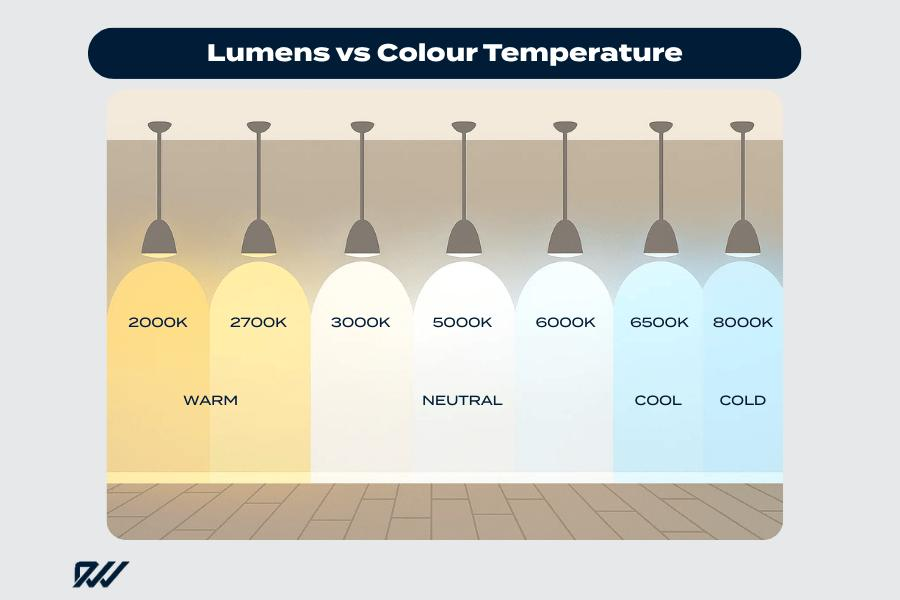
Most commercial lighting buyers I work with spend a lot of time comparing lumens, watts, and CCT (Correlated Color Temperature). They know what 4000K versus 3000K means. What they often don’t know is that “3000K” is a range, not a single value, and the gap between fixtures at opposite ends of that range is visible to the naked eye.
I learned this the hard way in 2019. We had a retail project in Munich — 400m² jewelry store, high-end finish, spec was clear: all track lights at 3000K, CRI 90+, consistent appearance. The fixtures came from a reputable European brand. When they arrived, we did a quick visual check, everything looked fine. Installation went smoothly. Then, on the night before the grand opening, the client called me in a panic. “The lights look different.” I drove to the site at 11pm. He was right. Under real conditions, about 15% of the fixtures had a noticeably different color temperature. Some looked almost 3500K, some looked closer to 2700K. The difference was unmistakable once you knew what to look for.
That job cost us €28,000 in replacement fixtures and a week of delays. Lesson learned.
What Binning Actually Is (And Why Your Datasheet Doesn’t Tell You the Full Story)
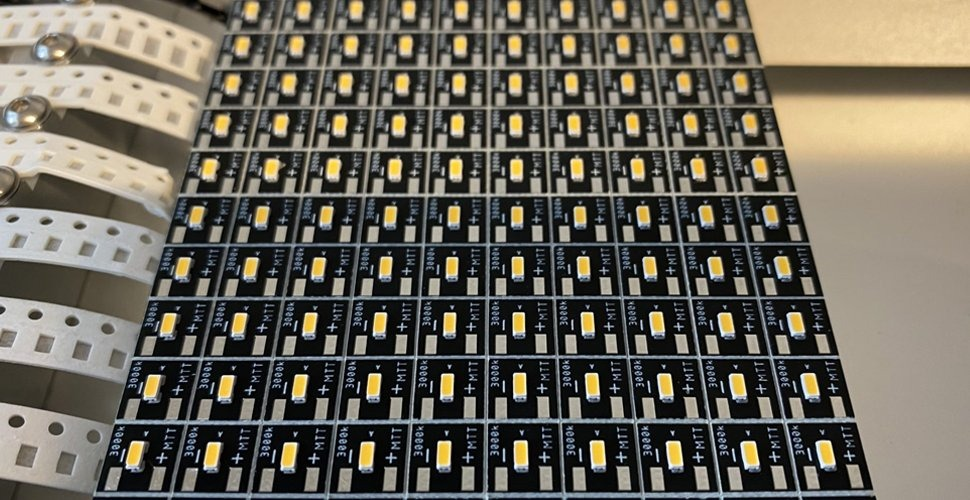
LED chips are manufactured in batches. Within any production run, chips will have slight variations in their color output. This happens because of microscopic differences in the semiconductor materials, the phosphorus coating, and the manufacturing process itself. No two chips are exactly identical.
To manage this variation, LED manufacturers test every chip after production and sort them into “bins” based on their actual color coordinates on the CIE 1931 chromaticity diagram. This process is called binning. The result is that every LED chip gets assigned to a bin — and that bin determines its precise color.
Here’s where it gets complicated for buyers. When you order “3000K LED downlights,” you’re not getting chips from a single bin. You’re getting chips from multiple bins that all fall within the defined range for 3000K. Different manufacturers use different binning strategies. Some are very strict and only use the center bins. Others are more relaxed and use a wider spread.
The MacAdam ellipse is the standard tool for measuring color difference. One MacAdam ellipse (1-step) represents a color difference that’s just perceptible to the human eye under controlled conditions. Most people can detect a difference of 3-4 steps. Here’s what the actual standards look like:
- 3-step MacAdam ellipse: Visually indistinguishable for most people
- 4-step: Noticeable to trained eye, acceptable for many applications
- 5-step: Visible difference in side-by-side comparison
- 7-step: Obvious mismatch, unacceptable for commercial projects
European standards EN 12464-1 and the related photometric guidelines effectively require 4-step or better matching for installations where fixtures will be visible together. Yet many datasheets don’t specify the binning quality at all.
The SDCM Number That Actually Matters
SDCM stands for Standard Deviation of Color Matching. It’s essentially another way of expressing MacAdam ellipses — 1 SDCM equals 1 MacAdam step. When you see “SDCM < 3” on a datasheet, it means the color variation should be imperceptible to most observers.
In practice, here’s what different SDCM values mean for your project:
SDCM ≤ 3: This is the quality level you should be specifying for any commercial installation where fixtures will be in the same space. At this level, the human eye cannot detect differences under normal viewing conditions. This is what we use for our premium projects.
SDCM 4-5: Acceptable for many applications. You might see slight differences in direct comparison, but under normal conditions, the color looks consistent. Budget projects often land here.
SDCM > 5: Visible differences. If you have 10 fixtures in a row and they’re from different batches, you’ll probably see the variation. This is common with cheap imports or when buyers don’t specify binning requirements.
I tell every client: if you’re spending serious money on a commercial fit-out, specify “SDCM ≤ 3” or “within 3-step MacAdam ellipse” on your purchase orders. It costs maybe 5-8% more on the fixture price. It saves you from costly rework.
Why LED Batching Is a Separate Problem from Binning
Even if you get fixtures with perfect binning, you have another problem: manufacturing batch variation. The LED chips in fixtures manufactured in January might be from a different production lot than chips in fixtures manufactured in April. If those production lots came from different wafer runs, you can have color differences even within the same model number.
This is why experienced buyers request fixtures from a single manufacturing batch when possible. If you’re ordering 200 track lights, ask the supplier to check that they come from the same production date. Many suppliers will do this at no extra charge if you ask. Some won’t even know to ask unless you raise it.
I’ve seen projects where the first 50 fixtures installed looked perfect, but fixtures 51-100 had a visible shift. The reason: the fixtures came from two different production batches. The manufacturer had run out of the original chip lot and substituted from a different lot that was within spec but visually different.
The practical rule: Always get written confirmation that fixtures come from a single production batch. If you’re ordering in stages over months, expect variation. Consider ordering all fixtures at once.
Real Numbers: What This Costs in the Field
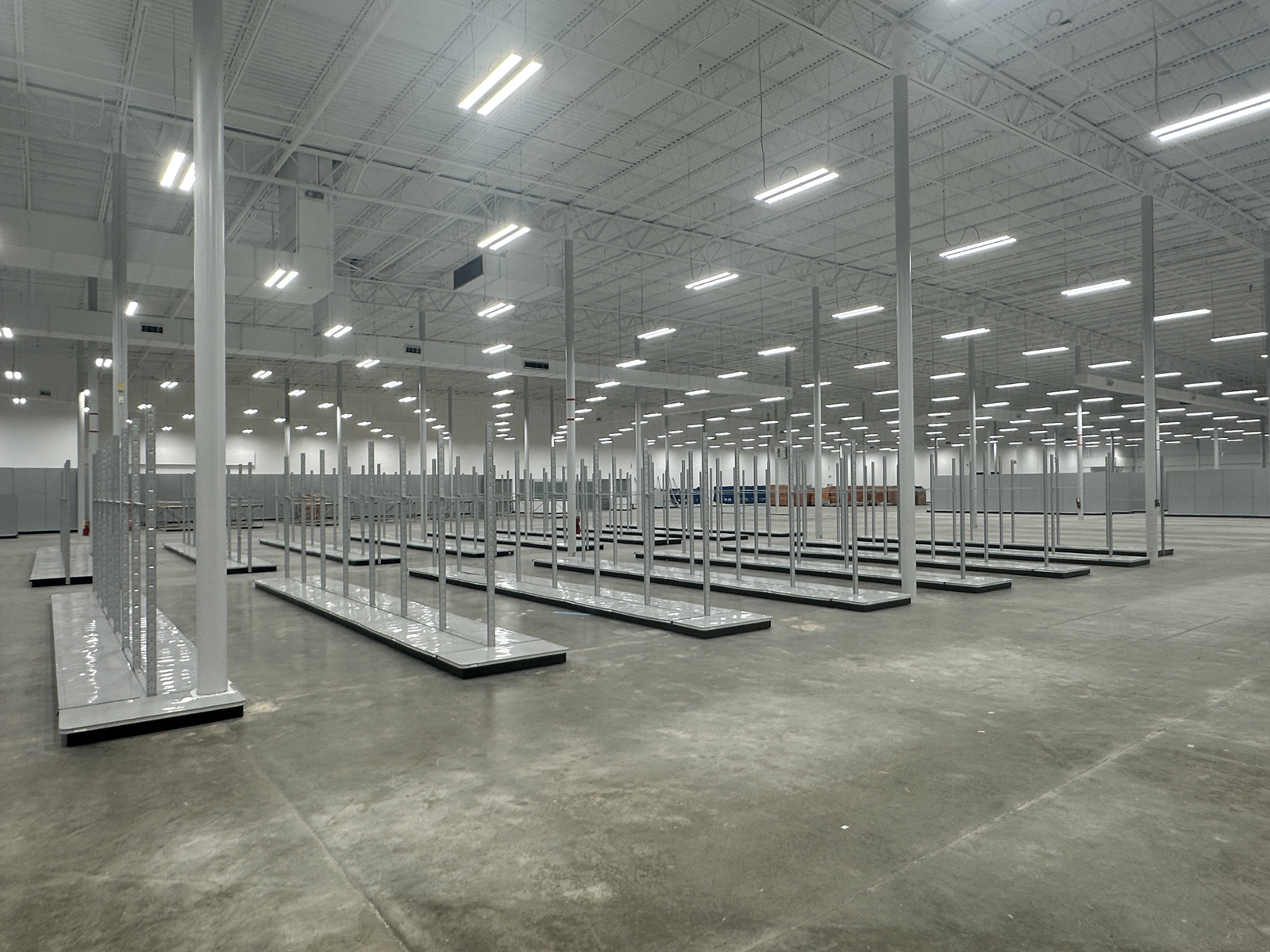
Let me give you a concrete example from a recent industrial project. A 2,400m² logistics warehouse in Rotterdam. The original lighting spec called for 150W high-bay LEDs at 4000K. The contractor sourced fixtures from a budget Chinese supplier at €85 per unit. Total bill for 120 fixtures: €10,200.
Six months after installation, the facility manager called. Several high-bay fixtures had visible color differences. In a warehouse with 15-meter ceiling heights and exposed industrial aesthetic, this wasn’t acceptable for the client. They wanted consistency.
The fix: we had to replace 34 fixtures (about 28% of the total) to get visual consistency. Replacement fixtures from the same supplier batch: €2,890. Installation labor: €1,800. Downtime and coordination costs: roughly €1,200. Total additional cost: €5,890.
The original savings of €5 per fixture had become a €49 per fixture problem.
Had the client specified SDCM ≤ 3 and requested single-batch manufacturing, the original order would have cost maybe €95 per unit. Total cost with premium specification: €11,400. Versus the actual final cost of €16,090. Premium specification would have saved €4,690 on a €10,200 order.
This math works out the same way in almost every project I’ve seen. The cheap fixtures aren’t cheap when you factor in the rework probability.
What to Actually Ask Your Supplier
Most buyers don’t know what questions to ask about color consistency. Here’s what should be on your RFQ:
First, ask about the binning standard: “What is the SDCM rating of your 3000K/4000K products?” If the supplier can’t answer this quickly, that’s a red flag.
Second, ask for the chromaticity coordinates: “Please provide the center point (Cx, Cy) and tolerance range for your CCT products.” A quality supplier will provide this data. A commodity supplier won’t have it.
Third, ask about batch control: “Can you guarantee shipment from a single production batch? What is your lead time policy for large orders?”
Fourth, request a sample comparison: Order 3 fixtures from the batch you’re considering and compare them under controlled conditions. Any competent supplier will provide samples.
Fifth, get it in writing: Put the SDCM requirement and batch guarantee in your purchase order. This gives you grounds for claims if the delivered product doesn’t match.
I should be honest here: many Chinese manufacturers will agree to whatever you ask for in an email. The question is whether their production actually delivers on those promises. This is why sample verification matters. The datasheet says SDCM < 3. Does the actual fixture meet it? Check before you commit to a large order.
The Geographic Dimension: Why Country of Origin Matters Less Than You’d Think
You might assume that buying from a German manufacturer guarantees better color consistency than buying from a Chinese factory. The reality is more nuanced. Major Chinese manufacturers like MLS (Lightstage), Nationstar, and Honglitronic have invested heavily in binning technology. Their premium product lines match or exceed the consistency of European competitors at the same tier.
What matters is the tier, not the country. A budget fixture from a German brand is still a budget fixture. The binning quality comes from the manufacturing process and quality control, not from the factory’s GPS coordinates.
That said, European manufacturers tend to be more conservative in their binning — they’re less likely to ship products that are at the edge of the spec. Chinese manufacturers at the same quality tier might push closer to the boundaries. If you’re risk-averse, European supply chains offer a margin of safety. If you’re price-sensitive and willing to verify samples carefully, Chinese premium tiers offer excellent value.
My Take: Stop Tolerating Color Drift
After 15 years in this industry, I still see color consistency treated as an afterthought by too many buyers. It shows up as a problem after installation, not during specification. By then, the cost of fixing it is 5-10x what it would have cost to specify correctly upfront.
Here’s what I’d tell every commercial lighting buyer: treat color consistency as a primary specification, not a secondary concern. The CCT number on the datasheet is just a starting point. The SDCM rating, the binning strategy, and the batch control process are what actually determine whether your installation will look consistent.
If you’re working with a supplier who can’t answer your questions about binning, find a different supplier. The extra effort of verification upfront is always cheaper than the rework later.
Your project’s visual consistency is worth more than the 5% you might save on fixture cost. Make sure everyone in the supply chain knows that you mean it.
Need help specifying commercial LED fixtures with proper color consistency requirements?
Contact YoubeeLight for project consultation on commercial lighting specifications, or browse our LED catalog for verified SDCM-rated products.
