
Commercial Lighting Project Management: Why Most Buyers End Up Paying Twice
Most commercial lighting projects don’t fail in the showroom. They fail after you’ve already signed off.
I’ve watched it happen too many times over 15 years: a buyer specs out a perfect lighting system, gets competitive quotes from three suppliers, signs the PO, and then six months later is dealing with voltage mismatches on site, fixtures that don’t fit the mounting brackets, or control systems that refuse to talk to each other. The project limps across the finish line, but the “savings” from shopping around are eaten up by change orders and delays.
The problem isn’t finding a good supplier. The problem is that nobody actually walks buyers through what a real commercial lighting project looks like from brief to handover. This article does exactly that.
The Brief That Determines Everything
Here’s the uncomfortable truth: most lighting specs I see in 2026 are still written backwards. Buyers start with “we need 200 fixtures” and then try to justify why. They should start with what the space needs to do.
A proper brief answers three questions before you ever touch a fixture catalog:
What’s the actual task? A warehouse aisle isn’t “general lighting.” It’s 150 lux minimum on the floor, uniformity better than 0.4, and enough vertical illumination to read box labels at 4 meters. An office open plan isn’t “LED panels.” It’s 300-500 lux at desk height, UGR below 19 for VDT work, tunable white capability for circadian support, and zonal control for meeting rooms versus focus areas.
What’s the operational reality? I’ve seen beautiful spec sheets for cold storage lighting that assumed the fixtures would operate at room temperature. In reality, those -20°C freezers create condensation during door cycles, and standard drivers fail within months. The spec looked great on paper and cost the buyer €40,000 in emergency replacements.
Who’s maintaining this in year three? This is the question almost nobody asks upfront. When I ask facility managers what they wish they’d known before their last lighting project, the answer is almost always about maintenance. Can the in-house electrician swap a driver without calling the original installer? Are replacement LEDs available in the same bin voltage as the original order? Is the controls programming documented and transferable?
Write the brief before you write the spec. Everything else is just filling in the blanks.
Site Assessment: The Step That Saves Real Money
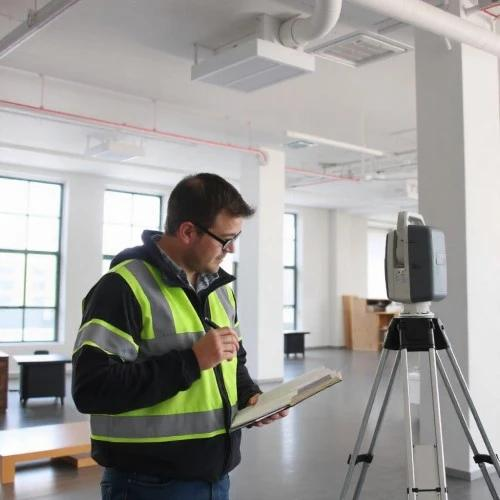
I worked on a project in Rotterdam two years ago where the buyer was spec’ing high-bay fixtures for a 12-meter warehouse. Everything looked fine in AutoCAD. What nobody caught until installation was that the building had a series of structural beams at exactly 11.5 meters that blocked mounting positions for the originally specced fixtures. They ended up with 40 fixtures in the wrong locations, 3 meters off from where the lighting design said they’d be.
This happens constantly. The fix is embarrassingly simple: do a physical site walk before finalizing the spec.
A proper site assessment covers:
- Ceiling height verification: Measure at multiple points. Old buildings especially have sag, settled slabs, and variations that AutoCAD doesn’t capture.
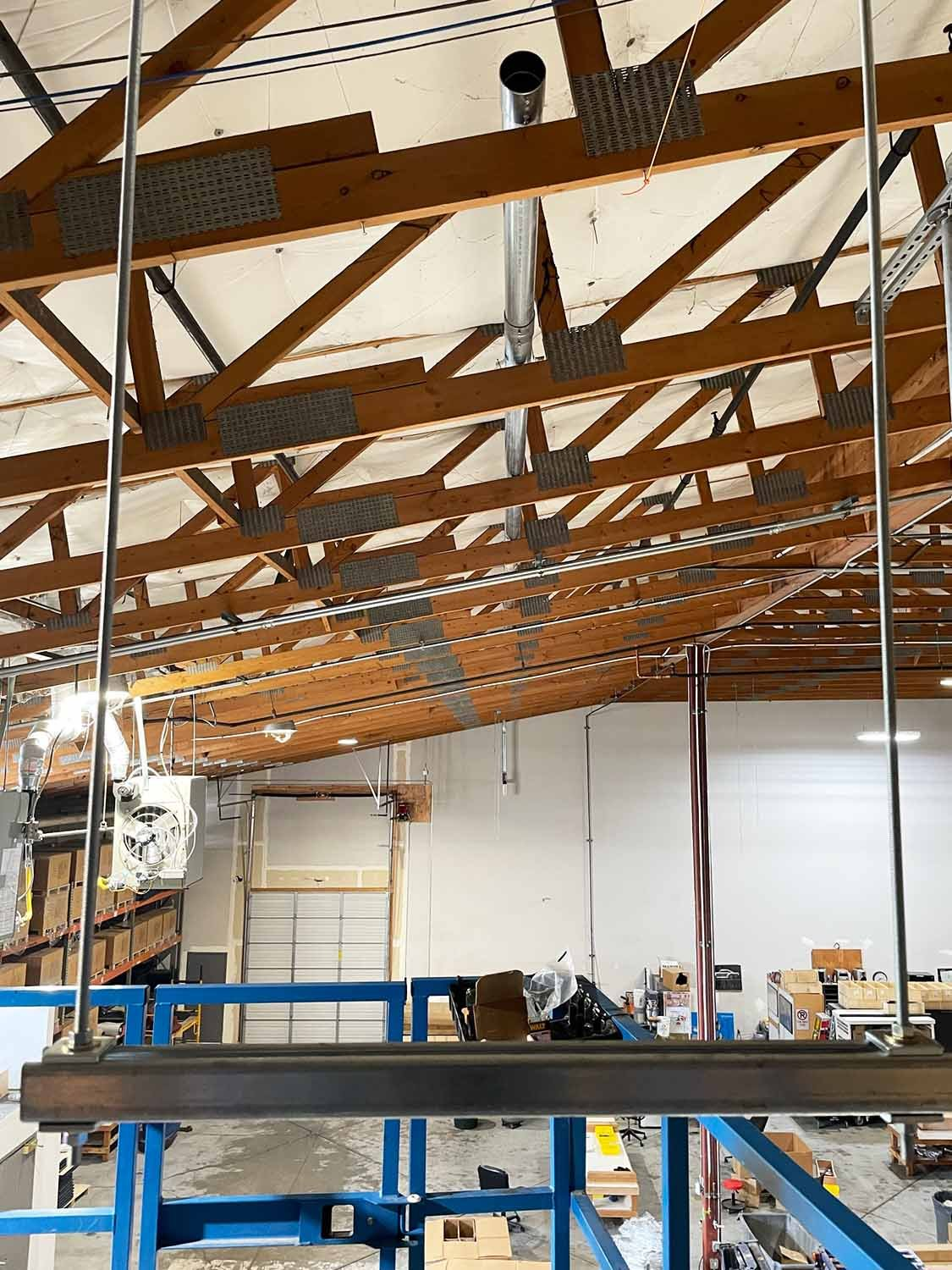
- Obstruction mapping: HVAC ducts, sprinkler pipes, structural beams, cable trays. Everything that competes for the same ceiling space.
- Power infrastructure: Where are the existing circuit termination points? What’s available capacity? I’ve seen projects where the controls spec required a new BACnet gateway, but nobody checked whether the building had an IP network drop in the electrical room.
- Existing fixture conditions: If you’re retrofitting, the existing fixture locations and mounting conditions dictate what’s practical. A new fixture with a different mounting pattern means ceiling modifications.
- Access constraints: Will the maintenance team be able to reach fixtures for relamping? This sounds obvious, but I’ve watched projects spec expensive fixtures in parking garages that require scaffolding for every driver change.
The site walk typically adds one day to the project timeline. Change orders from discovered problems typically add three weeks and 15-20% to the budget. Do the math.
The Submittal Stage: Where Projects Actually Get Won or Lost
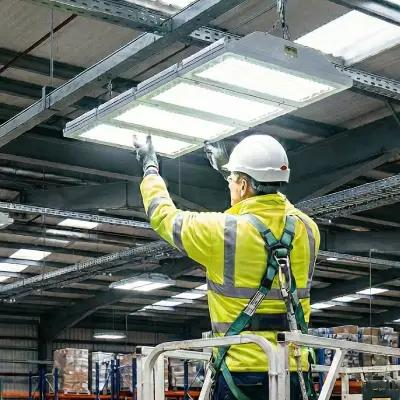
In commercial lighting, the submittal is where most buyers check out. They get the PDF, glance at the fixture photos, and approve. This is exactly backwards.
A submittal review is your last chance to catch problems before they become site problems. Here’s what I actually check:
Photometric files: Does the .IES file match the physical fixture you’re ordering? I’ve seen suppliers submit fixtures with generic photometric files that don’t reflect the actual optic configuration. Run the file in AGi32 or Dialux before approving.
Driver specifications: This is where LED systems hide their true cost. A fixture with a “reputable” driver brand at 0.95 power factor costs more to run than a properly-specified 0.99 PF driver. Over a 10-year project lifecycle, the difference in electricity cost typically exceeds the fixture price difference.
Control compatibility: If you’re specifying DALI, the fixture driver needs to be DALI-compatible, not just “DALI-ready” (which often means it has the hardware but firmware limitations). Ask for DALI device type declaration. If the supplier can’t provide it, walk away.
Binning consistency: This is the one that kills retail projects. A 4000K fixture from batch A and batch B can look completely different if the supplier isn’t binning to ANSI C78.377 standards. For retail or hospitality, request color bin verification on every order. Yes, it’s extra cost. But it’s cheaper than a callback.
Installation: The Hand-Off Nobody Manages
Here’s where most commercial lighting projects fall apart: the installation phase.
The typical scenario: the electrical contractor gets the approved submittals, installs to the lighting plan, and everything looks fine on the walk-through. Six months later, the end user is calling about dead fixtures, flickering controls, and zones that won’t respond to the occupancy sensors.
Why does this happen? Because nobody actually verifies that what’s on the plan is what’s in the ceiling.
I now recommend a three-stage inspection protocol for any project over 50 fixtures:
Stage 1: Rough-in inspection – Before ceilings go up, verify:
– Junction box locations match the lighting plan
– Control wiring is pulled to the right zones
– Voltage at each point matches fixture requirements
– Dimming/control wiring is separated from power wiring (for 0-10V and DALI, this matters more than most contractors realize)
Stage 2: Fixture installation verification – Before final commissioning:
– Every fixture matches the approved submittal (same model, same driver, same optic)
– Fixture orientation matches the lighting plan (a 30° tilt changes everything)
– Addressing is complete for DALI systems (yes, every fixture needs an address, and no, they don’t always get it right the first time)
– Control programming has been loaded and tested
Stage 3: Final lux verification – After installation:
– Take actual lux readings at task height
– Compare to the original lighting design targets
– Document any deviations before project sign-off
I’ve watched this protocol add €8,000 to a project’s inspection budget. I’ve also watched it prevent €120,000 in post-installation callbacks.
The Handover That Nobody Does Right
Here’s the thing about commercial lighting in 2026: it never stays exactly as you specified it.
Fixtures get swapped by maintenance crews. Controls get reprogrammed by facilities managers who didn’t read the original commissioning report. Additions get made by electricians who couldn’t match the original bin.
The handover package should include:
As-built documentation: Not just the lighting plan, but what was actually installed. If a fixture was substituted, that substitution should be documented with the reason why and the specification comparison.
Controls programming backup: For DALI, Casambi, or any programmable system, the commissioning file should be backed up and transferred to the facility management team. I’ve seen beautiful tunable white systems sitting in 4000K fixed mode because nobody saved the programming and the contractor who originally set it up is now in Dubai.
Maintenance schedules: What are the recommended relamping intervals? When should drivers be proactively replaced? What’s the expected lumen maintenance curve for the installed fixtures?
Contact matrix: Who do you call when the DALI gateway fails? Who can swap a driver if the original supplier has gone out of business? What’s the alternative part number if the original is discontinued?
Without this package, you’re not handing over a lighting system. You’re handing over a liability.
What This Actually Costs
Here’s the number that should be in every buyer’s spreadsheet: the total cost of a commercial lighting project over 10 years breaks down roughly as:
- 30% upfront equipment cost
- 20% installation and commissioning
- 50% operating and maintenance costs
Most buyers optimize for the 30%. The real money is in the 50%.
I’ve seen projects where buying a slightly more expensive fixture with a longer warranty and better driver thermal management added €2 per fixture to the upfront cost. Over a 500-fixture project, that’s €1,000. Over 10 years, the reduced maintenance calls, shorter maintenance windows, and better lumen maintenance typically saves €15,000-20,000 in operational costs.
The math changes when you actually do the math.
The Practical Takeaway
If you’re buying commercial lighting for a project this year, here’s what I want you to take away:
Write the brief first. What does the space need to do? Who maintains it? What can go wrong? Answer these questions before you open a single fixture catalog.
Walk the site before you finalize the spec. One day now saves three weeks later.
Read the submittal like your project depends on it. Because it does.
Inspect during installation, not just after. Catching problems before the ceiling goes up is the only time you can actually fix them cheaply.
Demand a real handover package. If your supplier can’t provide as-built documentation, backup programming, and a maintenance schedule, they’re not selling you a lighting system. They’re selling you fixtures.
Commercial lighting projects don’t have to be disasters. But they require exactly the kind of attention that most buyers, under deadline pressure, try to skip. The buyers who get it right are the ones who figured out early that the spec sheet is just the beginning of the project, not the end.
About YoubeeLight: We supply commercial LED lighting systems to distributors, contractors, and project buyers across Europe and North America. Every fixture in our LED catalog is backed by full photometric documentation, DALI compatibility verification, and a 5-year warranty. If you’re planning a commercial project and want a supplier who actually reads the submittals, contact us before you finalize your spec.
