Restaurant and food service lighting isn’t about ambiance—that’s the marketing pitch. It’s about three things: task performance in prep zones, perceived food quality under mixed light sources, and maintenance survival in harsh environments. Get those wrong and you’re not just wasting money on fixtures that fail prematurely—you’re actively hurting your customer experience.
I’ve sourced lighting for dozens of commercial food service operations across North America. The mistakes I see repeatedly come down to misunderstanding how commercial kitchens and dining areas actually function, not a lack of options.
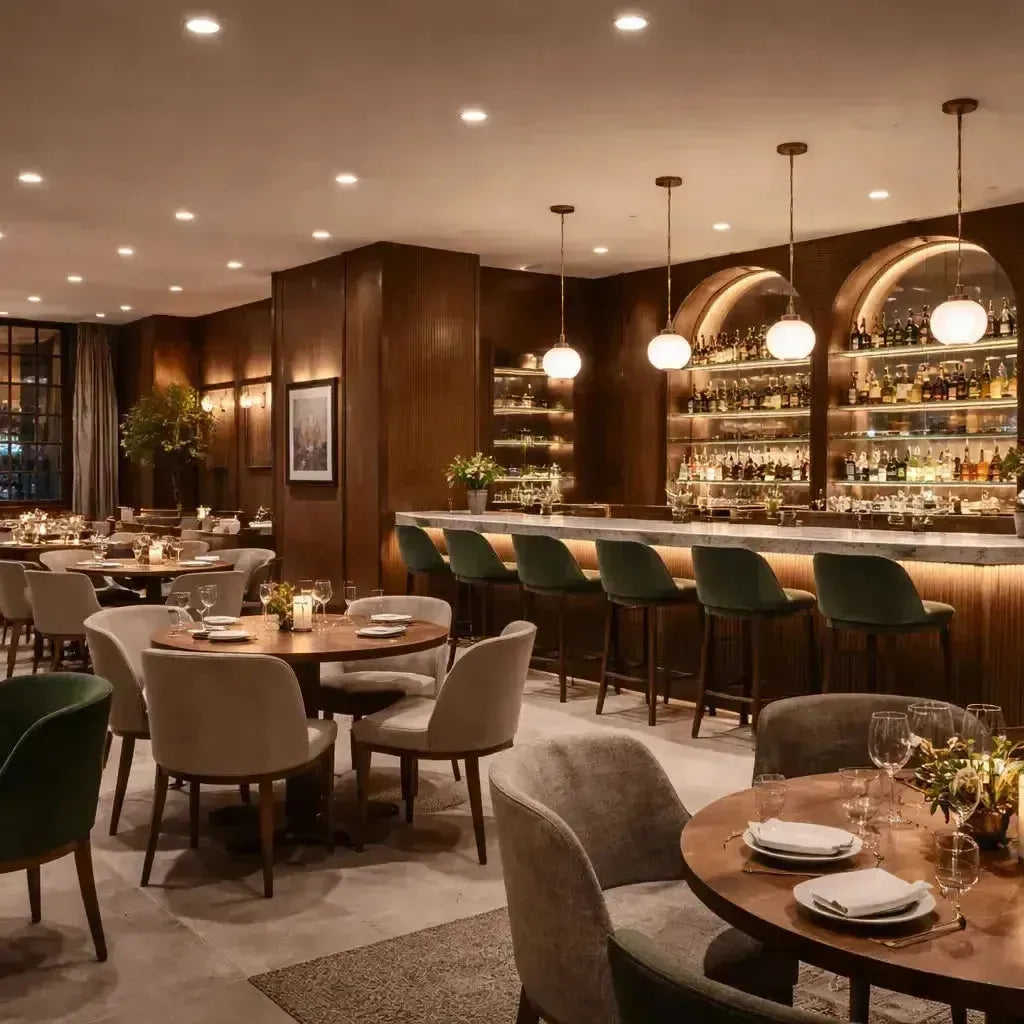
Fine dining restaurant interior with warm pendant lighting creating intimate atmosphere
The Prep Zone Problem Nobody Talks About
Walk into any commercial kitchen during service and you’ll find inspectors cranking up ambient lighting because staff can’t see what they’re doing. That’s a failure point you caused at the specification stage.
Food prep zones require minimum 100 foot-candles at the work surface—some health codes specify higher. But here’s where buyers get sloppy: they spec 4000K linear fixtures and call it done. What they don’t account for is shadow patterns from overhead equipment, hoods, and shelving.
Linear fixtures mounted perpendicular to prep counters create shadow valleys where bacteria could theoretically hide (not your lighting problem, but your food safety auditor’s concern) and where staff genuinely can’t see product details. The fix isn’t higher wattage—it’s fixture orientation and supplemental under-shelf lighting that most consultants never spec because it’s not a “sexy” lighting solution.
Track lighting over island prep stations solves the shadow problem elegantly. You can aim fixtures to eliminate shadow valleys while maintaining clean sight lines for service staff moving between stations. The maintenance downside: track heads in kitchens collect grease. Plan for quarterly cleaning or spec enclosed track systems with gasketed fixtures rated for the environment.
YoubeeLight’s commercial track systems handle kitchen grease environments with IP54-rated heads. The sealed design reduces maintenance calls significantly compared to open track configurations.
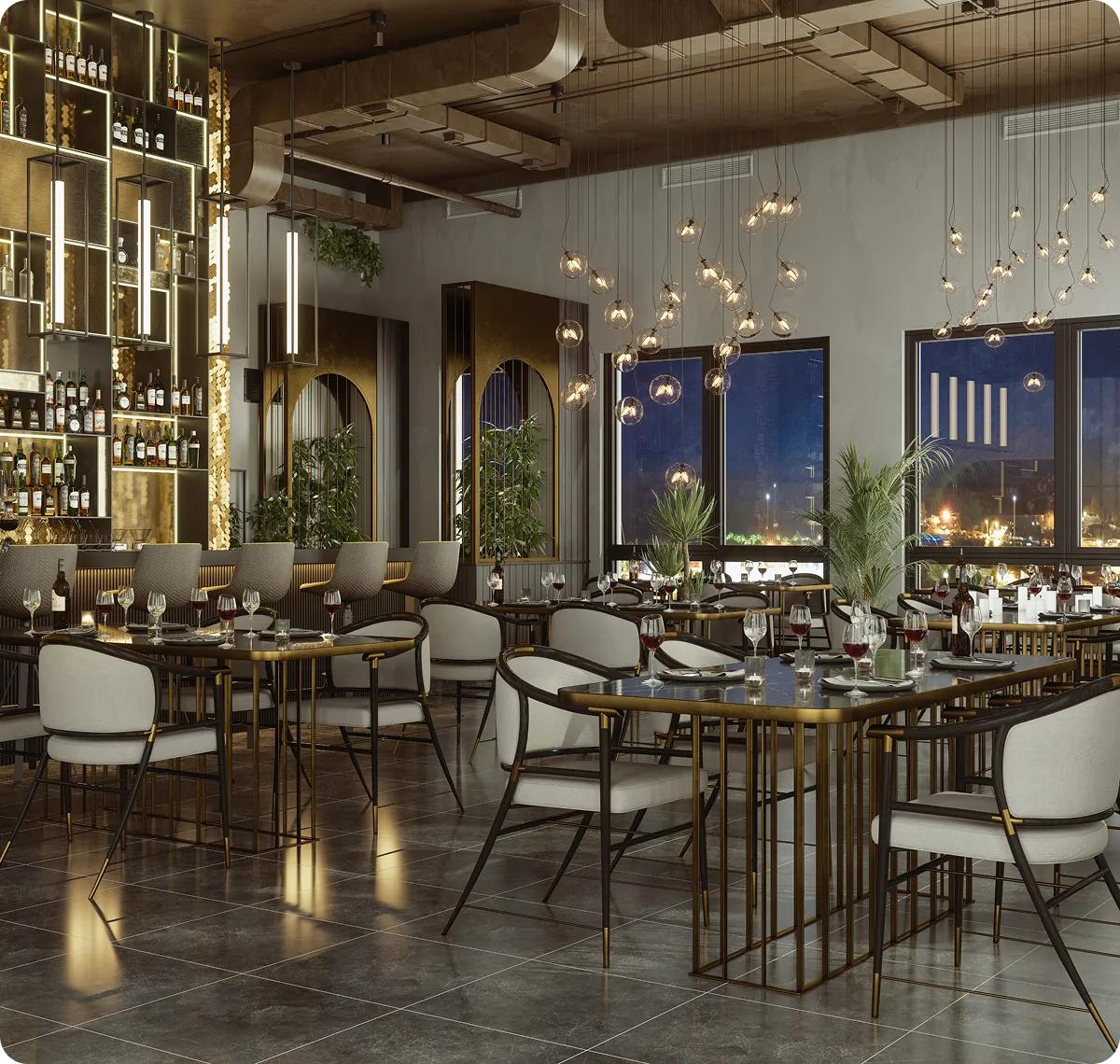
Modern restaurant with industrial pendant fixtures over dining tables
Color Temperature Is Doing More Work Than You Think
Walk through a grocery store and notice how the meat case looks different under different light sources. That’s not accident—that’s deliberate photobiology at work. The same principles apply in restaurants, just with different objectives.
Here’s what most buyers miss: your dining room lighting color temperature affects how customers perceive food quality before they take a bite. Research on food presentation consistently shows warm color temperatures (2700K-3000K) make proteins look more appealing while cooler temperatures (4000K-5000K) make vegetables look fresher.
This isn’t aesthetic opinion—it’s visual neuroscience. Your brain processes warm light reflected off red and brown tones as “cooked” and “safe.” Cool light processing makes green vegetables look vibrant rather than wilted.
For fine dining, this means your front-of-house lighting temperature is a menu engineering decision as much as a design decision. A steakhouse with 3500K overhead lighting is actively working against their food presentation.
Fast casual operations face a different challenge: high ambient light levels (for staff efficiency and perceived cleanliness) combined with warm dining areas (for customer comfort). Most operators solve this with 4000K throughout and accept the trade-off. But dedicated task lighting at 2700K in customer-facing areas while maintaining 4000K in service corridors and prep zones solves both problems without the visual confusion.
The Maintenance Reality Nobody Specifies
Commercial food service environments are hostile to lighting equipment. Grease vapor, thermal cycling from refrigeration access doors, high-pressure washdowns in some segments, and 16+ hour daily operation means your fixtures are working harder than almost any other application.
Spec failure mode, not initial performance. Here’s what that means practically:
LED fixtures with no thermal management beyond basic heat sinking will fail in walk-in cooler proximity zones within 18-24 months. The thermal cycling from -10°F (cooler) to 90°F (kitchen) creates condensation inside unsealed fixtures even with IP ratings. Every thermal cycle drives moisture deeper into electrical components.
The practical spec: fixtures within 6 feet of cooler doors need IP66 minimum with built-in condensation management (breather valves that equalize pressure without allowing moisture ingress). Most standard IP65 fixtures will fail this application prematurely.
Linear pendant fixtures over dining tables look elegant but create maintenance nightmares. Restaurant ceiling heights typically run 9-10 feet. Pendant fixtures at that height require scissor lifts for maintenance—a significant operational cost most lighting specs never acknowledge. Recessed fixtures or surface-mounted fixtures with tool-free access reduce long-term maintenance costs dramatically.
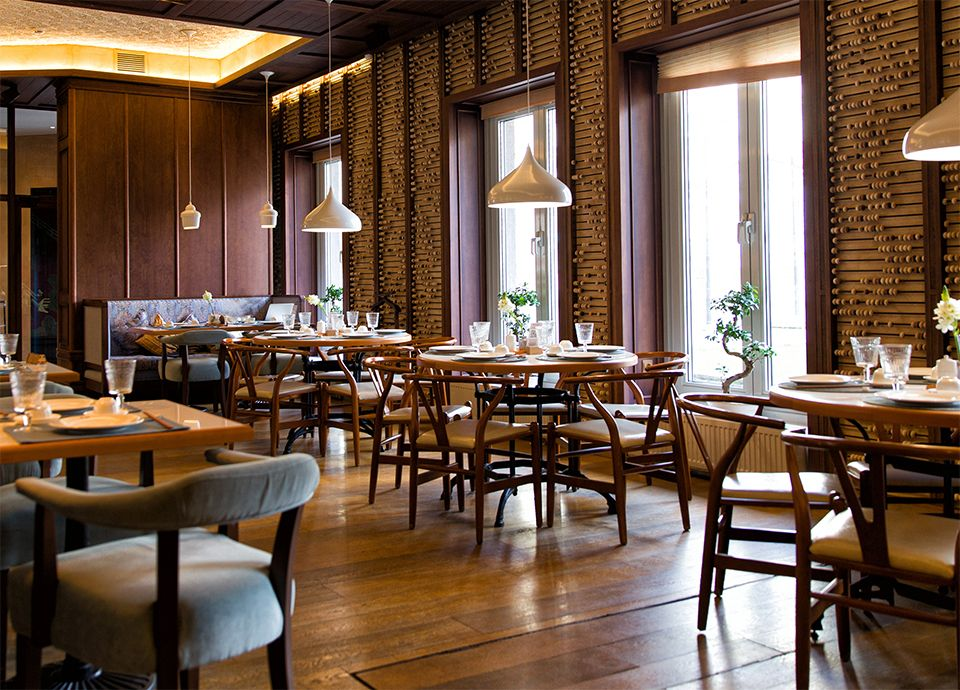
Contemporary restaurant dining area with wooden ceiling and pendant lights
The Electrical Reality
Food service operations run heavy loads. Walk-in coolers, high-volume exhaust systems, cooking equipment, and dishwashing machinery create harmonic distortion on electrical systems that LED drivers don’t handle well.
Standard LED drivers are sensitive to total harmonic distortion (THD) above 20%. Commercial kitchens with variable-speed equipment often push THD to 30% or higher during service peaks. That causes LED flicker—sometimes subtle enough that customers don’t consciously notice but still contributing to perceived quality degradation.
The spec that avoids this: drivers rated for high-THD environments (THD < 10% at full load). This isn't expensive—just specify it explicitly. Generic "LED compatible" drivers will fail this parameter.
YoubeeLight’s commercial fixture lines use drivers rated for THD < 15%, which handles most commercial kitchen electrical environments without issue. Worth verifying with your electrical contractor on older buildings with legacy wiring.
Sourcing Takeaway
Food service lighting procurement starts with maintenance access planning, not aesthetic choices. Calculate total cost of ownership including lift equipment rental for fixture access. Then work backward to appropriate IP ratings and thermal specifications.
Color temperature is a food quality variable, not just a design choice. Match temperatures to food categories you’re presenting.
And for any fixture within splash range of cooking or cleaning operations: specify IP66 minimum, thermal management for condensation cycling, and verify driver THD ratings against your actual electrical environment. Generic LED fixtures won’t survive commercial kitchen realities.