

Direct answer: Under Regulation (EU) 2019/2015, a luminaire supplied with a light source that can be removed for verification is a containing product. It does not carry an energy label and does not need its own EPREL entry — but the light source inside it must be registered in EPREL before that luminaire can legally be placed on the EU market. If the light source cannot be removed without permanent damage, the entire product is treated as a light source instead, and the full labelling and registration duties apply to the whole fixture.
That single distinction decides your packaging, your instruction manual, your advertising artwork and your supplier contracts. Most of the non-compliance we see in the commercial lighting supply chain does not come from ignorance of EPREL. It comes from applying the light source rules to the wrong product.
Light source or containing product: the question that decides everything
The 2019 rules deliberately stopped talking about lamps, LED modules and luminaires. They split the market into two concepts, and every obligation hangs off which one you are holding.
| Concept | Definition in practice | Energy label | EPREL |
|---|---|---|---|
| Light source | An electrically operated product that emits light — a lamp, a replaceable LED module, a light engine sold as a part | Required, printed on the packaging, A to G with QR code | The model must be fully registered before it is placed on the market |
| Containing product | A product containing one or more light sources or separate control gears, including luminaires that can be taken apart to verify the contained light source and its driver | No label. Printing one on a luminaire is misleading, not conservative | The luminaire itself is not registered; the light source inside it must already be registered |
| Sealed integrated fixture | The light source or driver cannot be removed without permanent damage, so separate verification is impossible | Required for the whole product | The whole product is registered as a light source |
The definition of a containing product is not our summary — it sits in Article 2 of 2019/2015 and was tightened by Regulation (EU) 2021/340 to spell out the assumption that the product can be taken apart for verification. Market surveillance authorities can ask a supplier to show how a light source is removed without permanent damage. If the answer is a destructive process, the exemption collapses and the fixture becomes a light source.
The removal test, applied to real products
- Panel light with a screwed-in LED module and a plug-in driver — a containing product. No label on the panel, but the module model must be in EPREL.
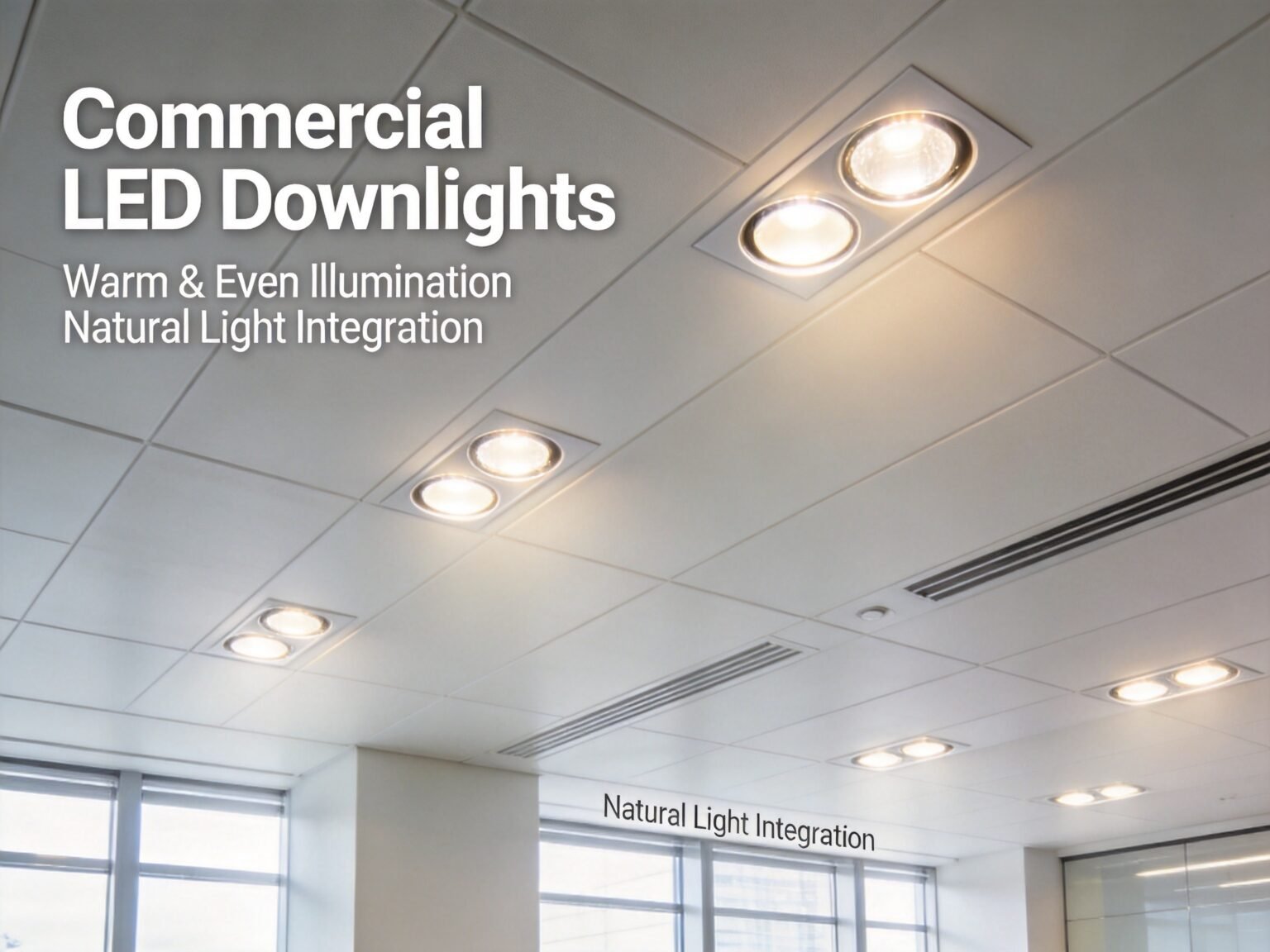
- Recessed downlight with a spring-clip light engine and an accessible driver — normally a containing product, provided a technician can free the engine without cutting the housing.
- Sealed vapour-tight linear fitting with a potted driver and a glued diffuser — verify this carefully. If nothing can be freed without damage, the fitting is a light source and needs its own label and entry.
- Track heads and spotlights sold without a lamp — a luminaire with no light source and no control gear. Outside the obligation entirely.
Why an energy label on a luminaire is worse than no label
When an online marketplace or a tender document demands an energy label for a luminaire, the fastest way to clear the checklist is to invent one. Industry guidance from LightingEurope has had to state plainly that displaying a luminaire energy label is misleading and illegal — the energy label exists for light sources, and a containing product does not have one.
The practical damage is worse than a paperwork error. If the fixture itself carries a class, then the supplier has implicitly classified a whole product as a light source, which triggers the full set of ecodesign requirements that apply to light sources — displacement factor, flicker and stroboscopic behaviour, lifetime and lumen maintenance, colour rendering and the rest. You do not get to claim the exemption and the label at the same time.
The correct answer to a marketplace form that insists on an energy class for a luminaire is the energy class of the contained light source, communicated in the way the regulation actually requires.
The sentence your instruction manual must contain
Where a light source is placed on the market inside a containing product, the supplier must make the connection visible. Two things have to happen:
- The technical documentation for the containing product must clearly identify the contained light source, including its energy efficiency class.
- The user manual or instruction booklet must display, clearly legible, the sentence: This product contains a light source of energy efficiency class X — with the class substituted. Where a product contains several light sources with different classes, the sentence can be repeated or written in the plural as appropriate.
Since 1 March 2022 this is a routine audit point for luminaires placed on the EU market. It is also one of the cheapest things to fix, and one of the most common findings — because instruction manuals are usually written once, three years ago, and never touched again when the light engine changes.
Distributors have their own side of the same duty. Energy class information has to appear in visual advertising and technical promotional material, including websites and catalogues, using the arrow illustration. A quotation PDF with a fixture photo and no energy class is not compliant marketing material.
Who is legally responsible for the EPREL entry
The word the regulation uses is supplier, and it covers three different businesses. Every dispute about a missing registration comes down to which of them dropped the ball.
| Role | Practical obligation |
|---|---|
| Manufacturer | Owns the test data, the product information sheet and the registration. If the factory is outside the EU, this role alone does not discharge the obligation. |
| Importer | Becomes the supplier for that product the moment it enters the EU. Must ensure the model is registered, the label is correct and the documentation exists before the goods are placed on the market. |
| Authorised representative | An EU-established party mandated in writing by a non-EU manufacturer to handle the registration and to hold the documentation for inspection. |
| Distributor or dealer | No registration duty, but responsible for displaying the label and product information sheet correctly, and for not publishing contradictory energy information. |
For a European buyer importing from China, the practical consequence is simple and uncomfortable: the registration is your problem, not your factory’s. The factory may own the test report, but if nobody has created the EPREL entry, the product cannot be legally placed on the market and the responsibility sits with the importer.

What actually goes into EPREL, and what stays hidden
EPREL is not one document dump. It has two parts, and the split matters when you are asked for evidence.
| Part | Content | Who can see it |
|---|---|---|
| Public part | The product information sheet parameters required by Annex V — rated power, luminous flux, efficacy, correlated colour temperature, colour rendering, beam angle, dimming behaviour, flicker metrics, lifetime and switching cycles, and the energy class derived from them | Anyone, via the public database and the QR code on the label |
| Conformity part | The technical documentation described in Annex VI, including the test evidence behind the declared values | Market surveillance authorities and the European Commission |
Two retention rules catch people out. The conformity documentation has to be available for fifteen years after the last unit of a model is placed on the market. The public part of the entry must never be deleted. Whoever created the entry in a hurry — a reseller, an agent, an authorised representative who has since disappeared — leaves a record that has to be maintained for the life of the product in the market.
A change that affects the label or the product information sheet creates a new model. Swapping the light engine for a different efficacy, or changing driver behaviour enough to move the declared values, is not an administrative update.
What to demand from a supplier in writing
Ask for these before the deposit, not before the shipment. Each one maps to an obligation that lands on the importer.
- A clear statement of whether the fixture is a containing product or a light source, and the mechanics that justify it
- The EPREL registration number of the contained light source, plus the model identifier used in that entry
- The product information sheet values for that light source, consistent with the test report
- Test evidence supporting the declared lifetime, flicker and colour metrics — not just a marketing datasheet
- An instruction manual that already contains the required sentence with the correct energy class, in the languages you sell in
- Arrow illustration artwork and the energy class statement for your catalogue, website and quotation templates
- A written commitment on how changes to the light engine or driver will be communicated, and who pays for re-registration
The last item is the one that ages badly without. A supplier that substitutes a driver to protect a margin has, without meaning to, invalidated a declaration and moved your model number.
Where importers actually get caught
Market surveillance in Europe is increasingly digital. Authorities query EPREL directly, cross-check the entry against product listings, and order test purchases when the declared values look implausible. The triggers we see repeatedly are an energy class that appears in a webshop for a luminaire, a product information sheet that does not exist, and a model reference that cannot be found in the database at all.
Exemptions are real but narrow, and they are the other place buyers create trouble for themselves. Emergency lighting, battery-operated products, medical devices and marine equipment, along with a list of specialist applications such as horticulture, aviation, railway and military uses, sit outside the mainstream labelling scope. Those exemptions belong to specific categories defined in Annex IV — they are not a general escape route for a fixture that happens to be awkward to test.
Frequently asked questions
Does an LED panel or downlight with an integrated light source need an energy label?
Usually not. If the light engine can be removed for verification without permanent damage, the fixture is a containing product, so it carries no label. The light engine module it contains does need to be registered in EPREL. Only where nothing can be freed without destroying the product does the whole fitting become a light source and take on the label.
Can our Chinese factory register in EPREL on our behalf?
A non-EU manufacturer can hold an EPREL account, but the obligation to ensure the product is properly registered still has to be anchored in the EU. In practice this is done through an authorised representative mandated in writing, or by the importer registering directly. Either way, define in the contract who maintains the data after the first shipment.
What happens if a model is not in EPREL when customs or a marketplace checks?
Expect the listing to be suspended and the shipment to be delayed while the entry is created. The commercial cost is usually far higher than the compliance cost — an unregistered model stops selling immediately, and retrofitting a registration number onto packaging and artwork after the fact is expensive.
Does changing the driver create a new model?
If the change moves any declared parameter on the label or the product information sheet, yes. This is why driver substitution decisions belong in the compliance discussion rather than the purchasing discussion. Fix it before it happens by naming approved alternatives in the supply agreement.
Do we need to re-register when we update a product that is already on the market?
Treat any change that affects the label or the information sheet as a new registration. Existing entries are not deleted or overwritten by habit — the public part must remain permanently available, and the conformity documentation has to be retained for fifteen years after the last unit is placed on the market.

This article is a procurement guide, not legal advice. Confirm requirements for your specific product and market with a qualified compliance provider.
