
Emergency Lighting Compliance: What Wholesale Buyers Need to Verify Before Placing Orders
The Compliance Gap That Costs Dealers Thousands
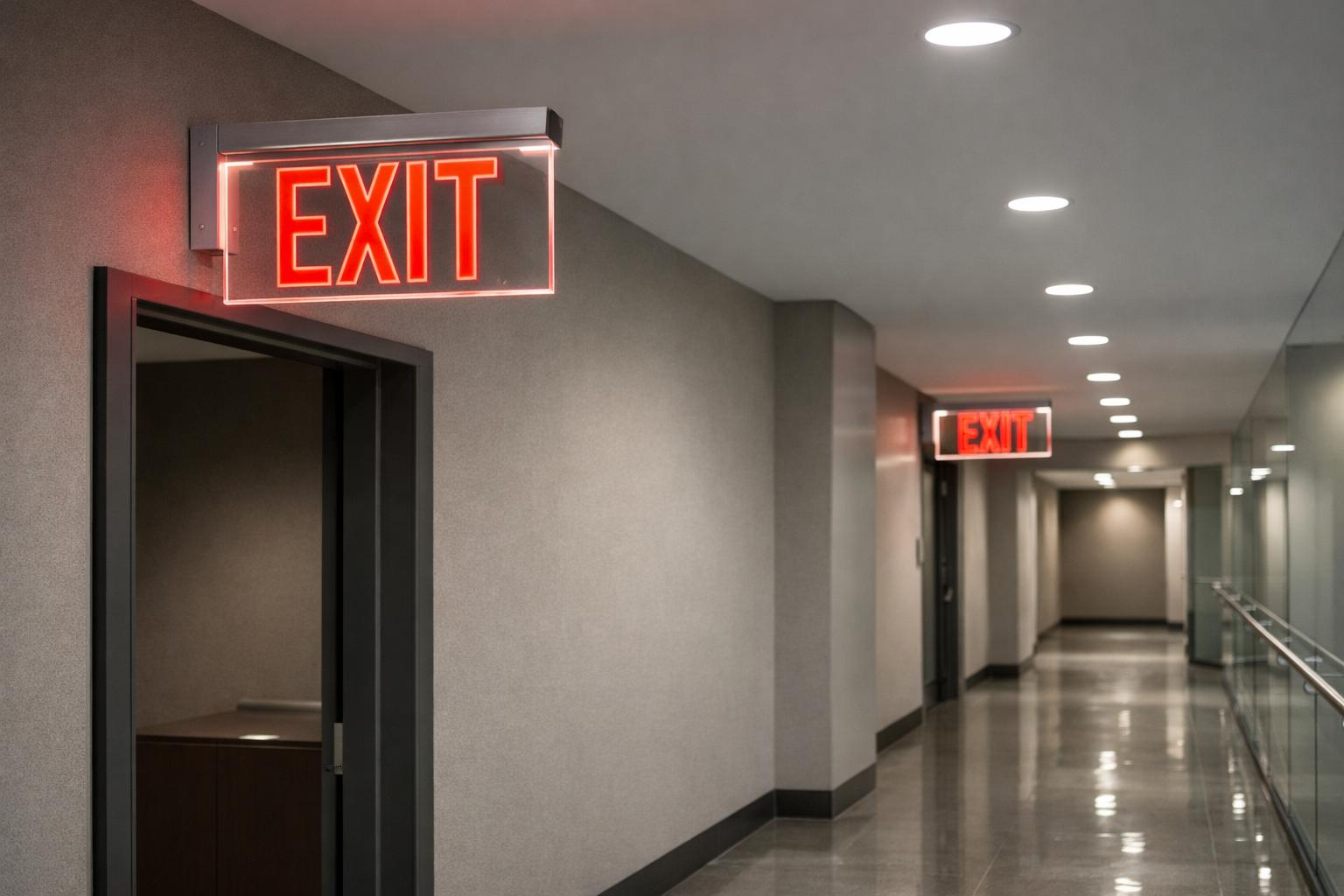
Here’s a pattern I see repeatedly when touring European and North American projects: beautiful lighting installations, but emergency fixtures that fail inspection because nobody bothered to verify the fine print.
Emergency lighting isn’t optional. And unlike standard luminaires where you can prioritize aesthetics, compliance here is non-negotiable. Get it wrong, and you’re looking at project delays, costly retrofits, or worse—liability claims.
This guide cuts through the regulation layers so you can source with confidence.
North American Standards: NEC and UL Requirements
The NEC Framework
The National Electrical Code (NFPA 70) mandates emergency lighting in virtually every commercial occupancy. Key requirements:
Duration: Minimum 90 minutes of illumination from battery-backed fixtures. Most quality units deliver 90-120 minutes; budget options sometimes barely meet this at room temperature.
Illumination levels: Not less than 1 foot-candle (10.76 lux) at floor level along egress paths. This isn’t a suggestion—inspectors measure it.
Mounting height: Fixtures must be ceiling or wall-mounted and positioned to illuminate the path “not less than 6 feet above the floor.”
Testing intervals: NEC requires monthly functional testing (30 seconds minimum) and annual 90-minute tests. Many modern fixtures include self-testing battery systems—verify this feature when ordering for large projects.
UL Certification: Non-Negotiable
All emergency luminaires sold in the US must carry UL listing (or equivalent like ETL/CSA). For OEM suppliers, confirm:
- UL 924 listed for emergency lighting equipment
- Battery packs certified separately if integrated design
- The specific model ordered matches the UL file number
I’ve seen containers held at customs because the fixtures used a “similar” LED driver to the UL-listed version—subtle differences matter.
European Standards: EN 1838 and Product Categories
The EN 1838 Framework
European emergency lighting falls under EN 1838:2013 (Lighting applications – Emergency lighting). Key specifications:
Minimum luminance: 1 lux on the centerline of the escape route, 0.5 lux at floor level (1 meter wide minimum path)
Duration: Minimum 1 hour for most applications; 3 hours increasingly specified for larger buildings
Color temperature: Typically 4000K-5000K for emergency luminaires (high visibility)
Product Standards to Know
- EN 60598-2-22: Specific product standard for emergency luminaires
- EN 62034: Automatic testing systems for emergency lighting
- BS 5266-1: UK implementation with additional British-specific requirements
For projects mixing North American and European specifications, you need separate product families—voltage, battery chemistry, and testing protocols differ.
Asia-Pacific Variations
Standards vary significantly across markets:
| Region | Primary Standard | Key Difference |
|---|---|---|
| Australia/NZ | AS/NZS 2293 | Different spacing tables |
| China | GB 17945 | Mandatory self-test functions |
| Singapore | SS 563 | Aligned with EN standards |
| Japan | JIS C 0922-1 | Unique testing protocols |
If you’re supplying multi-country projects, maintain separate compliance documentation for each market.
The Battery Chemistry Question
This is where buyers frequently get burned.
Nickel-Cadmium (Ni-Cd): Traditional choice, reliable in temperature extremes (-20°C to +50°C), but contains cadmium (environmental restrictions increasing). Lower energy density.
Nickel-Metal Hydride (Ni-MH): Better energy density than Ni-Cd, no cadmium, but performs poorly below 0°C.
Lithium-ion/Lithium Iron Phosphate: Higher energy density, longer cycle life (800-1000 cycles vs 300-400 for Ni-Cd), but:
– More expensive
– Temperature sensitivity (-20°C to +50°C operational range)
– Requires Battery Management System (BMS) for safety
– Shipping restrictions for air freight
Lithium: For budget applications where replacement frequency is acceptable.
For cold storage or outdoor emergency lighting in northern climates, Ni-Cd remains the safer choice despite environmental concerns. Don’t assume lithium is always better.
Critical Questions to Ask Your OEM Supplier
Before placing emergency lighting orders:
-
“What is your UL/ETL file number?” Verify it independently on the UL database.
-
“Can you provide third-party test reports?” Factory test reports aren’t independent verification.
-
“What is the battery warranty period?” Quality suppliers offer 3-5 years; budget manufacturers often limit to 1 year.
-
“What is the temperature rating?” Emergency fixtures in unconditioned spaces need extended temperature range.
-
“Do you have CE marking with EN 1838 test reports?” Required for European projects.
-
“Can you provide spacing tables for your fixtures?” Shows the photometric distribution—essential for proper specification.
The Self-Test Feature Premium
Modern emergency luminaires increasingly include self-testing and remote monitoring capabilities:
Basic self-test: Monthly automatic functional test, manual annual duration test still required.
Advanced self-test: Automatically performs full 90-minute test, logs results, indicates fault conditions.
Central battery system integration: For large facilities, centralized testing monitoring is often more cost-effective than individual self-testing fixtures.
The premium for self-testing features typically runs 15-25%. For projects with 50+ emergency fixtures, calculate whether labor savings justify the investment.
Sourcing Recommendations
When evaluating suppliers for emergency lighting:
Factory visit checklist:
– Watch a full 90-minute battery discharge test
– Inspect battery quality (swollen cells indicate problems)
– Verify photometric testing equipment (integrating sphere or goniophotometer)
– Check calibration certificates for testing equipment
Sample testing protocol:
– Request 3 samples minimum
– Perform your own 90-minute test (documented)
– Test at low temperature if cold storage application
– Verify driver changeover timing (<0.5 seconds is standard)
MOQ considerations: Emergency lighting typically requires higher MOQs than standard luminaires due to certification costs. Expect 100-500 units minimum for custom specifications.
Bottom Line
Emergency lighting compliance isn’t the place to cut corners or assume your supplier knows the requirements. The specifications exist because people die in poorly lit emergency exits.
Verify everything. Test samples. Document your compliance chain. When something goes wrong—and eventually something will—you want documentation showing you did your due diligence.
The extra 10-15% you spend on properly certified products from a responsive supplier will be a fraction of the cost when you need to service an emergency fixture in a Chicago high-rise three years from now.
Need help specifying emergency lighting for a specific project? The /led-catalog/ includes certified emergency luminaire options with full documentation packages.
Maintenance Considerations: Often Overlooked
Emergency lighting maintenance is where most projects fall apart after year two.
Battery replacement schedules: Lead-acid batteries typically need replacement every 4-5 years. Ni-Cd can last 8-10 years but loses capacity. Lithium systems may last 10+ years but replacement costs are higher.
Documentation requirements: Keep maintenance logs showing test dates, results, and any remedial action. This documentation is your defense if there’s ever an incident.
Remote monitoring systems: For facilities with 50+ emergency fixtures, consider central monitoring. Individual fixture testing becomes labor-prohibitive at scale.
Spare parts strategy: Keep 5-10% spare emergency driver modules and battery packs. When a fixture fails at 2am on a Friday, you can’t wait for overseas shipping.
Real Cost of Non-Compliance
Here’s what actually happens when emergency lighting fails inspection:
Minor violation: Red-tagged fixture, must be corrected before occupancy. Cost: $100-500 per fixture for repairs, plus inspection fees.
Major violation: Building department holds occupancy permit. Cost: $1,000-5,000+ in delays, labor for re-inspection.
Safety incident: Poor emergency lighting contributes to injury or death. Liability exposure: potentially millions, plus criminal liability for willful violation.
I’ve worked on retrofits where dealers paid 3-5x the original fixture cost to replace non-compliant products post-installation. Source correctly the first time.
The Testing Documentation Trap
One detail that kills projects: documentation.
Authorities Having Jurisdiction (AHJs) increasingly require:
– Factory test reports for each luminaire type
– Battery capacity test reports
– Photometric layout showing compliance coverage
– Installation certification from licensed electrician
When sourcing internationally, ensure your supplier can provide documentation packages in formats accepted by your target markets. European CE documentation and North American UL documentation are separate processes.
Need help specifying emergency lighting for a specific project? The /led-catalog/ includes certified emergency luminaire options with full documentation packages.
Questions about specific standards or testing requirements? Reach out to our technical team at /about-us/.
