
h1>Emergency & Exit Lighting Regulations: What Commercial Space Owners Need to Know
Every year, emergency lighting failures contribute to preventable injuries and fatalities. Yet across the commercial lighting industry, exit and emergency lighting remains one of the most misunderstood categories. Let me cut through the confusion.
The Regulatory Framework

Emergency lighting requirements in North America and Europe share the same objective—ensure safe evacuation during power failures—but differ significantly in implementation.
NFPA 101 (Life Safety Code) governs the US market. The core requirement: illuminated exit signs visible from any direction of egress, plus emergency lighting along exit paths for at least 90 minutes at a minimum illumination level. Self-testing monthly is mandated for newly installed battery-backed units, with annual testing to verify the full 90-minute duration.
EN 1838 and related EU standards operate differently. European requirements emphasize photometric performance—minimum luminance on the sign face (typically 100 cd/m² for pictogram, 2 cd/m² for surrounding areas), specific color temperature ranges, and defined viewing angles. Testing intervals are similar but the documentation requirements vary by country.
UL 924 is the product standard you need to know for US-market luminaires. Any emergency lighting equipment must carry UL 924 certification. For the EU, it’s EN 60598-2-22 (and related Luminaire standards). Selling non-certified products in regulated markets is not worth the liability exposure.
Why Exit Sign Visibility Is More Complex Than It Looks
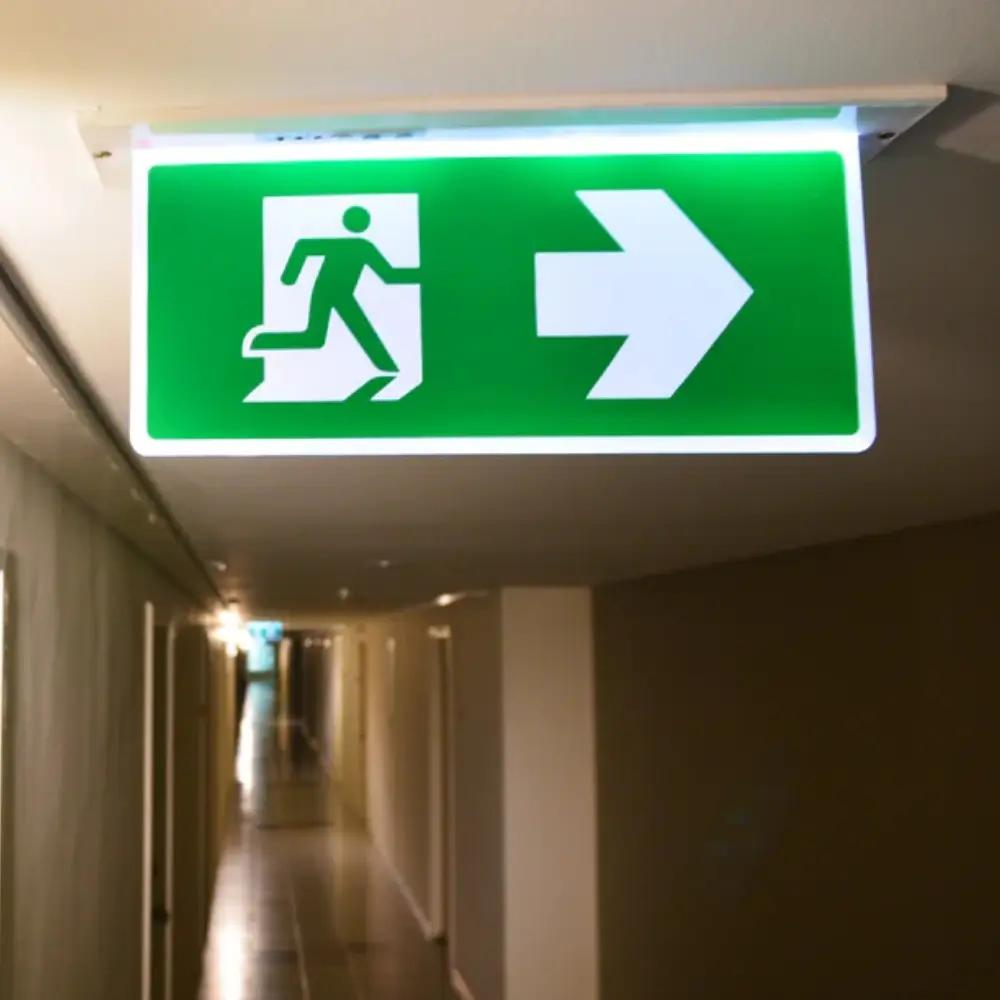
Here’s a detail that trips up many specifiers: exit sign visibility isn’t just about having bright lights. The viewing angle matters enormously.
Picture this scenario: you’re walking down a corridor at night during a power failure. Smoke is present, drifting toward the ceiling. A standard exit sign might be clearly visible from directly ahead—but unreadable from a 45-degree angle when smoke reduces contrast. The regulations address this, but the testing requirements are often overlooked.
Modern LED exit signs have improved this significantly. Edge-lit signs with uniform illumination across the entire sign face outperform older back-lit designs. For environments where smoke is a genuine concern (parking structures, industrial facilities), consider photoluminescent or high-output LED options that maintain visibility at wider angles.
Maintenance: The Hidden Compliance Issue
The regulations are clear about testing. The compliance reality is messy.
Battery degradation is the primary failure mode. Nickel-cadmium batteries in emergency luminaires typically last 4-7 years. Lead-acid can be as short as 2-3 years in hot environments. But most facilities don’t track individual battery ages—they wait for failure, which often means the first power outage reveals the problem.
Monthly functional tests (brief activation to verify operation) catch obvious failures. But true compliance requires the annual 90-minute full-duration test, which most facilities either skip or perform inadequately.
Self-testing and self-diagnostic emergency luminaires exist to address this gap. They automatically run monthly and annual tests, log results, and alert maintenance when battery replacement is needed. Yes, they cost more upfront. But when you factor in labor for manual testing across a large facility, the payback is typically under three years.
Central Inverter vs. Self-Contained: Making the Call
Two primary architectures for emergency lighting:
Self-contained emergency luminaires contain the battery, charger, and control gear within each fixture. Simple to install, simple to troubleshoot, but battery replacement requires accessing each individual luminaire—which can be challenging in high-ceiling installations.
Central inverter systems provide emergency power from a dedicated battery bank to multiple luminaires via the normal AC circuit. Higher installation cost, but battery maintenance is centralized, and the system can power LED drivers from virtually any manufacturer. For large commercial buildings, especially those undergoing LED retrofits, central inverters often make more sense.
A common mistake: pairing cheap LED drivers with a central inverter system that doesn’t meet their inrush current requirements. The result is nuisance tripping during utility power transfer. Verify inverter compatibility before specifying.
The Emergency Lighting Audit Checklist
If you’re responsible for a commercial facility, here’s what a proper audit covers:
- Exit sign locations and viewing angles from all directions of egress
- Luminaire spacing calculations for path illumination (photometric modeling where required)
- Battery age and test records for all self-contained units
- Central inverter capacity and load verification
- Monthly test logs (last 12 months minimum)
- Annual full-duration test documentation
- UL 924 or EN 60598-2-22 certification verification for all products
- Integration with fire alarm system (where required for area-specific activation)
Most facilities fail on documentation. Regulations require you to prove you tested. Paper logs are still acceptable in most jurisdictions, but electronic logging through self-diagnostic systems is becoming the practical standard.
Sourcing Considerations
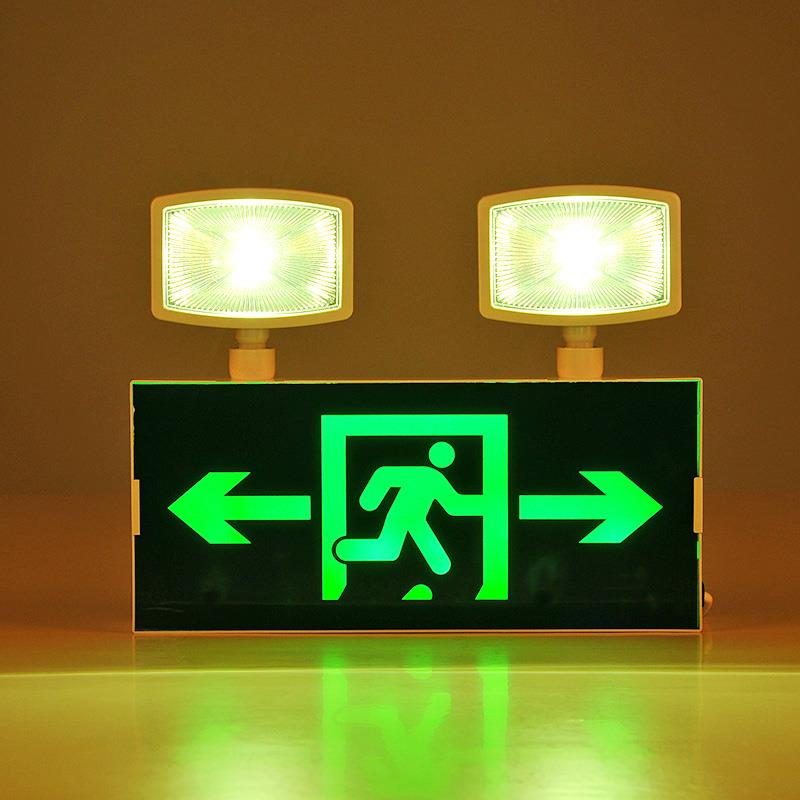
When sourcing emergency luminaires for commercial projects:
The lithium iron phosphate (LiFePO4) battery chemistry is replacing older technologies in new products. Better cycle life, no thermal runaway risk, and excellent performance in cold environments. If you’re replacing aging emergency lighting, look for LiFePO4-based products.
For custom configurations—unusual mounting heights, specialized environments, or specific photometric requirements—working with a manufacturer that offers configurable emergency drivers versus fixed-product catalog items can significantly reduce project complexity.
At YoubeeLight, we supply emergency-rated luminaires and components for commercial projects worldwide. Our team can help verify compliance requirements for your specific market and application.
