Commercial Lighting ROI in 2026: Why Most Buyers Calculate It Wrong
Buyers always ask me about LED payback period. Most are asking the wrong question.
They want a simple formula: replacement cost divided by annual energy savings. Got it, 3.2 years, great.
Except that’s not your actual return on investment. That’s just the energy breakeven point.
The Number That Actually Matters
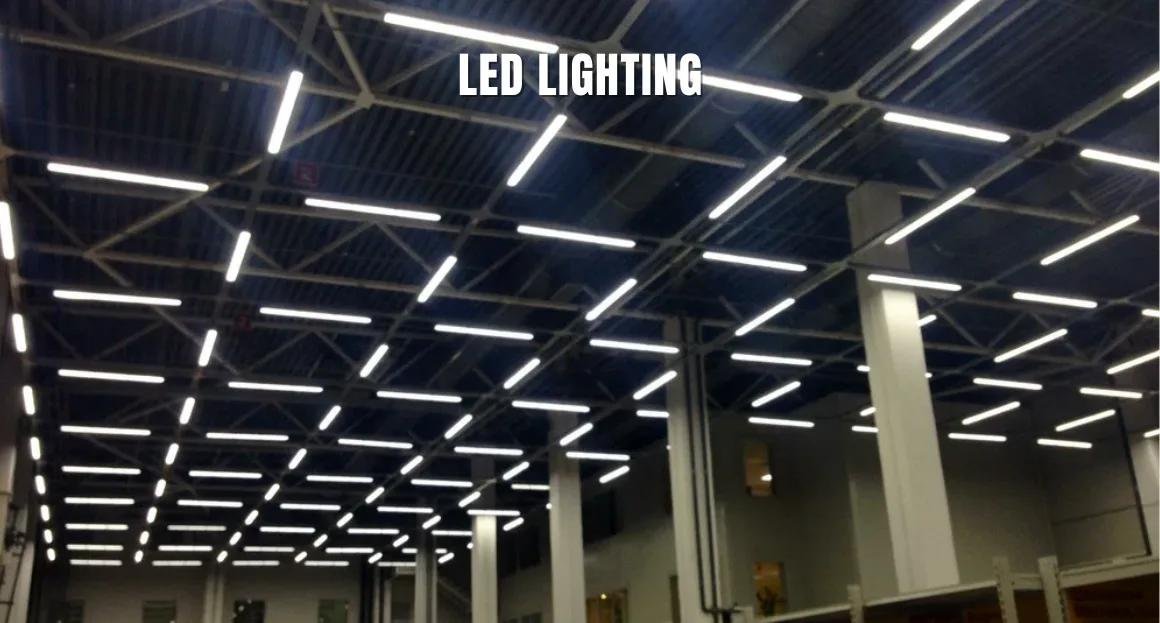
Modern LED high-bay installation in warehouse facility
Here’s what I tell my clients: Total Cost of Ownership (TCO) beats payback period every time.
TCO for commercial lighting over 10 years includes:
– Initial purchase and installation
– Energy consumption
– Maintenance and replacements
– Operational downtime
Let me give you a real example from a warehouse project I consulted on last year.
500 metal halide fixtures, 400W each. Replaced with 150W LED high-bays. Simple payback looked great on the spreadsheet.
Energy savings came in as projected. But six months later, maintenance crew reported 23 fixture replacements. At $180 per service call plus parts, that’s real money bleeding out of the theoretical savings.
The metal halides weren’t failing because LEDs were “less reliable.” They were failing because nobody calibrated the new drivers properly, and voltage spikes were cooking the electronics.
Where Most ROI Calculations Fall Apart
1. Ignoring Maintenance Realities
Standard industry data suggests LED lifespan at L70 rating (70% initial brightness) is 50,000+ hours. That’s true under ideal conditions.
In practice? Thermal management varies wildly between manufacturers. I’ve seen the same “50,000 hour” spec fail at 15,000 hours in hot climates with poor fixture design.
Ask your supplier for thermal test reports, not just the L70 number.
2. Treating Energy as the Only Variable
Electricity cost is important, but consider:
– HVAC load reduction (LEDs run cooler = less air conditioning)
– Productivity improvements from better light quality
– Reduced accident rates in industrial spaces
– Rebates and utility incentives
A 200,000 sq ft distribution center I worked with in Ohio calculated $47,000 annual HVAC savings alone, on top of the $89,000 energy reduction. Their utility company also kicked back $31,000 in energy efficiency rebates.
Your ROI spreadsheet probably isn’t capturing these numbers.
3. Using Wrong Baseline Comparisons
Buyers often compare new LED fixtures against “existing lighting” without accounting for actual usage patterns.
If your current metal halides run 24/7, the math looks different than 8 hours/day. But more importantly: are those existing fixtures actually operating at rated output?
A fixture that’s been in service 5 years typically performs at 70-80% of original specification due to lumen depreciation. Your comparison baseline is already weaker than you think.
A Smarter Way to Evaluate
Here’s my framework when evaluating commercial lighting investments:
Step 1: Get actual photometric readings on existing spaces. Don’t estimate. Measure. A handheld lux meter costs $40 and gives you real baseline data.
Step 2: Demand complete specifications from suppliers. This means driver efficiency, thermal resistance, photopic vs scotopic ratios, and yes, those thermal test reports.
Step 3: Model multiple scenarios. Best case, worst case, and realistic case. How sensitive is your investment to utility rate changes? To different usage hours?
Step 4: Build in a 15% safety margin. Projects never go exactly as planned. Budget for it.
The Supplier Question
Where you source matters for ROI, not just for price.
I’ve seen buyers chase the lowest unit cost, then spend more on logistics, quality issues, and replacement parts than they saved.
Chinese manufacturers range from genuinely excellent (those with proper quality systems, thermal testing facilities, and consistent production standards) to operations running out of converted warehouses.
At YoubeeLight, we publish our actual test data on lumen maintenance, thermal performance, and driver efficiency. Because I’ve found that suppliers willing to show their methodology tend to be the ones worth trusting with your project.
Bottom Line
A 2.5 year payback looks attractive. But if that calculation ignores maintenance costs, uses optimistic utility rates, and doesn’t account for real-world operating conditions, you’re not making an investment decision.
You’re making a guess with someone else’s money.
Get the real numbers. Run the complete TCO analysis. Then decide.
Need help modeling lighting ROI for your specific project? Our team regularly works with distributors and project buyers on complete cost-of-ownership analysis before orders are placed.