
Why Your Commercial Building’s Lighting Schedule Is Making Everyone Tired
Walk into most office buildings at 2 PM. Watch the energy level.
Now compare that to 10 AM. There’s a reason productivity dips in the afternoon. And no, it’s not just post-lunch carb coma.
The artificial lighting in your building is actively working against your circadian rhythm.
This isn’t wellness jargon or trendy biophilic design speak. It’s basic human biology that’s been ignored by the lighting industry for decades because nobody was selling it as a feature.
What Actually Happens
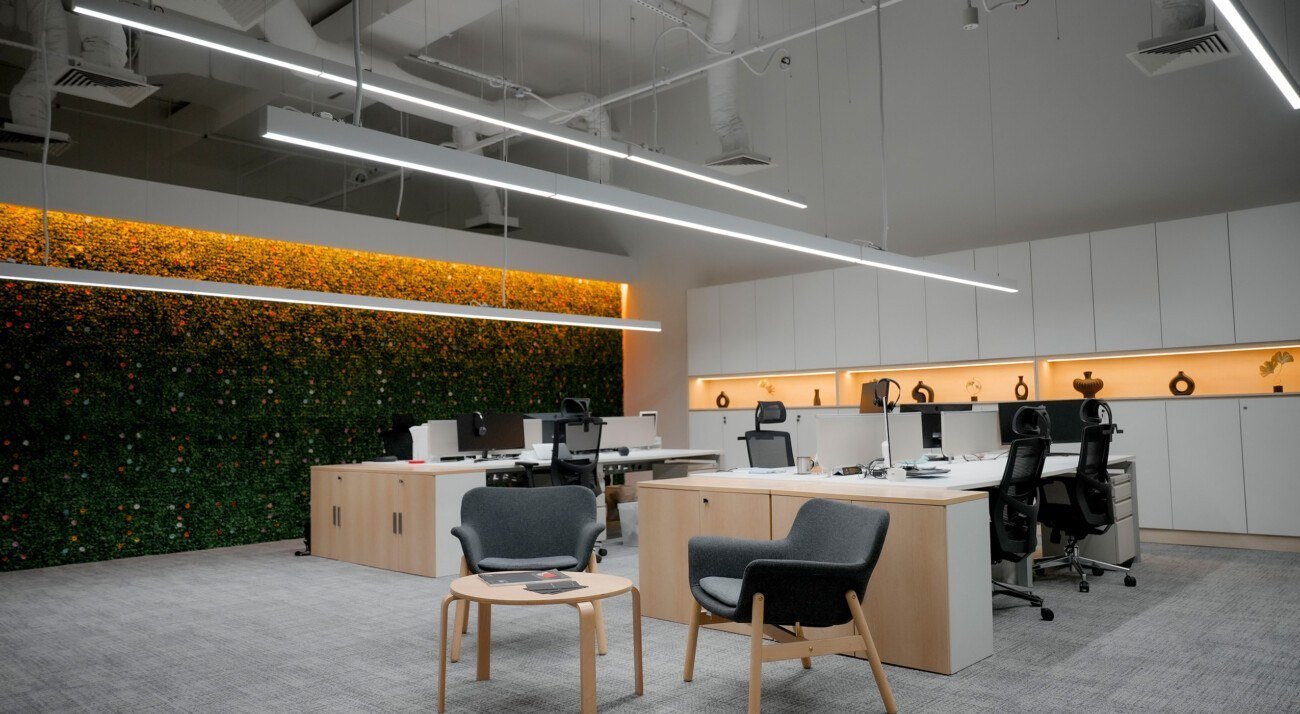
Your circadian system doesn’t just respond to darkness. It responds to specific wavelengths of light, particularly blue wavelengths around 460-480nm, which signal “wakefulness” to your brain’s suprachiasmatic nucleus.
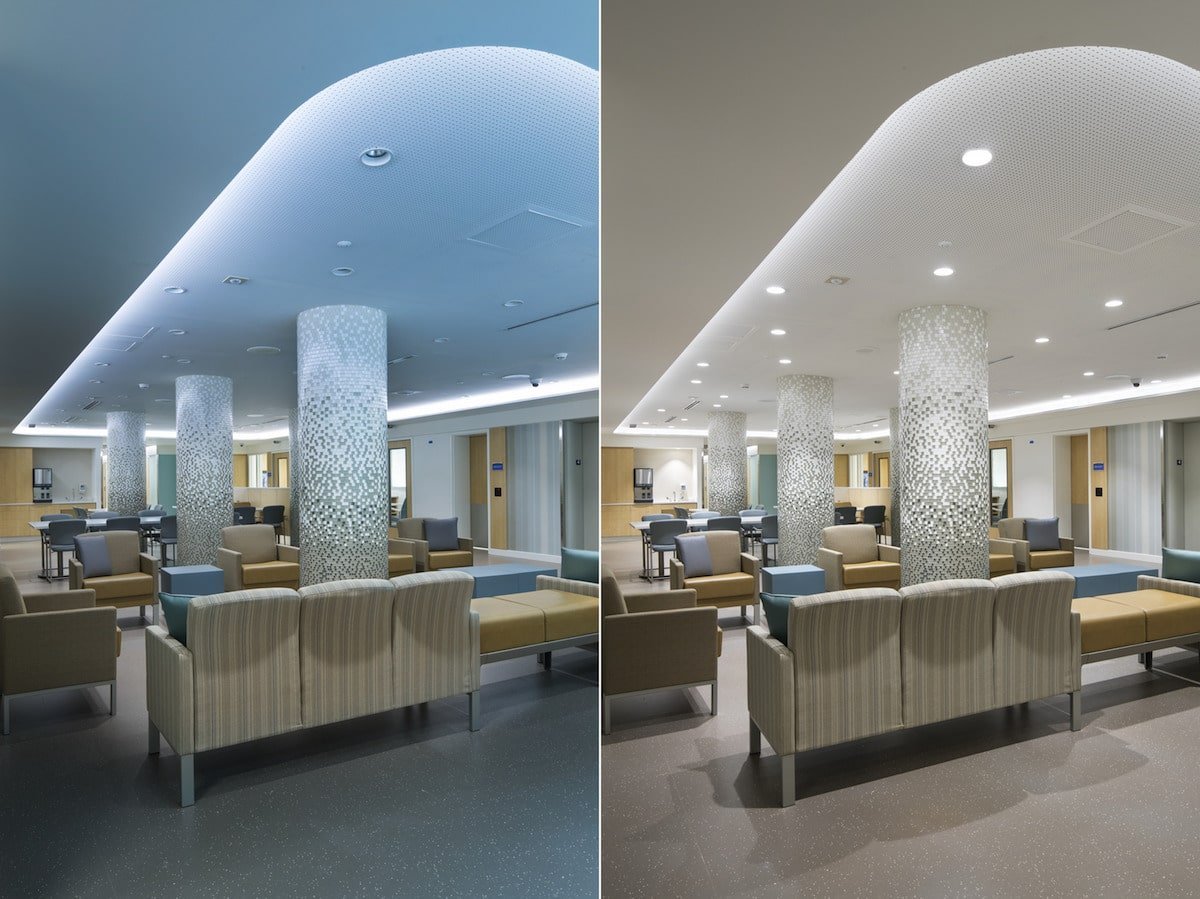
Traditional fluorescent and early LED installations emitted relatively constant color temperatures. 4000K at 9 AM. 4000K at 3 PM. Your brain couldn’t tell the difference between noon sunlight and a cloudy Tuesday afternoon in a basement office.
The result: misaligned circadian signals, disrupted melatonin production, and the afternoon energy crash that everyone accepts as normal.
The Tunable White Solution
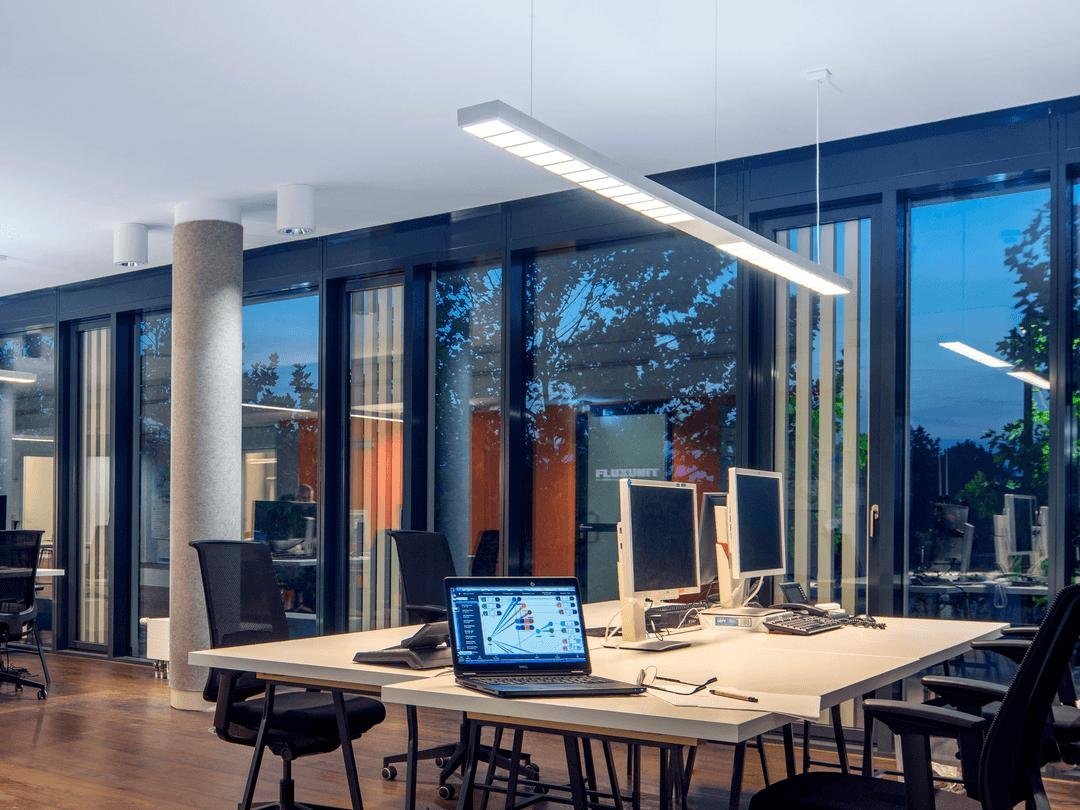
Human-centric lighting systems (also called circadian or tunable white lighting) dynamically adjust color temperature throughout the day:
- Morning: Warmer 2700K-3000K to ease into the day
- Mid-morning to early afternoon: Neutral 4000K-5000K for peak alertness
- Late afternoon: Gradual warming toward 3000K to support natural wind-down
- Evening: Very warm 2200K-2700K to minimize circadian disruption
Sounds complicated. In practice, it’s automated based on time schedules or daylight sensors.
The key insight: it’s not about making spaces “feel nicer.” It’s about providing the correct biological stimulus at the correct time.
What the Research Actually Shows
I’m skeptical of lighting industry studies sponsored by lighting manufacturers. But independent research is accumulating:
- A 2018 study in the Journal of Clinical Endocrinology & Metabolism found morning bright light exposure improved sleep quality and reduced evening cortisol levels
- Research from the Lighting Research Center at Rensselaer Polytechnic showed measurable improvements in alertness and cognitive performance with dynamic lighting
- Several European healthcare systems have implemented circadian lighting protocols in hospitals with documented improvements in patient recovery times
Does this mean you need to rip out every fixture in your building? No. But it does mean that the next lighting retrofit project should at least ask the question.
The Commercial Realities
Tunable white systems cost more upfront. Expect 30-50% premium over static color temperature fixtures. Controls add complexity and commissioning time.
But consider the math:
A 50,000 sq ft office building with poor lighting might see:
– $12,000 annual increase in sick days attributable to fatigue-related issues (conservative estimate)
– Measurable productivity drag during afternoon hours
– Higher turnover as employees seek better work environments
If tunable white lighting improves afternoon productivity by even 5%, on a $2M annual payroll, that’s $100,000 in recovered productivity. Against a $40,000 lighting premium, the math becomes interesting.
My Take After 15 Years in Commercial Lighting
Human-centric lighting is legitimate. Not a gimmick, not just another wellness buzzword.
But here’s my practical advice for buyers evaluating whether to spec it:
1. Start with spaces that have the biggest circadian impact. Open offices, shift work areas, interior spaces without daylight access. Don’t spec tunable white in a conference room used 4 hours per day.
2. Evaluate controls architecture. Who programs the schedules? Who adjusts when tenant needs change? Overly complex systems become abandoned systems. Simpler is often better.
3. Consider the manufacturer track record. This technology is still maturing. Stick with companies that have demonstrated installations running for 3+ years, not just product brochures.
4. Negotiate commissioning into the project. Tunable white systems require proper calibration for the space. Don’t accept “ship and install” as a complete scope.
The Market Direction
EU standards have already moved toward circadian-friendly lighting requirements in certain applications. Australian building codes are following.
US codes remain voluntary, but I’m seeing increasing spec language requiring tunable white capability in institutional and commercial projects.
Whether you spec it today or wait for code mandates, the technology is ready. The question is whether your building’s occupants are worth the investment.
YoubeeLight works with commercial project buyers on lighting specifications that balance biological performance, energy efficiency, and realistic budget constraints. Our team has experience with tunable white installations across office, healthcare, and industrial applications.
