The $50,000 Retail Lighting Mistake Most Buyers Don’t See Coming
Last year, a client spent $50,000 on a retail lighting installation that looked stunning in the showroom and failed completely under actual merchandise.
The fixtures were beautiful. The color rendering was technically spec’d correctly. But no one had tested how the light actually rendered specific merchandise categories—dark denim, chrome accessories, fresh produce, marble surfaces—under the planned lighting layout.
This happens more often than it should.
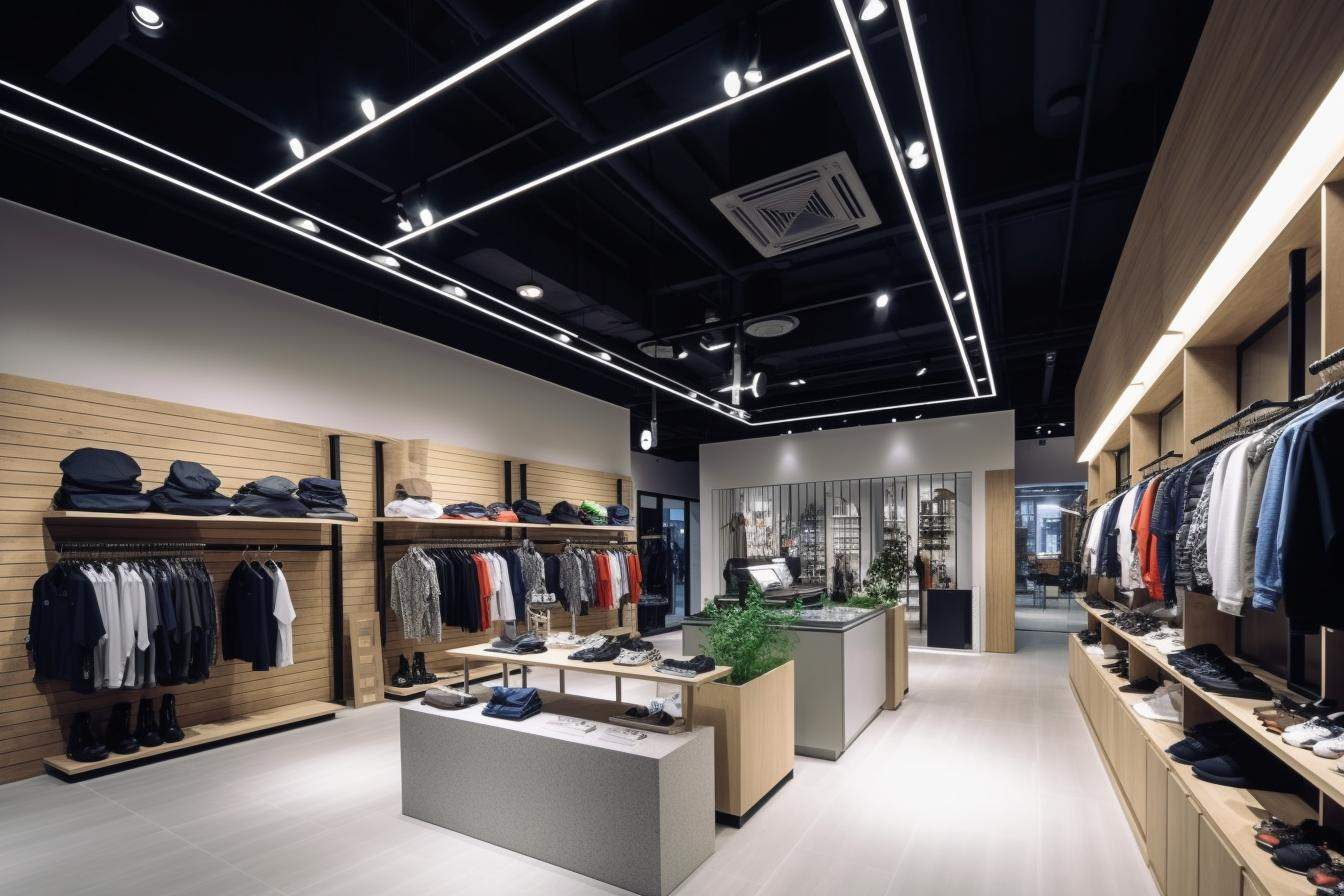
Effective retail lighting balances ambient illumination with targeted accent lighting
## Why Retail Lighting Is Different
Commercial lighting specifications typically focus on illuminance levels (foot-candles or lux), uniformity ratios, and efficiency (lumens per watt). These metrics matter in warehouses and offices.
Retail is different because the product is the lighting target itself.
A fixture that delivers perfect 500 lux on a photometric plane doesn’t tell you anything about how it renders a red cashmere sweater against a charcoal wall, or how shadows fall across a jewelry display case at 3pm when afternoon sun hits the window.
I’ve watched too many buyers accept deliveries based on laboratory photometric reports, then discover field performance is completely different.
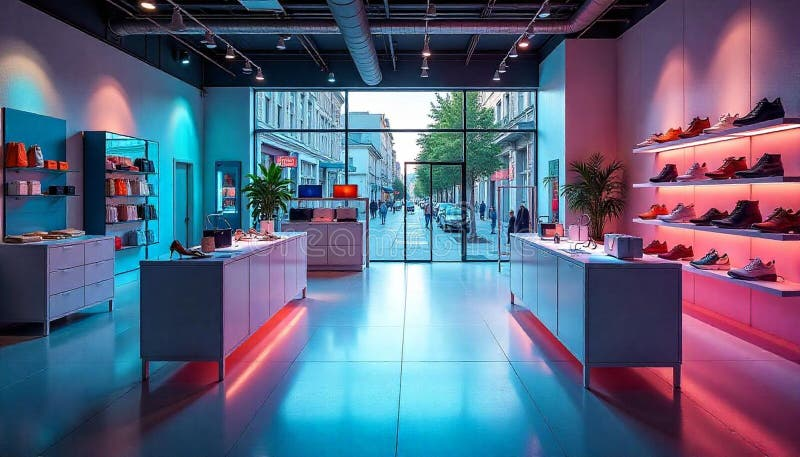
Color-tuned lighting creates distinctive zones and enhances merchandise presentation
## The Four Factors That Actually Determine Retail Lighting Success
1. Merchandise category determines the specification starting point.
Dark merchandise (denim, black leather, charcoal home goods) requires higher illuminance and careful attention to fixture mounting height and beam angle. Light-colored merchandise reflects more, so you may need to dial back intensity to avoid harsh contrast.
Jewelry and cosmetics demand tight beam control and high CRI across specific color ranges—particularly R9 (red) and R13 (skin tone). A fixture with 95 CRI but weak R9 performance will make gold appear dull.
Food retail has its own physics. Fresh meat looks best under 2700K with high R9. Bakery displays typically need 3000K. Produce under cooler color temperatures can look wilted regardless of freshness.
Specifying a single fixture type for all three layers is a rookie move. Your accent fixtures should deliver 3-5x the illuminance of ambient fixtures on the merchandise surface.
3. Glare control isn’t optional.
I’ve seen beautiful retail installations where customers literally squint when looking at merchandise displays. This isn’t a technical failure—it’s a specification failure.
UVBA/B rating, shielding angles, and glare ratings need to match customer sight lines. In fitting rooms, glare on mirrors is a conversion killer.
4. Daylight integration changes everything.
If the space has significant natural light—and most retail does today—your lighting specification must account for daylight zones and automatic adjustment. A static lighting plan that looks perfect at 8am will be completely wrong by 2pm.
Human-centric lighting specifications (tunable white, circadian-aligned color temperature) are moving from hospitality into retail, particularly in markets like Germany and Scandinavia where customer expectations have already shifted.
Practical Specification Checklist
When reviewing retail lighting specs, I walk clients through these questions:
Merchandise categories: Have you tested the proposed fixtures against actual merchandise in the specific categories being sold?
Layering plan: Does the specification address ambient, task, accent, and decorative layers separately?
Mounting heights and angles: Has the lighting designer modeled the actual fixture locations against customer sight lines and merchandise displays?
Glare ratings: Are UGR (unified glare rating) values specified for customer-facing viewing angles, not just general compliance?
Daylight integration: If the space has windows or skylights, is there a daylight harvesting or zoning plan?
Commissioning: Who programs the scenes and adjusts levels after installation? Is this budgeted?
The Testing Protocol That Would Have Saved $50,000
For any retail project over $20,000 in lighting, I recommend requesting fixture samples and conducting a mock display test.
Set up the actual merchandise categories planned for the store under the proposed fixtures. View at different times of day with simulated daylight conditions. Evaluate the renders with store staff who will be working in the space daily.
This costs $500-2000 in sample fixtures and a few hours of time. It consistently identifies problems before they become installation failures.
YoubeeLight works with retail lighting buyers to develop specification frameworks that account for merchandise-specific rendering requirements, layered lighting design, and daylight integration. Our team has sourced fixtures for retail projects across 40+ countries, with experience across fashion, food retail, cosmetics, home goods, and specialty retail.