
Article 2: Color Temperature Isn’t About Preference—It’s About Application
The Conversation That Changed How I Spec Lighting
A German retailer once asked me why their 6500K LED fixtures “felt wrong” in the showroom. My answer: because you’re selling furniture, not a hospital.
That conversation opened their eyes. Color temperature isn’t about what looks modern or clean. It’s about how your products look under your lights—and how that affects purchasing behavior.
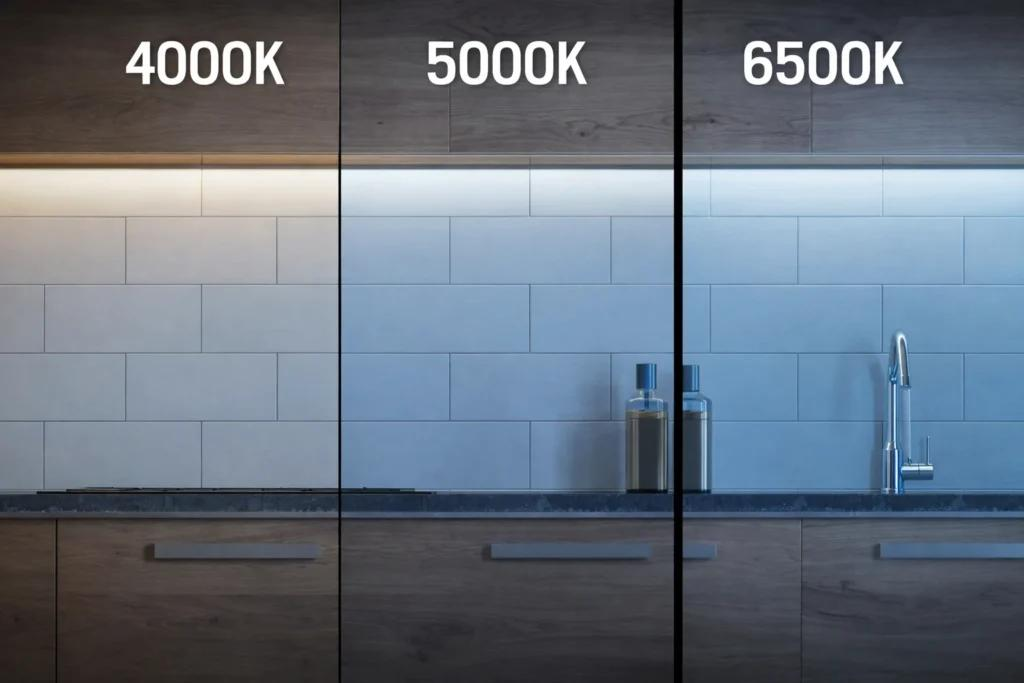
I’ve seen the same fixture in 3000K, 4000K, and 6500K destroy the same wood sample three different ways. One made it look warm and inviting. One made it look clinical. One made it look gray and dead.
Choose wrong, and you sabotage your own merchandising.
What Color Temperature Actually Means
CCT (Correlated Color Temperature) measures the warmth or coolness of light on the Kelvin scale:
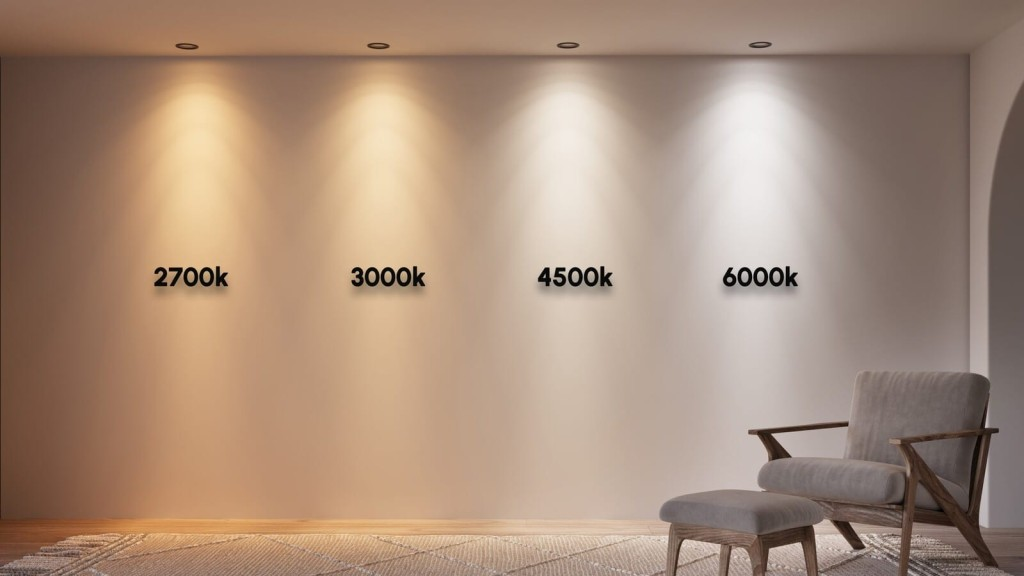
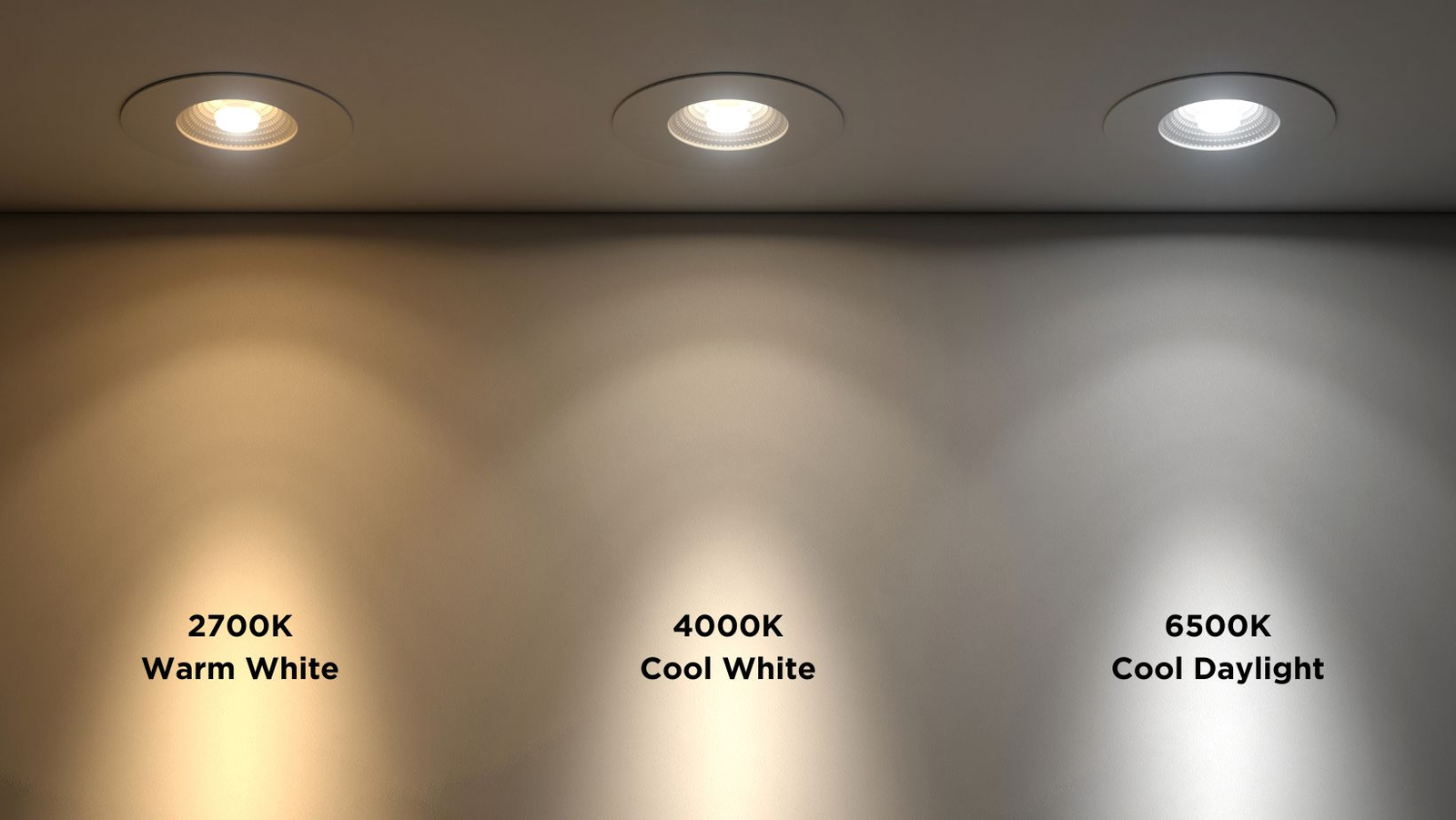
- 2700K: Very warm, almost amber—like incandescent bulbs
- 3000K: Warm white—cozy, residential feel
- 4000K: Neutral white—clean, professional
- 5000K: Daylight—crisp, clinical
- 6500K: Cool daylight—harsh, daylight simulation
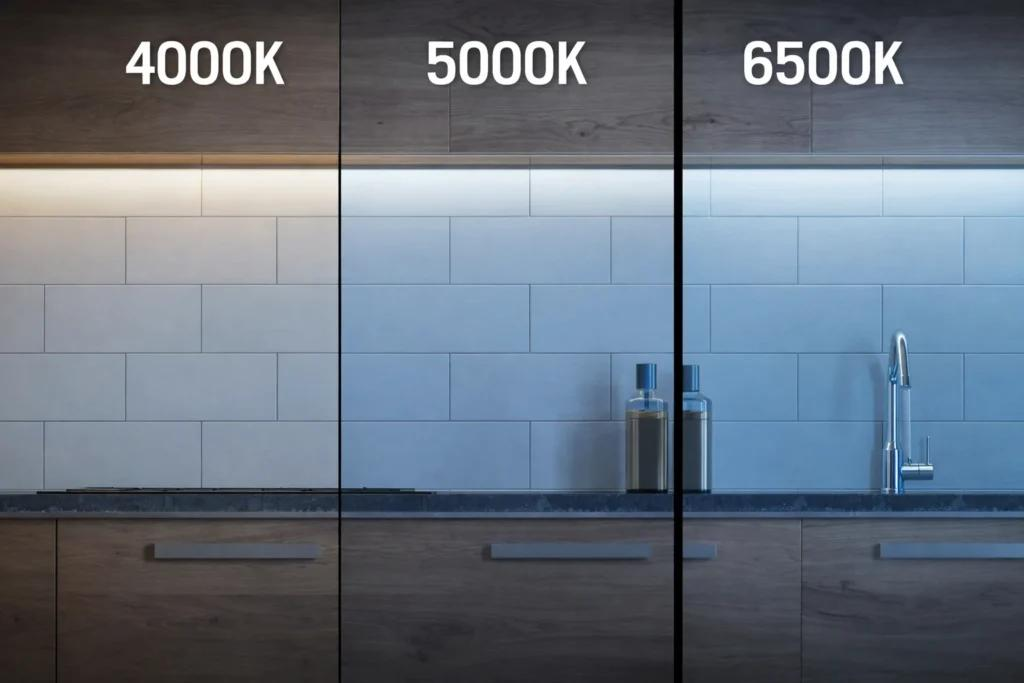
The practical difference between 4000K and 6500K isn’t subtle. At 6500K, whites look blue-white. At 3000K, whites look cream. Neither is “better”—but one is definitely wrong for your application.
Application Guide That Actually Helps
Retail Showrooms
Recommendation: 3000K-4000K
Customers make emotional decisions. Warm light (3000K) makes products feel approachable and desirable. This is why luxury brands almost universally use warm lighting—LV, Hermes, high-end furniture stores.
Exception: If you’re selling tech products or tools where color accuracy matters for selection, 4000K neutral provides clarity without feeling cold.
Warehouses and Industrial
Recommendation: 4000K-5000K
Higher color temperature improves visual alertness and focus. For long shifts, 5000K helps workers stay alert. For detailed picking operations, 5000K provides better color differentiation.
We installed 5000K high bays in a Hamburg logistics center. Forklift drivers reported fewer eye-strain complaints compared to their previous 3000K installation.
Offices
Recommendation: 4000K for general, tunable for premium
4000K strikes the balance between warmth (comfortable for long hours) and clarity (professional appearance, good for video calls).
Premium installations increasingly use tunable white systems that shift from 3000K in the morning to 5000K mid-day, mimicking natural daylight cycles. The productivity data is still emerging, but worker satisfaction scores consistently improve.
Hospitals and Medical
Recommendation: 4000K-5000K, never below 3500K
Medical staff need accurate color rendering for patient assessment. Warm light masks pallor and skin conditions. This isn’t speculation—it’s in medical lighting standards.
Parking Garages
Recommendation: 5000K
Higher color temperature reduces the “tunnel effect” that makes parking garages feel oppressive. It also improves security camera footage quality.
The CRI Trap
Color Rendering Index (CRI) measures how accurately a light source reveals colors compared to natural light. Most LED fixtures are CRI 80+. Premium fixtures are CRI 90+.
Here’s what nobody tells you: CRI is an average. A fixture can have CRI 85 but render certain colors terribly.
If you’re selling products where specific color accuracy matters (fashion, food, paint), demand:
– CRI 90+ minimum
– R9 value (deep red rendering) above 50
– Verify with your actual products, not the spec sheet
I visited a paint store in Munich with CRI 80 fixtures. The same paint looked three shades different under their display lights versus daylight. They were constantly dealing with customer complaints about color mismatch.
The Temperature Shift Problem
Here’s a defect that plagues cheap LED products: color temperature shift over time.
Quality LEDs should maintain within 200K of rated CCT over 50,000 hours. Cheap LEDs can shift 500K or more, turning your “4000K neutral” fixture into something approaching 5000K within two years.
Ask suppliers for LM-80 test data (luminaire aging tests). If they can’t provide it, the answer tells you something.
My Decision Framework
When I’m spec’ing color temperature, I ask three questions:
- What products or tasks happen in this space? (Guides the base CCT)
- Who spends 8+ hours here? (Influences warmth vs. alertness balance)
- What’s the surrounding environment? (Outdoor daylight vs. interior affects perception)
If I’m uncertain, I default to 4000K for commercial applications. It’s the safest middle ground—never the warmest or most dramatic choice, but rarely the wrong one.
One More Thing: Batch Consistency
Order all fixtures for a single project from the same production batch.
Same model, same CCT rating—but different production runs can vary by 200-300K. I’ve seen installations where one side of a warehouse was noticeably different from the other because the fixtures came from separate orders.
Reputable suppliers bin LEDs by color temperature and can guarantee consistency within 100K. If batch consistency matters for your project—and it usually does—specify it in your purchase order.
Need help choosing the right color temperature for your project? YoubeeLight provides color temperature consultation for commercial projects and can supply samples for on-site verification before bulk orders.
Browse our LED catalog for complete fixture specifications including detailed photometric data and CRI ratings.
