

LED Power Factor: The Invisible Spec That’s Silently Costing Your Commercial Project Thousands
You’ve compared lumens. You’ve negotiated watt-for-watt pricing. You’ve even checked the CRI. But there’s one number on that LED driver label you probably glanced right past — the power factor rating, usually shown as “λ” or “PF” — and ignoring it could be the single most expensive mistake in your next commercial lighting project.
I’ve seen it happen. A logistics company in the Netherlands retrofitted a 15,000m² distribution center with “high-efficiency” LED high-bays. The spec sheets looked great — 160 lm/W, 50,000-hour lifespan, DLC listed. But six months later, their electricity bill hadn’t dropped nearly as much as projected. The reason? Every single fixture had a power factor of 0.5. They were pulling double the apparent power their meters were recording, and the utility noticed.
What Power Factor Actually Means (And Why Your Utility Cares More Than You Do)
Power factor is the ratio of real power (watts that do actual work — producing light) to apparent power (the total power the grid must deliver, measured in VA). A PF of 1.0 means all the power drawn does useful work. A PF of 0.5 means half the current flowing through your building’s wiring is essentially wasted — it creates magnetic fields in transformers and motors but produces zero useful output.

In AC circuits, this happens because LED drivers use switching power supplies that draw current in short, sharp pulses rather than in smooth sine waves. The lower the power factor, the more “reactive” power your fixtures demand, and the harder your electrical infrastructure has to work to deliver it.
Here’s the thing most lighting buyers don’t realize: your utility meter measures real power (kWh), but your utility company bills for the strain you put on their grid. In commercial and industrial tariffs across Europe and North America, that strain is captured through demand charges, reactive power penalties, or power factor surcharges.
If you think this only matters for factory floors with giant motors, think again. A 500-fixture LED installation in a retail park pulls enough reactive power at PF 0.5 to trigger penalty clauses in most EU commercial electricity contracts. I’ve reviewed utility bills for clients who were shocked — pun intended — to find a “reactive energy surcharge” line item they’d never noticed before, totaling thousands of euros per quarter.
The Real Cost: A Back-of-Napkin Calculation That Should Scare You
Let me walk you through the math on a mid-size project, because until you see the numbers, power factor sounds like an engineering abstraction.
Say you’re outfitting a commercial facility with 500 LED panel lights, each rated at 40W. At PF 0.9 (a reasonable spec for quality drivers), the apparent power per fixture is about 44.4 VA. Total apparent power: 22.2 kVA.
Now take the same 500 fixtures at PF 0.5 (cheap driver, no PFC circuit). Each fixture draws 80 VA. Total: 40 kVA.
That’s nearly double the apparent power. Here’s what that means in practice:
- Demand charges: Many commercial tariffs include a kVA demand component. If your utility charges $12/kVA/month (common in EU industrial tariffs), the PF 0.5 scenario costs you $480/month versus $266/month — that’s $2,568/year extra on demand charges alone.
- Transformer and panel sizing: Your electrical engineer now needs to specify larger switchgear, thicker cables, and possibly a bigger transformer. On a new build, that can add $15,000–$30,000 to the electrical package.
- Reduced circuit capacity: At PF 0.5, each circuit can only serve half the fixtures it could at PF 0.9. More circuits, more breakers, more conduit, more labor.
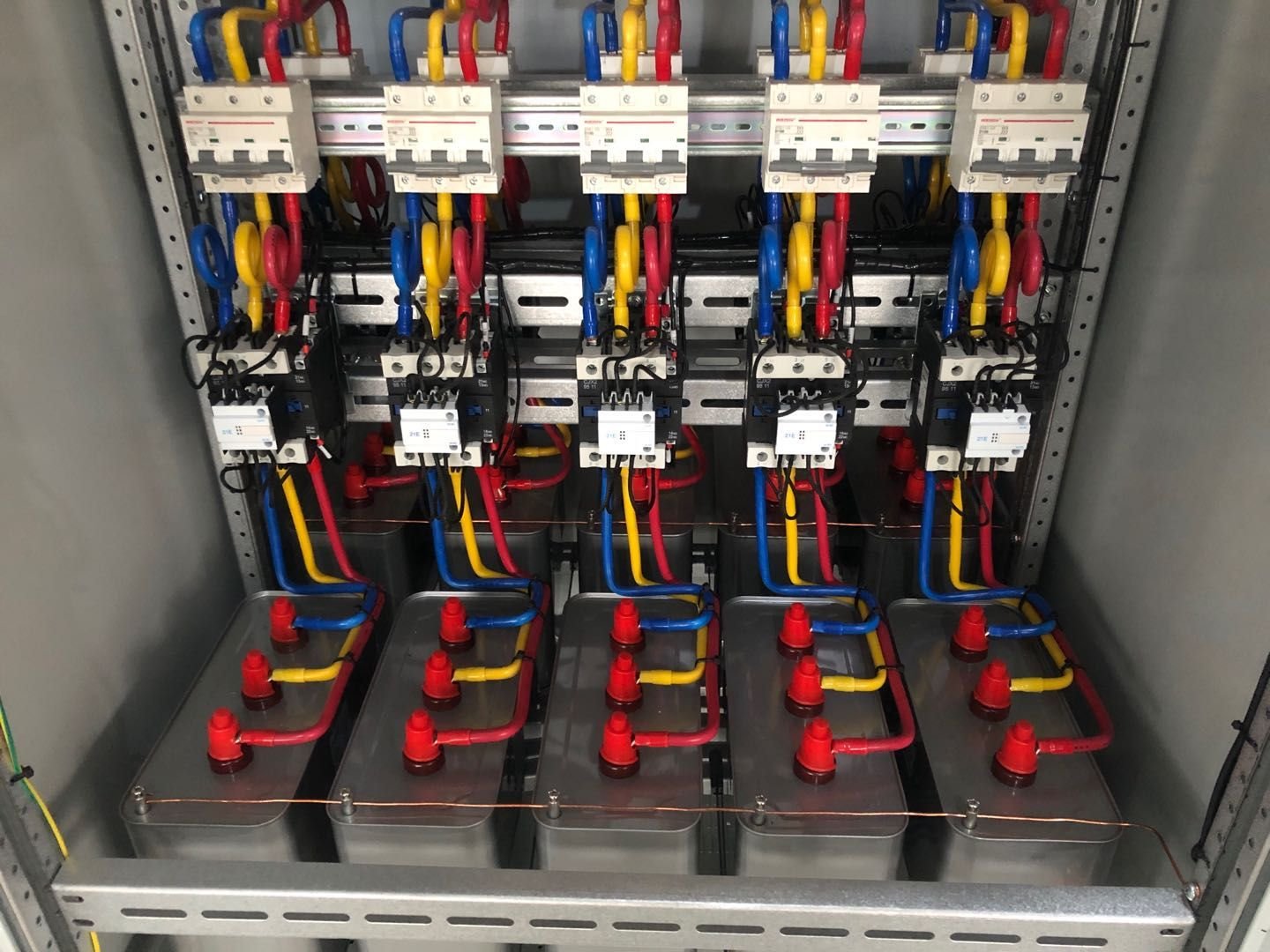
One project I consulted on — a cold storage facility in Belgium — had to add a 200kVAR capacitor bank ($18,000 installed) because the original LED spec used PF 0.55 drivers across 800 fixtures. The capacitor bank fixed the penalty issue, but it was a retroactive band-aid that wouldn’t have been necessary with proper driver selection upfront. And capacitor banks themselves require maintenance — contactors wear out, capacitors degrade over time, and you’ve just added another piece of equipment your facility team needs to monitor.
How to Read the PF Spec on an LED Driver (And What the Numbers Actually Mean)
If you’re sourcing LED fixtures, here’s what to look for on the driver label or datasheet:
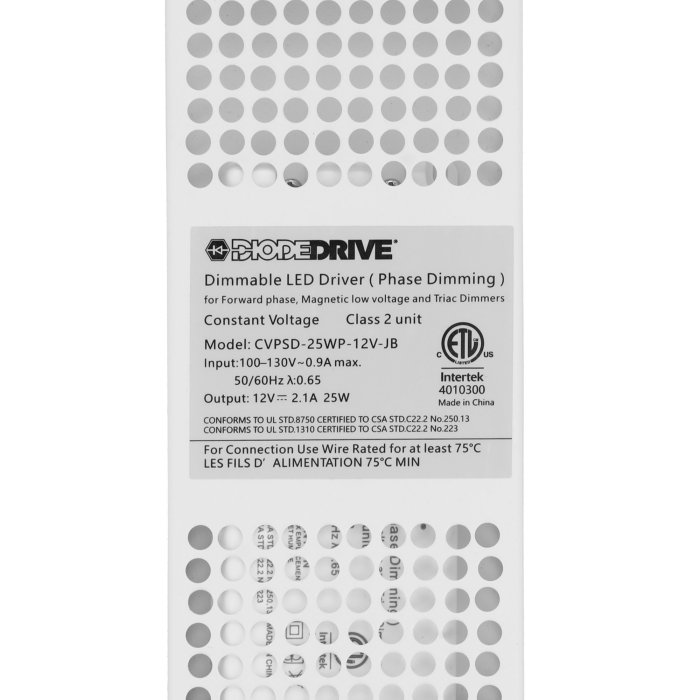
PF ≥ 0.9: This is the minimum you should accept for any commercial project above 50 fixtures. Quality drivers from reputable manufacturers (Mean Well, Inventronics, Osram, Tridonic) typically hit 0.95 or higher at full load. This is the standard in Europe under EN 61000-3-2 for drivers above 25W.
PF 0.5–0.7: This is the danger zone. These are typically cheaper drivers with no active PFC (Power Factor Correction) circuit. You’ll find them in budget fixtures from suppliers who optimize for upfront cost, not total cost of ownership. Honestly, if a supplier can’t tell you the power factor of their driver off the top of their head, that’s a red flag.
PF < 0.5: Run. These are usually found in ultra-cheap LED strips, decorative fixtures, or very low-wattage bulbs where PFC isn’t economically justified. Fine for a residential accent light. Disastrous in a 200-fixture commercial install.
There’s also a nuance most spec sheets don’t advertise: power factor varies with load. A driver rated PF 0.95 at full load might drop to 0.7 at 30% dimming. If your project uses heavy dimming schedules (common in hospitality and retail), ask the supplier for PF curves at partial loads, not just the full-load number.
This is particularly critical for projects using DALI or 0-10V dimming, where fixtures routinely operate at 20–40% brightness during off-peak hours. I checked a hotel project in Munich last year where the daytime PF was 0.93 (full brightness in the lobby), but the overnight dimmed PF in the corridors was 0.58. The facility manager couldn’t figure out why their reactive power penalties spiked at night — when the lights were dimmed. Turns out, dimming made the power factor worse, not better.
Why Cheap Drivers With Low PF Are a False Economy
I see this pattern constantly in sourcing decisions: a buyer gets a quote for track lights at $14.50/pc from Factory A and $18.80/pc from Factory B. The $4.30 difference on 500 units is $2,150 — seems significant. But Factory A’s driver has PF 0.55, and Factory B’s has PF 0.95.
Over a 5-year operating period on a commercial tariff with demand charges, the PF 0.55 fixtures will cost approximately $6,000–$12,000 more in electricity and demand charges than the PF 0.95 fixtures (exact figure depends on your utility tariff structure). That $2,150 upfront saving just cost you $6,000+ in operating costs.
And it gets worse. Low-PF drivers run hotter because they’re less efficient at converting input power. Hotter drivers fail faster. In my experience reviewing RMA data across multiple projects, fixtures with PF < 0.7 have roughly 2.5x the driver failure rate over 3 years compared to PF > 0.9 fixtures. That means more maintenance calls, more replacement units, and more disruption to your client’s operations.
Here’s a real scenario I ran into: a retail chain in the UK sourced 1,200 downlights from a supplier offering PF 0.6 drivers at a “competitive” price. Within 18 months, they’d replaced 89 drivers under warranty. The labor cost alone for electricians to access recessed fixtures across 15 stores ran north of £12,000. The supplier’s warranty covered the replacement parts, but nobody reimbursed the labor or the store downtime. Had they gone with PF 0.95 drivers, the projected failure count over the same period would have been approximately 12 units.
What to Specify: A Practical Framework for Commercial Buyers
Here’s what I tell every commercial lighting buyer who asks me about driver specs:
For projects over 100 fixtures: Specify PF ≥ 0.9 at full load as a hard requirement. Don’t accept “typical” values — demand guaranteed minimums. Put it in your purchase specification document alongside CCT, CRI, and IP rating.
For projects with dimming requirements: Ask for PF data at 50% and 30% dimming levels. Some “smart” fixtures with PF 0.95 at full output drop to 0.6 when dimmed to 20%. If your project runs fixtures at low dimming levels for extended periods, this matters enormously.
For projects in regions with reactive power penalties: This includes most of Europe, parts of Australia, and increasingly in North America. In these markets, PF < 0.9 can literally result in a line-item penalty on your utility bill. Some German utilities charge €0.80–€1.20 per kVARh of reactive power consumption. On a large installation, that’s real money.
For retrofit projects: Check the existing electrical infrastructure. If you’re replacing 400W metal halide with 150W LED but the LED has PF 0.5, your apparent power only drops from ~420 VA to 300 VA — a 29% reduction, not the 62% the wattage suggests. Your client’s energy savings projection just fell apart.
The Verification Step Most Buyers Skip
Don’t trust the spec sheet alone. I’ve tested enough fixtures to know that the PF number on paper and the PF number you measure on site can differ significantly, especially with cheaper suppliers.
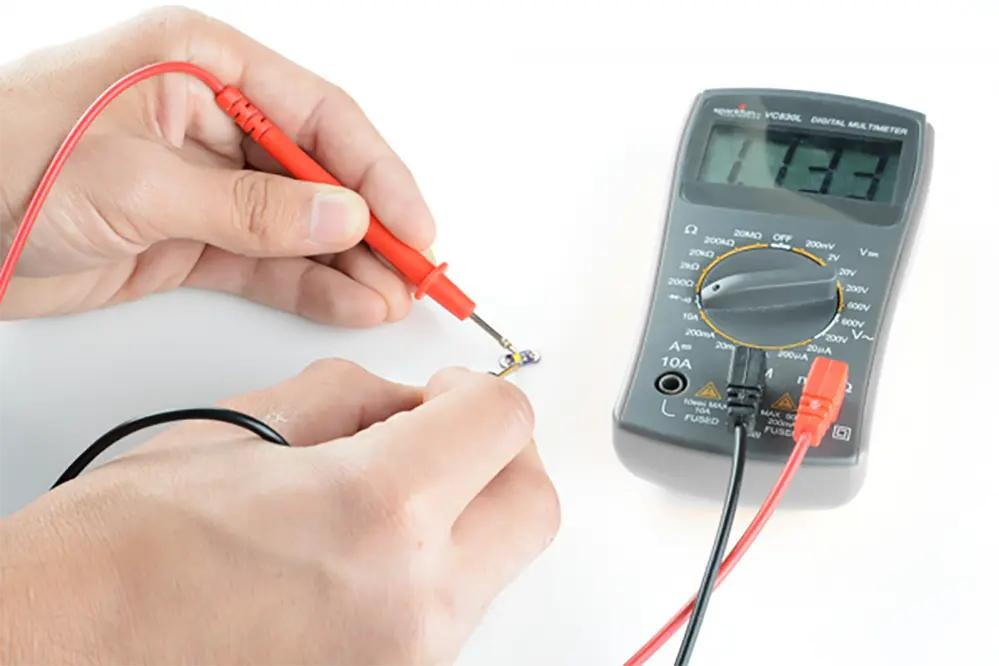
If you’re evaluating samples, plug a fixture into a power analyzer (a basic Kill-A-Watt meter works for rough checks; a proper power quality analyzer like a Fluke 43B gives you the full picture). Measure the actual PF at full brightness and at your expected dimming level. I’ve found discrepancies of 0.10–0.15 between claimed and actual PF more times than I can count.
In one memorable case, a supplier’s datasheet claimed PF ≥ 0.95. Our bench test showed 0.72 at full load. When confronted, the supplier admitted the 0.95 was measured at 230V/50Hz, but they shipped the 110V/60Hz version to our US client, which had a different driver topology. Same SKU, different PF depending on input voltage. That’s the kind of detail that doesn’t show up until you test.
Another verification point: measure total harmonic distortion (THD) while you’re at it. There’s a strong correlation between high THD and low PF — they’re both symptoms of a driver cutting corners on the input stage. If your supplier quotes PF > 0.9 but THD > 30%, something doesn’t add up. Quality drivers manage both — PF > 0.95 and THD < 15% at full load.
Regional Regulations You Can’t Afford to Ignore
This isn’t just a cost issue — it’s increasingly a compliance one. The EU’s Ecodesign directive (Regulation 2019/2020) mandates minimum power factor requirements for LED light sources and control gear sold in the European market. For drivers above 25W, PF must be ≥ 0.9 at full load. For drivers between 5W and 25W, the threshold is PF ≥ 0.5.
But here’s the catch: these are self-declared requirements, and enforcement varies by country. Market surveillance in Germany and the Nordics is relatively thorough; in other markets, low-PF products slip through. If you’re an importer or distributor, the liability falls on you — not the Chinese factory that made the driver.
In the US, the picture is more fragmented. There’s no federal PF mandate for commercial LED fixtures, but several states — California (Title 24), Connecticut, and others — have adopted PF requirements through building energy codes. California requires PF ≥ 0.9 for commercial indoor LED fixtures above a certain wattage. If your project is in a regulated state and your fixtures don’t meet the threshold, you’ll fail inspection.
If you ask me, the smart move is to spec PF ≥ 0.9 across all projects regardless of local regulations. It future-proofs your installations against tightening codes, and the operating cost savings alone justify the modest price premium.
The Bottom Line
Power factor isn’t a sexy spec. It doesn’t show up in marketing photos or feature on spec sheet front pages. But in commercial lighting projects with more than a handful of fixtures, it’s one of the most impactful numbers on the entire bill of materials.
If you’re sourcing LED fixtures for commercial projects, here’s my honest advice: add PF ≥ 0.9 to your non-negotiable spec requirements alongside lumens, CCT, CRI, and IP rating. The $2–$5 per fixture premium for a quality PFC driver pays for itself within the first year of operation through lower demand charges, cooler-running fixtures, and fewer driver failures.
And if a supplier quotes you a price that seems too good to be true, check the driver’s power factor. That’s usually where the cost savings are hiding — and where your project’s hidden costs are born.
At YoubeeLight, every commercial-grade fixture we manufacture ships with drivers rated PF ≥ 0.95 at full load, and we provide measured PF data at 100%, 50%, and 20% dimming levels on request. Because the cheapest fixture is rarely the least expensive one over the life of your project.
