
Hotel Lighting Design: What Buyers Actually Look for in Commercial Lighting Suppliers
When European hotel groups source lighting, they think in layers. Not just “we need fixtures”—they map out guest journeys, brand standards, maintenance cycles, and energy compliance from day one. After 15 years helping lighting buyers navigate OEM production, I can tell you: the difference between a smooth hotel project and a disaster usually comes down to four questions most suppliers never ask.
The Four-Panel System Hotel Buyers Actually Care About
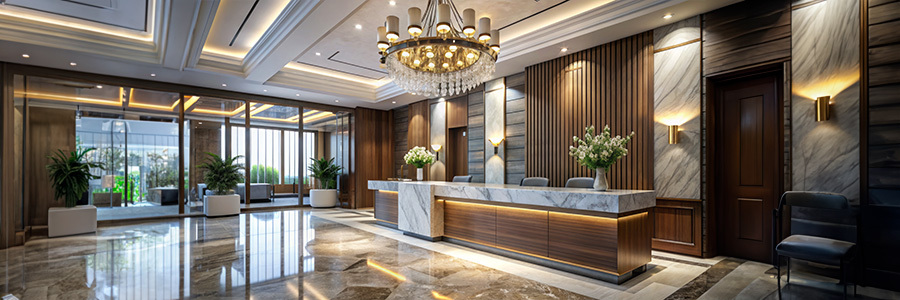
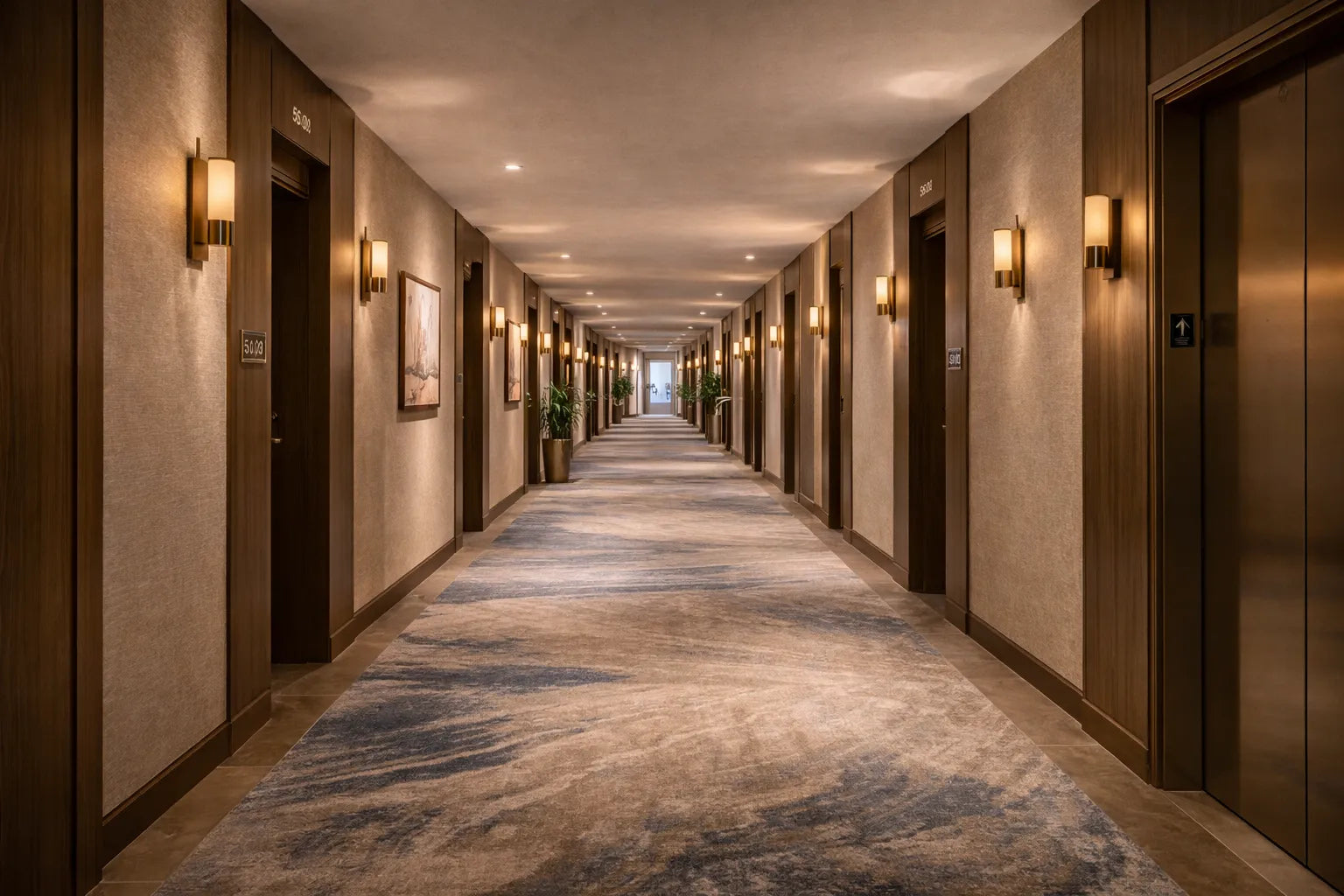
Most buyers aren’t buying lights. They’re buying a lighting system that performs across four dimensions simultaneously.
Visual comfort vs. photographic appeal
Here’s a dirty secret: lights that look stunning in a catalog photo often create harsh glare in real hotel corridors. European buyers—particularly German and Scandinavian—test for Unified Glare Rating (UGR) before anything else. UGR below 19 is standard for guest rooms. Get this wrong and your entire container becomes a liability.
Color temperature layering
Luxury hotels rarely use a single color temperature throughout. The lobby might be 3000K warm white, guest corridors drop to 2700K for evening ambiance, back-of-house areas go 4000K neutral for staff efficiency. Your supplier needs to understand why this layering matters—and not just supply “warm white” or “cool white” as a color option checkbox.
Emergency integration
This is where most Asia-sourced lighting fails. Emergency lighting isn’t a separate system in many European hotels—it’s integrated into the same fixture with maintained or non-maintained modes. If your driver doesn’t support this out of the box, you’re looking at costly custom engineering or failed fire safety inspections.
Brand consistency across batches
Bin sorting is real. LED chips from the same production run can vary in color temperature by 100-200K. For a 200-room hotel project, if you’re not specifying tight bin sorting (SDCM ≤3), you will get visible color differences between floors. No buyer will accept that in a premium property.
Why Most Factory Catalogs Lie About CRI
CRI 90+ sounds great on paper. In reality, the CRI measurement is only meaningful when you know the specific R values—and whether they tested with the correct reference source.
For hospitality specifically, R9 (deep red rendering) matters enormously. Red tones in warm wood furniture, burgundy upholstery, art pieces—these all depend on R9 above 60 to look right. Many suppliers advertise CRI 90 but have R9 scores below 20. Ask for the TM-30 report, not just the CRI number.
TM-30 is becoming the new baseline for serious European buyers. It measures 99 color samples and gives fidelity (Rf) and gamut (Rg) scores. A properly specified hotel project should target Rf ≥ 85 and Rg 95-105.
The Maintenance Factor Nobody Talks About Until It’s Too Late
Hotel maintenance teams are not electricians. They need:
- Tool-free access for driver replacement
- Modular components rather than sealed fixtures
- Driver lifespan matching or exceeding fixture lifespan
- Local spare parts availability within 48 hours
I’ve seen projects where the fixture cost was 30% below market—but the first driver failure required complete fixture removal, costing more in labor than the lighting itself. Calculate total cost of ownership, not unit price.
Most suppliers will not volunteer this analysis. You need to ask directly: “What is the driver’s mean time between failures in your testing?” If they can’t answer, that’s your answer.
What Premium Hotel Brands Actually Specify
Based on projects I’ve sourced for clients, here’s what the serious players specify:
| Requirement | Standard Tier | Premium/Luxury |
|---|---|---|
| CRI | ≥80 | ≥90, R9≥60 |
| SDCM Binning | ≤5 | ≤3 |
| UGR | <22 | <19 |
| Driver Life | 30,000h | 50,000h |
| IP Rating (bathroom) | IP44 | IP65 |
| Emergency | Optional | Integrated |
| Warranty | 2 years | 3-5 years |
| Flicker | <3% | <1% |
If you’re quoting to a luxury brand procurement team and your spec sheet doesn’t include TM-30, SDCM bin codes, and UGR calculations, you’re already out of the running.
How to Vet a Hotel Lighting Factory Without Visiting
Three things to request before any serious negotiation:
1. LM-80 test reports from LED chip manufacturers
Not the fixture’s LM-80—the actual chip manufacturer’s. This proves the LED’s rated lifespan is independently verified, not just a number on a datasheet.
2. Photometric files (.ies or .ldt)
Any serious supplier can provide IES files for their fixtures. If they can’t—or “the file is too big”—that means they never ran proper photometric testing.
3. Sample evaluation criteria
Ask them what their internal pass criteria are for color consistency, lumen output, and driver efficiency. If they say “we test every light,” ask what the test equipment is. Integrating spheres cost $30,000-100,000. A proper one.
The Communication Issue That Kills Hotel Projects
Hotel projects move slowly. A typical European hotel renovation takes 18-24 months from specification to installation. During that time:
- Specs get revised 3-5 times
- Quantity adjustments happen monthly
- Custom modifications accumulate
Most factories treat this as a nuisance. The suppliers who win long-term contracts with hotel groups treat it as the core service. Response time to specification queries, revision handling, and documentation management separate the pros from the traders.
If your supplier’s minimum order quantity is rigid and their sample lead time is 3 weeks, they’re not set up for the hotel project workflow. Find one that is.
Bottom line: Hotel lighting is not about finding the cheapest fixture with the best datasheet. It’s about finding a manufacturing partner who understands that a UGR mismatch or a bin sorting error creates real problems for real people managing real properties. Ask the hard questions early. The answers tell you everything.
Related Reading:
- LED Product Catalog – Browse our full range of commercial LED lighting solutions
- About YoubeeLight – Professional OEM/ODM LED manufacturer with 15 years experience
