
Cleanroom LED Lighting for Pharmaceutical & Semiconductor Facilities in 2026: What Commercial Buyers Actually Need
Every month I get an inquiry from a procurement manager who says their cleanroom LED project “should be simple” and then sends me a spec sheet that tells me nothing useful. It’s full of numbers — lumens, CCT, CRI — but missing the things that actually determine whether this installation will pass qualification.
Cleanroom lighting is not a lighting project. It’s a qualification project that happens to use light fixtures. If you don’t understand that distinction, you’re going to have a very expensive conversation with your validation team six months after installation.
Why Cleanroom Lighting Is Different From Every Other Commercial Application
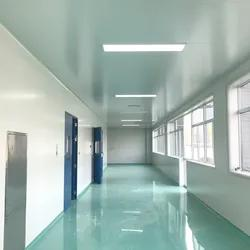
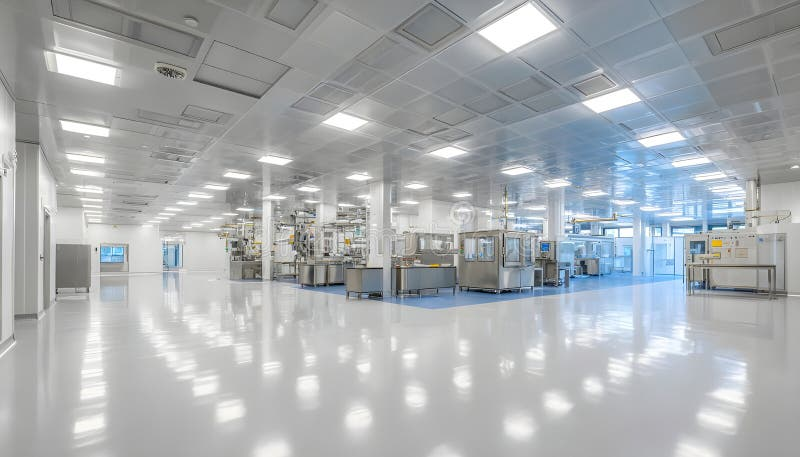
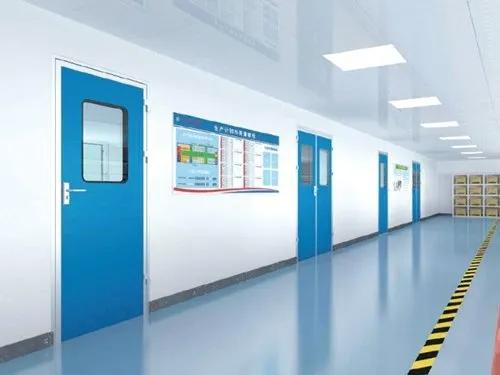
In a pharmaceutical cleanroom, your light fixtures are part of the environmental control system. They’re installed in the ceiling plenum, they affect airflow patterns, they generate heat that impacts HVAC load calculations, and critically — they need to be documented, qualified, and maintained in a state of control.
This means:
- You can’t just swap fixtures the way you would in a regular office. Any fixture change in a GMP facility requires a change control process, revalidation, and documentation.
- 你要的东西 must be available for 5-10+ years because qualification is expensive and you don’t want to re-qualify every 3 years when a fixture model gets discontinued.
- Particle generation matters. Fixtures must not be a source of contamination. This is where most commercial LED fixtures fail immediately.
The most common mistake: buyers spec a “cleanroom LED fixture” from a catalog and don’t verify that the fixture has been independently tested for particle generation per ISO 14644-1 under actual operating conditions.
Understanding ISO 14644 Cleanroom Classifications
Before specing any fixture, you need to know what class of cleanroom you’re lighting:
| ISO Class | Max particles ≥0.1μm/m³ | Typical Applications |
|---|---|---|
| ISO Class 5 | 3,520 | A/B grade aseptic processing, unidirectional airflow hoods |
| ISO Class 6 | 35,200 | Sterile manufacturing, fill-finish areas |
| ISO Class 7 | 352,000 | Secondary packaging, quality control labs |
| ISO Class 8 | 3,520,000 | Warehouse, general pharmaceutical support areas |
| ISO Class 9 | Not typically specified | Conventional manufacturing, storage |
Most pharmaceutical cleanrooms are ISO Class 5-7. Semiconductor fabs run ISO Class 3-5, which is an entirely different specification level.
For ISO Class 5-7 pharmaceutical environments, your lighting fixtures must:
- Not generate particles above class limits under normal operating conditions
- Survive VHP (vaporized hydrogen peroxide) fumigation without degradation — fixtures in cleanroom ceilings are routinely fumigated
- Seal to the ceiling plenum to prevent cross-contamination from the plenum space
- Operate without fans — any forced-air element is a particle generation risk
The Surface-Mount vs Recessed Question
This is where specs diverge significantly:
Surface-mount fixtures are mounted on the ceiling grid (common in ISO Class 7-8 areas). Easier to install, easier to access for maintenance, and the ceiling plenum behind them is technically outside the cleanroom environment.
Recessed/flush-mount fixtures are installed flush with the ceiling plane to maintain uninterrupted airflow in unidirectional cleanrooms (ISO Class 5-6). The recessed housing is in the plenum, and only the lens/ diffuser is flush with the cleanroom ceiling. These are more expensive and require more precise installation, but they’re the only option for Grade A/B areas.
For ISO Class 5-6 pharmaceutical applications, recessed is almost always required. Surface-mount is fine for ISO Class 7-8 support areas.
One additional consideration: seismic mounting. Pharmaceutical facilities in most jurisdictions require seismic restraints on ceiling-mounted equipment. Verify your fixture supplier can provide ICC-ESR certified seismic-rated fixtures. Budget suppliers often can’t.
CCT, CRI, and the Spectral Requirements Nobody Talks About
Cleanroom lighting spec sheets typically list:
– CCT: 4000K or 5000K (almost always 4000K for pharmaceutical)
– CRI: Ra > 80 or > 90
These numbers are necessary but not sufficient. Here’s what actually matters in pharmaceutical environments:
Spectral requirements for inspection areas. If your cleanroom has visual inspection stations (common in injectable manufacturing), you need more than CRI > 80. Standard 4000K LED has a spectral gap in the deep red region that affects how certain color-coded inspection tasks are performed. For these applications, request:
– CRI Ra > 90 minimum
– R9 (deep red) > 50
– Specifically ask for the spectral power distribution curve — a reputable supplier will provide this
Uniformity. Cleanrooms require illuminance uniformity of U1 (minimum to average) ≥ 0.7 and U2 (minimum to maximum) ≥ 0.4 per EN 12464-1. This is more stringent than standard commercial office requirements. Verify that the photometric layout achieves these values before approving the fixture selection.
Glare control. For areas where operators are doing detailed visual tasks, a UGR (Unified Glare Rating) of < 19 is typically required. Many flat-panel LED fixtures marketed as “cleanroom rated” have UGR > 22 due to high luminance values at the lens surface.
IP Ratings for Cleanroom Fixtures
Cleanroom fixtures are rated for their ability to:
1. Seal against the ceiling plenum
2. Withstand cleaning agents and fumigation
The IP rating for a cleanroom fixture is different from a standard fixture because the threat model is different — it’s not about rain or dust infiltration from outside, it’s about maintaining a pressure differential seal against the plenum and surviving chemical exposure.
For pharmaceutical environments:
– ISO Class 6-7 areas: IP54 minimum, IP65 preferred
– ISO Class 5 (Grade A/B) areas: IP65 is standard, IP66 for areas with wet cleaning protocols
More important than the IP rating is the gasket material compatibility. Verify that the fixture gaskets are compatible with:
– VHP (vaporized hydrogen peroxide) — used for bio-decontamination cycles
– Isopropyl alcohol (IPA) at the concentrations used in your facility
– Hydrogen peroxide-based disinfectants
Gasket failure after fumigation is one of the most common cleanroom lighting maintenance issues. EPDM gaskets typically degrade after 8-12 VHP cycles. Silicone gaskets handle 20-30 cycles. Specify silicone gaskets explicitly if your facility runs frequent VHP cycles.
Emergency Lighting in Cleanrooms
This is almost universally mishandled in pharmaceutical cleanroom projects. The standard approach of mounting battery-backed emergency exit signs on walls doesn’t work in cleanroom environments:
- Wall mounting interferes with cleanroom wall panel systems
- Standard exit signs don’t meet cleanroom aesthetic or particle generation standards
- Self-testing battery systems require maintenance access that’s disruptive in high-class areas
For cleanroom environments, specify:
– Ceiling-recessed emergency luminaires with maintained (always-on) operation
– Central battery or UPS-backed systems — eliminates individual battery maintenance in the cleanroom
– Cleanroom-rated exit signs (blade-type, ceiling-mounted) that maintain the cleanroom envelope
– Exit pathway marking that doesn’t require wall signage — floor-level LED pathway markers are an alternative in some jurisdictions
Emergency lighting in cleanrooms must also be included in your emergency lighting qualification test, which is part of the commissioning package. Budget for this in your project timeline.
The Qualification Documentation Checklist
This is what your validation team will ask for. Have it ready before you order:
- Fixture datasheet with IP rating, CCT, CRI, operating temperature range, dimensions
- LM-79 test report (photometric performance)
- LM-80 test report for the LED modules (lumen maintenance)
- LED manufacturer TM-21 projection (calculated lifespan under actual operating conditions)
- IP and IK test certificates from an accredited laboratory
- Gasket material data sheet showing chemical compatibility with your cleaning agents
- Seismic certification (if required in your jurisdiction)
- Material declaration / REACH compliance documentation (EU pharmaceutical buyers)
- Manufacturing location declaration — increasingly important for pharmaceutical supply chain qualification
- Cleaning validation support — documentation showing the fixture can survive your cleaning protocols
Any supplier who says “we’ve been doing this for 20 years, you don’t need all that documentation” is not a pharmaceutical-grade supplier.
Sourcing for Multi-Site Programs
If you’re rolling out cleanroom LED upgrades across multiple facilities — common in pharmaceutical CDMO and biotech company portfolios — you need to think about supplier continuity from day one.
The qualification investment per site is significant. If your fixture supplier changes their product line mid-program (discontinuation, acquisition, manufacturing relocation), you’re looking at $15,000-$40,000 in requalification costs per site.
Mitigate this by:
– Writing supply continuity requirements into the supplier agreement — minimum 7-year product availability commitment
– Requiring 12-month advance notification of any product changes or discontinuation
– Banking fixtures at each site — typically 5-10% overage for maintenance stock, stored in controlled conditions
Final Thought
Cleanroom LED projects fail in predictable ways: wrong IP rating, wrong gasket material, non-existent documentation, and fixtures that can’t pass qualification testing.
They succeed in equally predictable ways: the buyer understood what ISO class they were working in, they got the photometric model done before ordering, they demanded the full documentation package, and they had a qualification engineer reviewing the fixture datasheets before anything was purchased.
That second approach takes longer upfront. It’s worth it. Cleanrooms don’t get easier to qualify after installation.
Our cleanroom fixture documentation package is available at /led-catalog/ — it includes the full qualification documentation set, photometric models in AGI32 format, and a sample change control support letter that your validation team can use as a starting point.
