
Loading Dock & Warehouse Exterior LED Lighting: The Specifier’s Field Guide
Most loading dock lighting specs I’ve reviewed over 15 years of commercial lighting procurement are wrong. Not slightly off — fundamentally wrong. People spec wattage when they should spec distribution. They spec IP65 when the actual environment demands IP66k at minimum. They buy based on price from suppliers who have never stood in a frozen loading dock at 2am watching their supposedly “weatherproof” fixture fail.
This guide is for buyers who are done guessing.
The Loading Dock Environment Is Not What You Think
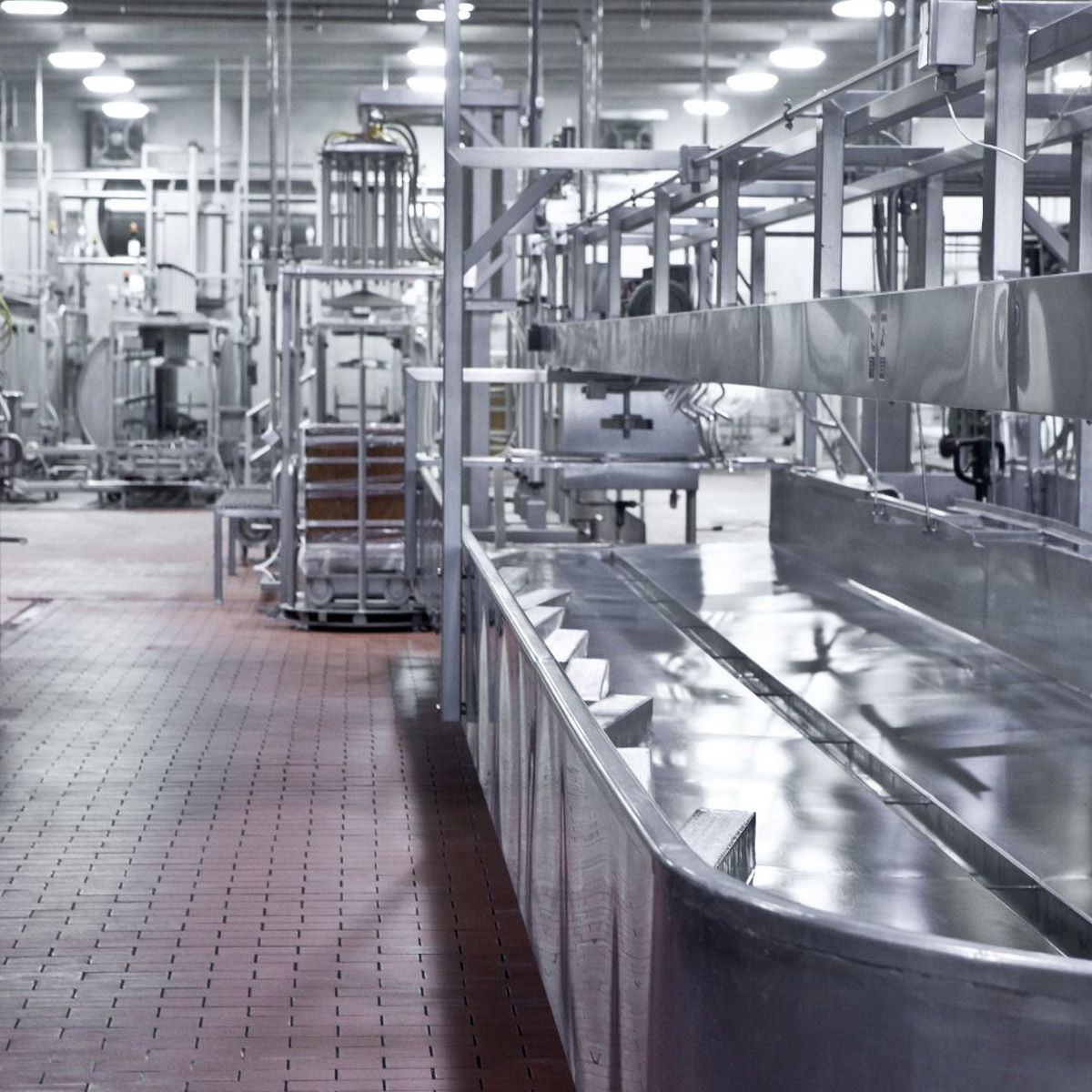

A loading dock is not an outdoor area. It’s not an indoor area. It’s a hybrid zone that kills fixtures faster than almost any other commercial application.
Here’s what actually happens in that space:
- Forklifts generate particulate matter constantly. Dust, debris, and metal shavings float everywhere. Open fixtures accumulate junk inside the housing within months.
- Temperature swings are violent. A refrigerated warehouse dock in Chicago goes from -10°C to +35°C in summer as trucks back in and doors stay open. Standard LED drivers aren’t rated for that range.
- Moisture is omnipresent. Not from rain — from condensation, steam from truck exhausts, and the constant temperature differential. Humidity in an unconditioned dock bay routinely hits 80-90%.
- Vibration is constant. Forklifts, trucks idling, doors slamming — all transmit vibration through the structure. Standard LED fixtures have their solder joints crack within 12-18 months in this environment.
If your current fixtures are lasting less than 3 years at a busy dock, this is why.
Specifying the Right Light Distribution: The Most Ignored Factor
Here’s the number one mistake commercial buyers make: they spec based on wattage or lumens and ignore photometric distribution.
A loading dock needs light in three distinct zones:
Zone 1: Dock level (ground to 1.5m)
This is where workers unstrap pallets, connect TRK lines, and inspect shipments. This is the high-activity zone and it needs the most foot candles — typically 30-50fc depending on the operation.
Zone 2: Dock face (1.5m to 4m)
This covers the dock leveler, the dock seal/plank area, and the truck trailer interior when backed in. Needs about 20-30fc with excellent uniformity. Hot spots here create vision problems when workers move between bright and dark areas.
Zone 3: Approach lane (above 4m, extending 10-15m out)
Vehicle approach and reversing zone. Lower requirements, but still needs 10-15fc with sharp cutoff to avoid light spill into adjacent areas or public roads.
Most single-head LED high bay fixtures you see installed at docks are designed for even ceiling mounting — their photometric distribution is wrong for dock faces. The result: ground-level lux readings that are half what the specification called for.
The fix: Specify fixtures with asymmetric (forward throw) distribution for wall-mounted dock applications, or full-cutoff Type II/III distribution for canopy-mounted applications. Get the photometric PDF from the manufacturer and model the layout before you order.
At YoubeeLight, our standard loading dock fixture (/led-catalog/“>YB-LD series) ships with Type II distribution as default, with Type III and IV options available for specific layouts.
IP Ratings: What You Actually Need
IP65 is not enough. Full stop.
Here’s why: the IP rating system measures protection against solid objects (first digit) and liquids (second digit). IP65 means:
– 6: Dust-tight (no ingress of dust)
– 5: Protected against water jets (12.5L/min from any direction)
But IP65 fixtures fail in loading docks because the second digit doesn’t account for pressure. A high-pressure washdown or a pressure washer used to clean the dock area will force water past the gasket on IP65 fixtures.
What you actually need:
| Application | Minimum Rating | Recommended |
|---|---|---|
| Standard enclosed dock bay | IP65 | IP66 |
| Washdown dock / refrigerated dock | IP66 | IP66k |
| Chemical exposure area | IP66 + chemical resistant coating | IP67 + epoxy coating |
The “k” designation in IP66k specifically tests against high-pressure/steam jet conditions. This is the spec used in food processing docks and refrigerated facilities.
One more thing: IP rating only applies to the fixture housing. If the fixture uses a separate driver (which many high-power LED fixtures do), the driver needs its own IP rating or must be installed in a protected enclosure. A fixture rated IP67 with an IP20 driver is effectively IP20.
Verify that the driver’s IP rating is specified in the datasheet.
IK Rating: The Spec Nobody Checks
IK rating measures impact resistance on a scale of IK01 to IK10. Loading dock fixtures routinely get hit by:
- Forklift masts at 3-4m height
- Strapping tools dropped from dock level
- Debris blown by truck exhaust
IK08 (5 joule impact, equivalent to a 1.7kg mass falling from 300mm) is the practical minimum for loading dock applications. IK09 or IK10 if the dock is used by aggressive forklift operations or in facilities where strapping tools are common.
Most budget dock fixtures are IK07 or below. They’re going to crack.
Cold Storage Dock Considerations
If your facility has refrigerated docks — common in food, pharmaceutical, and chemical distribution — the LED spec changes significantly:
Temperature range matters more than lumens. Standard LED drivers operate reliably to -20°C. Below that, you need drivers rated to -40°C. In practice, even standard drivers fail faster in cold environments because the electrolytic capacitors degrade more quickly at temperature extremes.
Cold-start behavior. Some LED drivers won’t start reliably below -10°C even if they’re rated to -20°C. Check the cold-start specification, not just the operating temperature range.
Condensation inside the fixture. In refrigerated docks, the warm humid air from the truck cab mixes with the cold dock environment. Condensation forms inside fixtures even with IP66 ratings. Consider fixtures with built-in pressure-equalization valves (breather membranes) that prevent moisture accumulation without compromising IP rating.
Our /led-catalog/“>YB-LD-COLD series addresses these requirements with drivers rated to -40°C operation and dual-breather valve design.
The Wattage Trap
Loading dock wattage requirements vary too much based on mounting height, uniformity requirements, and zone layout to give you a simple formula. But here’s the common trap:
Buyers spec 150W or 200W fixtures because their existing metal halide was that wattage. This is backwards.
Calculate the required foot candles for each zone, model the fixture’s photometric distribution in your layout, then derive the required wattage. A well-designed 100W asymmetric fixture at 3.5m mounting height will outperform a poorly placed 200W round high bay by a significant margin.
Common sense but rarely applied in practice.
What You Should Demand From Your Supplier
Before placing a loading dock LED order, get the following from your supplier:
- LM-79 test report with full photometric data (not just a lumens number)
- LM-80 data for the LED chips used — this is the actual lifespan test, not marketing claims
- IP and IK test certificates (not just a statement on the datasheet)
- Driver datasheet showing temperature range and cold-start performance
- Calculated TM-21 projections for lumen maintenance — not just “50,000 hours”
Any supplier that can’t provide items 1-5 isn’t a spec-grade supplier. They’re a price-point supplier, and loading docks are not the place to play that game.
Final Thought
I’ve seen loading dock LED projects save clients $40,000-$80,000 per year in energy and maintenance costs on large facilities. I’ve also seen projects where they spent $60,000 and replaced everything 18 months later because they bought on price.
The difference is always in the specification — specifically, the details nobody checks until the fixtures start failing.
If you want the photometric models and datasheets for our loading dock fixture range, they’re at /led-catalog/. We spec these out with actual project drawings included, not just a “call for quote” page.
