
Swimming Pool & Aquatic Facility LED Lighting in 2026: What Commercial Buyers Get Wrong
The number one mistake I see in aquatic facility LED procurement isn’t about lumens or wattage. It’s about treating pool lighting like any other commercial lighting project.
It’s not. And the buyers who figure that out first end up with systems that last; the rest end up with expensive corrosion failures within 18 months.
After consulting on aquatics projects from hotel rooftop pools to Olympic training centers, here’s what separates the buyers who spec it right from the ones who write it off as a maintenance nightmare.
Why Pool Lighting Breaks Faster Than Your Models Predict
Standard LED lifespan ratings assume relatively benign operating conditions. Pool lighting doesn’t qualify.
The environment inside a natatorium is aggressively corrosive:
– Chlorine and bromine off-gassing accelerates plastic degradation
– High humidity (typically 60-70% RH) attacks electrical connections
– Temperature swings between pool deck and water create condensation cycles
– Chemical exposure attacks gasket materials and sealing compounds
I’ve seen fixtures rated for 50,000 hours fail at 15,000. The culprit wasn’t the LED module—it was the polycarbonate lens hazing from chemical exposure and the wire terminations corroding inside the junction box.
The spec implication: Demand IP67 or IP68 rating and verify the manufacturer’s corrosion testing protocol. “Suitable for wet locations” is marketing language. Ask for the specific ASTM B117 salt fog test results.
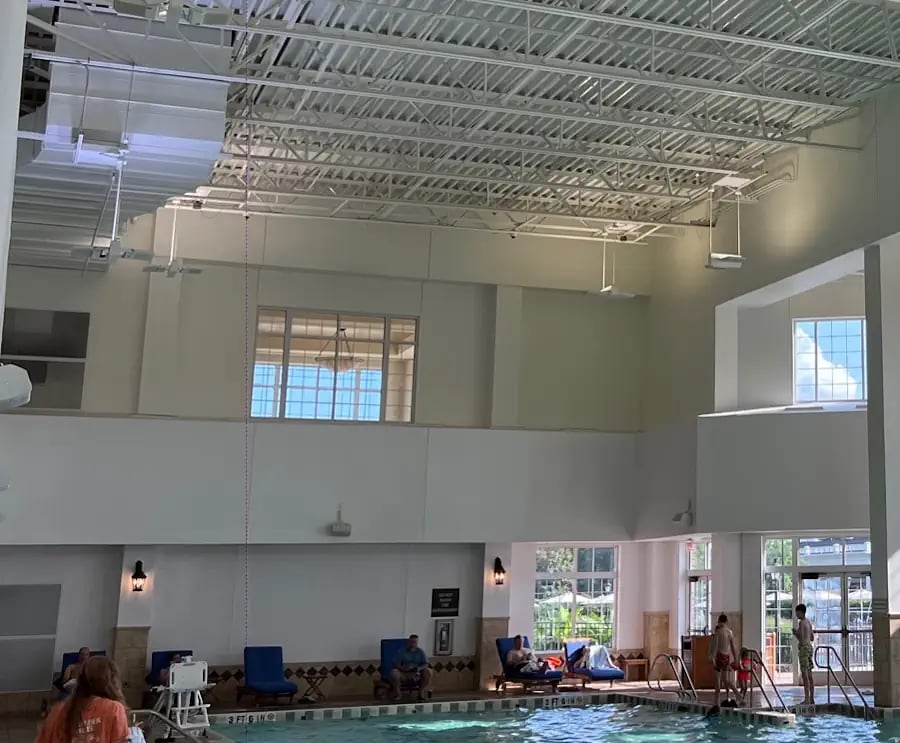
The Color Temperature Decision That Affects More Than Aesthetics
Pool lighting color temperature isn’t about matching décor. It’s about how swimmers perceive the water and how lifeguards see underwater.
The practical breakdown:
For competition pools (50m, 25m):
– 5000K-6500K provides optimal visibility for officials and cameras
– Water clarity and lane lines become more visible at higher CCT
– TV broadcast requirements typically mandate 5600K minimum
For leisure pools and hotel installations:
– 4000K-4500K creates a more inviting, natural atmosphere
– Warmer temperatures reduce the “clinical” feel that puts some guests off
– Lower CCT reduces glare reflection off water surface
For therapy pools and rehabilitation facilities:
– 3000K-3500K promotes relaxation and reduces patient anxiety
– Tunable white systems allow session-specific adjustments
– Avoid 5000K+ in areas used for extended therapy sessions
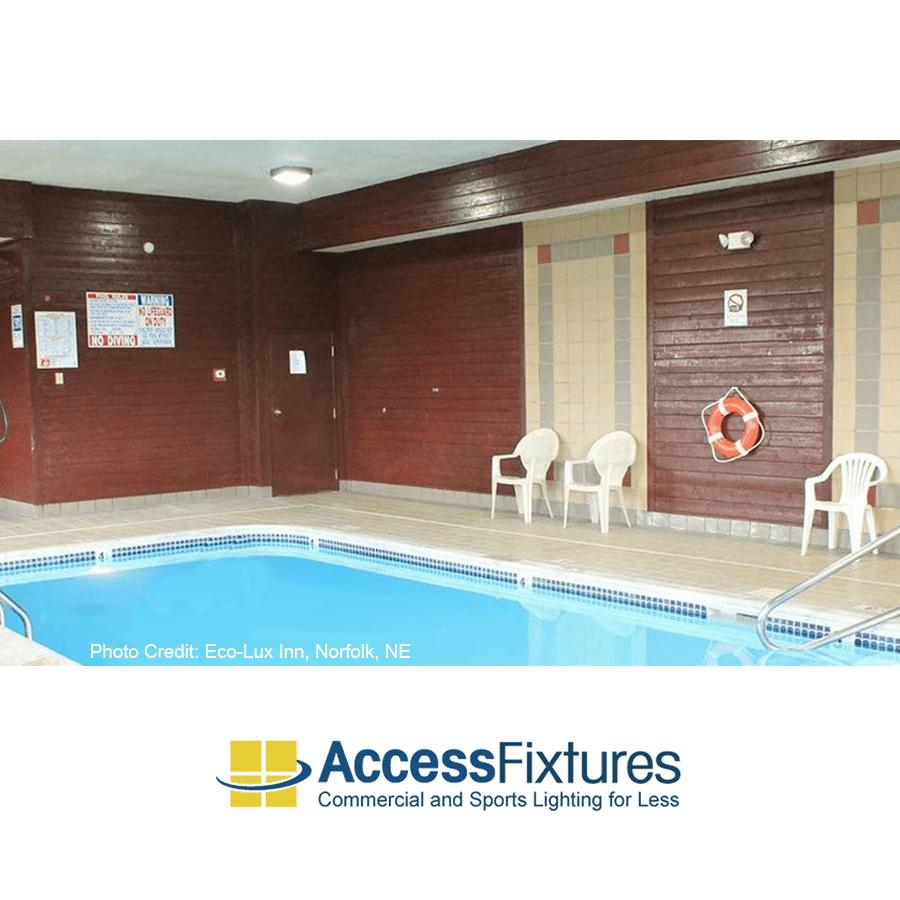
Underwater vs. Deck Lighting: The Architecture That Matters
Pool lighting isn’t one system—it’s three integrated subsystems, and most procurement mistakes happen when buyers treat it as one.
Underwater fixtures:
– Require IP68 with specialized underwater ratings (not just “wet location”)
– Operating voltage matters: 12V systems are safer for underwater use
– lumen output needs to account for water absorption (roughly 1-2% per centimeter)
– Beam angle selection depends on pool depth—deeper pools need wider beams
Deck-level area lighting:
– IP65 minimum (chlorine-laden air is corrosive)
– Uniformity critical for safety—pool edges must be well-lit
– Glare control essential in areas where people transition from water to deck
Vapor tight fixtures for natatorium ceiling:
– 100% humidity environment = constant condensation potential
– IP65/IP66 rated fixtures mandatory in ceiling cavities above pool
– Thermal management must account for heat trapping in enclosed ceiling spaces
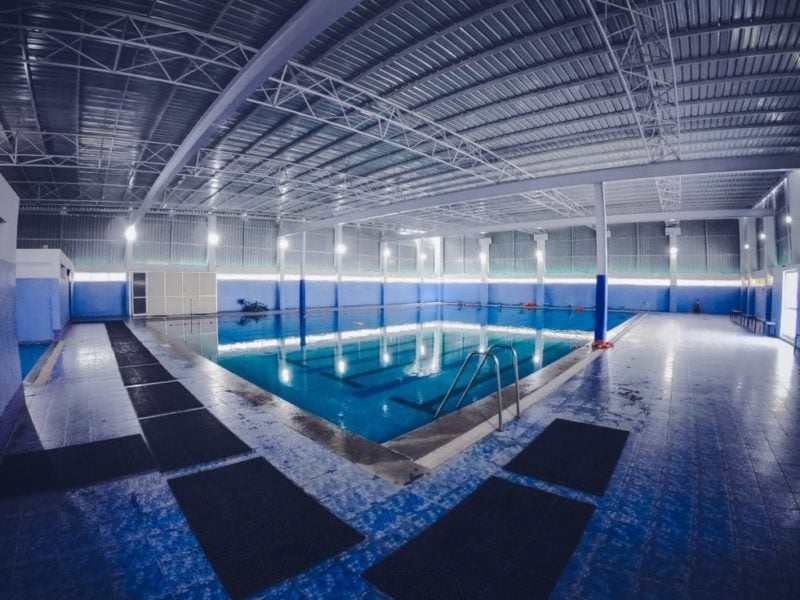
The Control System That Actually Makes Economic Sense
Pool lighting control requirements depend heavily on facility type and operating hours.
What’s worth specifying:
For hotel/resort pools:
– Astronomical timeclock for seasonal schedule adjustment
– Dimming capability for evening ambiance (50-100% range)
– Override switch for maintenance
– Integrate with building automation for energy code compliance
For competition venues:
– Scene presets for competition/training/events
– DMX512 for theatrical effects (some international events require it)
– Instant-on capability (no warm-up time for competition starts)
– Emergency lighting integration for televised events
For community recreation centers:
– Occupancy sensors in locker rooms and associated areas
– Scheduling that matches facility operating hours
– Dimming for early morning/evening programs
– Simple manual override—no WiFi-dependent “smart” controls
What’s not worth specifying: RGB color changing for most commercial pools. Yes, it looks great on Instagram. No, your maintenance staff won’t use it regularly, and the controllers fail before the fixtures do.
Maintenance Access: The Decision That Determines Real Cost
Pool lighting maintenance isn’t optional—it’s a scheduled necessity. The spec decisions that seem minor upfront become major cost drivers when you need to service fixtures above water.
What affects maintenance cost:
| Factor | Budget Impact |
|---|---|
| Fixture mounting height | >20ft requires lift equipment |
| Fixture accessibility | Recessed fixtures harder to access |
| Driver replacement | Modular drivers reduce service time |
| Lens material | Polycarbonate vs glass affects replacement frequency |
| Wiring termination | Junction box location matters |
My recommendation: Specify fixtures with tool-free driver access from below. The 15% cost premium pays back on the first service call.
Energy Code Compliance: The Hidden Complexity
Commercial pools fall under multiple energy codes, and the requirements interact in ways that aren’t obvious.
ASHRAE 90.1, IECC, and local codes all apply. The typical compliance pathway:
- LPD (Lighting Power Density) limits apply to pool deck and natatorium areas
- Controls requirements mandate automatic shutoff and daylight harvesting where applicable
- Emergency lighting must meet IBC requirements for assembly occupancies
- Exemptions exist for underwater lighting in some codes—verify your jurisdiction
The mistake I see regularly: Specifying fixtures that meet individual requirements but exceed combined LPD limits when all systems are operating.
What You Should Actually Require in Your RFQ
Every swimming pool LED lighting RFQ should specify:
Fixture requirements:
– IP68 for underwater, IP65+ for deck/ceiling
– ASTM B117 salt fog test minimum 500 hours
– Operating temperature range -10°C to 45°C
– Driver mean time between failure minimum 50,000 hours
– Luminaire warranty minimum 5 years, full replacement
Photometric requirements:
– Lighting calculations for both deck and underwater coverage
– Glare index calculations for deck areas
– Uniformity ratios per IES RP-6 (U1 minimum 0.4)
– UGR calculations where lifeguard/supervisor positions exist
Control requirements:
– Dimming protocol specified (0-10V, DALI, or proprietary)
– Scene capability defined for facility type
– Integration requirements with existing building systems
– Override and manual control provisions
Documentation requirements:
– IES files (.ies format) for all fixtures
– ASTM B117 test reports
– LM-79 photometric test reports
– Installation manual with maintenance procedures
Pool lighting isn’t complicated—but it’s unforgiving. Get the spec right and you’ll have a system that serves the facility for 15+ years. Get it wrong and you’re managing a chronic maintenance problem while explaining to ownership why the lights keep failing.
Browse YoubeeLight’s commercial LED catalog for IP68-rated aquatic lighting solutions, or contact our team for project-specific specifications.
