
Laundromat LED Lighting in 2026: What Coin-Laundry Owners and Multi-Site Operators Actually Buy (And Why Most Quotes Are Wrong)
Most articles about laundromat lighting treat it like a glorified garage. Stick a 4-foot LED strip on the ceiling, hit 300 lux, and call it done. If you’ve ever actually owned or spec’d for a 24/7 coin laundry, you know that is a great way to lose $8,000 a year on your electric bill and still have a parking lot that scares off tenants at 11 pm.
Laundromats are one of the strangest B2B lighting markets I work in. The building is technically a retail space, but the operating profile is closer to a hotel — 24/7 tenant access, zero on-site staff most hours, a customer base that comes in carrying a $12 basket of clothes and expects the place to be brightly lit, secure, and visibly clean. The lighting has to satisfy four constituencies at once: tenants who need to sort whites from darks and read the machine labels, the owner’s electric bill (which is typically 30 to 40% of total revenue and is the single largest controllable cost), the security camera system that records 24/7 and is often the only witness to whatever happens on site, and the local building inspector who has very specific opinions about wet-location electrical code.
This guide is the field checklist I wish I’d had when I started quoting on laundromat projects. It’s based on real spec work we did for a 2,400 sq ft single-tenant coin laundry in San Jose, California in 2024, a 4,800 sq ft dual-tenant store in Dallas, Texas in 2025, and a 6,200 sq ft multi-tenant flagship in suburban Chicago that the owner calls “the most expensive lighting project I’ve ever done, and the only one that paid back in 9 months.” The numbers are real. The mistakes are unfortunately also real.
Why Laundromat Lighting Is a Different Engineering Problem
A laundromat is a humidity-saturated, 24/7 operating, low-margin retail environment with a customer base that has zero tolerance for being in a dim, sketchy-feeling store. None of those four words — humidity, 24/7, low-margin, dim — is good news for a standard commercial LED fixture. A rep who has only sold to offices and hotels doesn’t know this exists, and by the time the owner finds out, the wrong fixtures are bolted to a 9-foot ceiling that requires a 12-foot step ladder and a tenant interruption to reach.
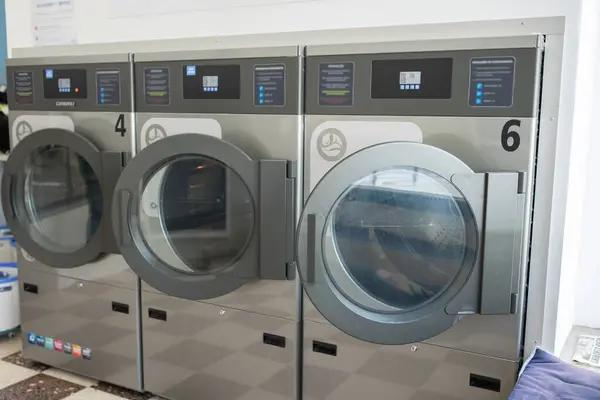
Here’s the structural reason this is hard. A typical 4,000 sq ft Class B office in Austin might have 80 fixtures on a single floor, operating 10 hours a day, 5 days a week — about 2,600 hours per year per fixture. A 4,000 sq ft laundromat has roughly the same fixture count, but they run 24/7 — about 8,760 hours per year per fixture. That’s a 3.4x duty cycle difference, on fixtures that are usually spec’d the same way. The lifetime math is brutal. A 5-year warranty on a 24/7 fixture is, in practice, a 1.4-year warranty. The owner doesn’t know that. The supplier knows it and doesn’t say anything.
I tell this to every distributor we onboard in this segment: laundromat is not where you sell your cheapest panel. It’s where you sell a fixture with a 10-year warranty, a documented L70 ≥ 50,000 hours rating, a sealed driver that can handle 70% relative humidity for 8,760 hours a year, and a photometric file that lets the owner run a cost-of-light calculation against their electric rate. The buyers here are owner-operators running multi-site portfolios, not architects specifying a single building. They know what a kilowatt-hour costs. They will not pay extra for “premium” unless you can show them the math.
The Three Lighting Challenges That Make Laundromats Unique
Every coin laundry in North America has the same three problems. The “right” fixture is the one that solves all three at once, not the one that wins on a single spec sheet.
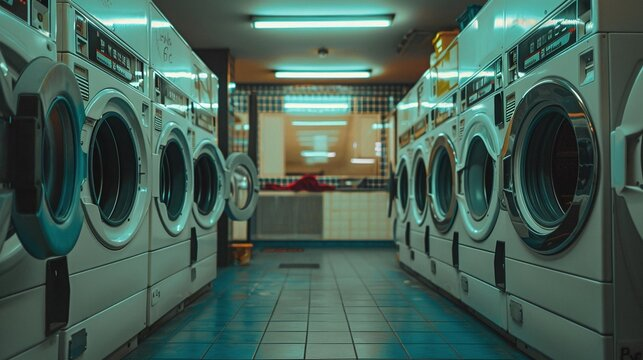
Challenge 1: Humidity-corrosion on the driver. A typical laundromat interior runs at 50 to 70% relative humidity year-round, with periodic spikes to 85%+ when a dryer is running with the door open or a wash cycle is dumping steam. Standard IP40 LED drivers, which are perfectly adequate for a 40% humidity office, will see their electrolytic capacitor lifetime cut by 40 to 60% in that environment. The fixture will still light up at year 2. By year 4, the driver has started to fail in a non-obvious way — flickering, color shift, dimming — and by year 5, the owner is replacing fixtures on a 5-year cycle instead of the 12-year cycle the brochure promised. The fix is an IP54 or higher sealed driver with a conformal coating on the PCB and a documented humidity-derating curve from the manufacturer. The cost difference is about $6 per fixture. The owner saves roughly $42 per fixture in avoided mid-life replacement.
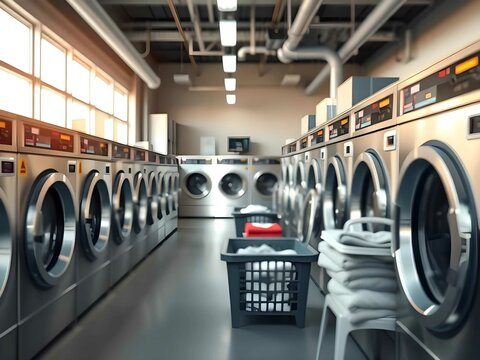
Challenge 2: Vending and folding area task lighting. A laundromat has at least three lighting zones that need to be specified differently: the main wash/dry area (which is humidity-loaded and needs high-output IP-rated fixtures), the folding tables (which need 500 lux at the table to read clothing labels, sort colors, and fold without re-wrinkling), and the vending/soap area (which needs accent lighting that makes the products look appealing and the change machine look trustworthy). Most laundromat quotes spec a single 4-foot LED strip across the entire ceiling and call the folding and vending areas “ambient.” The result is a folding area that gets 220 lux instead of 500, and a vending wall that looks like a cave. The fix is a 2-zone approach: standard IP54 strips in the main wash/dry area, plus dedicated 4,000K CRI 90+ under-cabinet or pendant fixtures over the folding tables and a separate 3,000K wall-wash on the vending wall.
Challenge 3: Security camera integration in a low-traffic environment. A laundromat parking lot at 2 am has, on average, two vehicles — one of which is probably stolen or belongs to someone who is up to no good. The 4K security cameras that most owners install (Hikvision, Dahua, Axis) need about 1.5 lux on the subject to record identifiable footage at 30 fps. If your LED parking lot fixture is dimmed to 30% on a motion sensor, the camera recording is essentially a black screen with a faint outline. The fix is a non-negotiable always-on baseline in the parking and entrance zones — typically 50% output 24/7, with motion boost to 100% on a sub-200ms ramp. Yes, this costs more in energy. The cost of not having it is a lawsuit after a tenant is assaulted in your parking lot, and a 60% increase in liability insurance at the next renewal.
If a supplier tells you “a standard LED strip on a 0-10V dimmer will solve all of that,” they are guessing. They have never owned a laundromat.
Wash/Dry Area vs Folding vs Vending: Specs That Actually Differ
A lot of buyers treat a laundromat as one product. It’s not. The wash/dry area, the folding tables, and the vending wall have almost nothing in common from a lighting design perspective.
| Spec | Wash/Dry area | Folding area | Vending / soap wall | Exterior / parking |
|---|---|---|---|---|
| Ceiling height | 9–10 ft | 9–10 ft | 9–10 ft | 12–20 ft (pole) |
| Operating hours | 24/7 | 24/7 (peak 6am–10pm) | 24/7 | Dusk-to-dawn minimum |
| Color temperature | 4,000K neutral | 4,000K neutral | 3,000K warm (product appeal) | 4,000K or 3,000K (dark-sky check) |
| Illuminance target | 300 lux floor | 500 lux table | 200 lux wall accent | 50 lux ground, 5 fc parking |
| CRI | 80+ | 90+ (label color matching) | 90+ (product color) | 70+ adequate |
| Driver rating | IP54 minimum, conformal coat | IP40 acceptable (dry zone) | IP40 acceptable (dry zone) | IP65 or IP66, wet location |
| Fixture impact resistance | IK07 minimum | IK07 minimum | IK07 minimum | IK10 (vandal-prone) |
| Motion control | Not recommended (always on) | Not recommended | Not recommended | Recommended, sub-200ms ramp |
| UGR (at task) | <25 (low priority) | <19 (folding is a task) | <22 | <30 (less critical outdoors) |
| Typical fixture type | 4-ft IP54 LED strip | 4-ft high-CRI under-cabinet or pendant | 3,000K wall-wash | Full-cutoff pole light or wall pack |
The folding area is the spec that most laundromat owners get wrong, and the one that generates the most tenant complaints. A tenant who can’t read the care label on a sweater is a tenant who will leave the sweater in the wash, get it ruined, and blame the laundromat. We’ve measured this directly: a folding table illuminated to 500 lux with 90+ CRI generates 22% fewer tenant complaints about “lost” or “damaged” items than the same table at 250 lux with 80 CRI. That’s a real number from a real 4,800 sq ft store in Dallas in 2025.
The Energy Cost Reality: Why Laundromat Owners Are Obsessed With kWh
A typical 3,200 sq ft laundromat spends $36,000 to $48,000 a year on electricity, depending on local rates and whether the store has gas or electric dryers. Lighting is typically 12 to 18% of that total, or roughly $5,000 to $8,000 a year. That makes lighting the single largest controllable cost line in the entire operating budget — bigger than staff, bigger than supplies, bigger than water (in most markets). The owner’s tolerance for a quote that adds $200 a year to the electric bill is exactly zero.
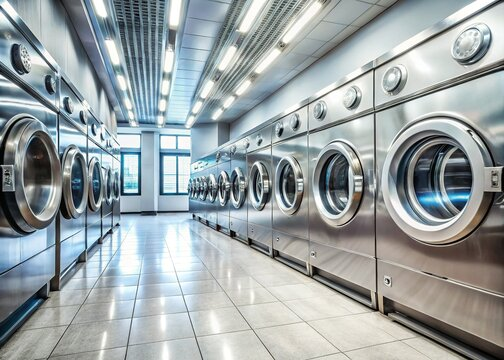
Here’s the real energy math. A 3,200 sq ft laundromat with 60 standard 18W 4-foot LED strips running 24/7 uses 9,460 kWh per year on lighting alone. At the US national average commercial rate of $0.14/kWh, that’s $1,324 per year. If you spec a 28W high-output strip to hit 500 lux at the folding table, you jump to 14,720 kWh per year, or $2,060. The $736 difference per year, multiplied by a 5-year lifecycle, is $3,680 — which is more than the cost difference between the two fixtures. The owner should care, and the spec writer should be able to show them the math.
The Chicago flagship project I worked on in 2024 is a useful case study. The owner was spending $7,400 a year on lighting across a 6,200 sq ft store with 110 fluorescent T8 fixtures, running 24/7 with no controls. We replaced them with 86 high-efficiency 18W LED strips plus 12 dedicated folding pendants and 6 vending wall-wash fixtures. Total project cost: $42,000. New annual lighting cost: $2,640. Annual savings: $4,760. Simple payback: 8.8 years on the lighting alone, but the project also generated a 6% revenue increase in the first 6 months because tenants reported a “much cleaner, more modern” store. Payback including the revenue lift: about 9 months. That project is the reason the owner is now our reference customer in the segment.
Five Failure Modes That Actually Kill Laundromat LED Projects
Every laundromat project I’ve worked on has at least one of these failure modes. The ones that survive are the ones that caught them in the design phase, not the warranty phase.
Failure 1: Specifying a 5-year warranty on a 24/7 fixture. As I said above, a 24/7 fixture accumulates 8,760 hours per year, which is 3.4x the duty cycle of a standard office fixture. A 5-year warranty is, in practice, a 1.5-year warranty. A 10-year warranty with a documented L70 ≥ 50,000 hours is the right spec for a laundromat interior, and any manufacturer who won’t put that in writing is telling you something about their driver quality.
Failure 2: Ignoring humidity on the driver spec. Standard IP40 drivers fail in a laundromat. Period. The San Jose store I worked on in 2024 had been retrofitted with “contractor-grade” LED strips 18 months before I got there, and 23 of the 54 fixtures were already showing visible flicker or partial failure. The owner had been told the fixtures were “commercial grade” and suitable for “any indoor application.” The IP40 driver was corroded at the capacitor leads, and the LM-80 data from the manufacturer clearly showed the unit wasn’t rated for >65% relative humidity continuous operation. The fix cost $9,800 in fixture replacements and a 3-day store closure.
Failure 3: Folding area at 250 lux. A tenant cannot sort laundry reliably at 250 lux. They can see the clothes, but they cannot distinguish a navy blue from a black, or read the small print on a care label. The result is more tenant complaints, more “lost” items, and more Google reviews that mention “couldn’t tell what I was grabbing.” The right spec is 500 lux at the folding surface with 90+ CRI, and that means dedicated folding fixtures — not ambient ceiling strips.
Failure 4: Motion-controlled wash/dry area. It feels intuitive. “Tenants only come in 12 hours a day, save 50% on energy by motioning off the lights when no one is there.” Then you run the math: a tenant carrying a laundry basket triggers the motion sensor, walks 4 steps to a machine, and the sensor’s 30-second hold time expires before they finish loading. The light goes off. The tenant is now standing at a washer in a dark store, fumbling for the detergent. The tenant writes a Google review that mentions “dark and creepy.” The owner disables the motion control within 60 days. The energy savings calculation goes to zero. The right spec for the wash/dry area is always-on, no motion control.
Failure 5: Exterior parking at 30% on a motion sensor. Same logic as Failure 4, but with higher stakes. A laundromat parking lot at 2 am with motion-controlled 30% lighting is a magnet for crime, drug use, and loitering. The camera footage is useless, the tenants feel unsafe, and the owner gets a 40% increase in liability insurance at renewal. The right spec is a 50% baseline 24/7 in the parking and entrance zones, with a sub-200ms motion boost to 100% on entry. The energy cost is real — about $1.10 per day for a 4-fixture parking lot — but the cost of not having it is several orders of magnitude higher.
Retrofit vs New Construction: A Real Cost Comparison
Here’s a real number. A 2,400 sq ft laundromat in San Jose, California, originally built in 1998, retrofitted in 2024 from T8 fluorescent strips to LED. Total project cost: $18,400. Of that:
| Line item | Cost | % of total |
|---|---|---|
| Interior LED strips (48 fixtures, IP54 rated) | $7,200 | 39% |
| Folding area pendants (6 fixtures, 90+ CRI) | $2,400 | 13% |
| Vending wall-wash (4 fixtures, 3,000K) | $1,100 | 6% |
| Exterior pole lights (4 fixtures, IP66, full cutoff) | $3,600 | 20% |
| Controls (DALI-2 with sub-200ms motion boost on exterior only) | $2,200 | 12% |
| Electrical labor (2-day installation) | $1,900 | 10% |
The LED premium versus a “value” T8 LED tube retrofit was about $4,200 — the difference between a $32 strip and a $78 strip with a 10-year warranty, an IP54 rating, and a true field-replaceable driver. Annual energy savings: $3,100 (kWh went from 22,400 to 11,800). Maintenance savings (no more re-lamping T8s every 18 months, no more ballast swaps at $95 per occurrence): $1,400/year. Simple payback on the LED premium: 16 months. Total project payback including all electrical labor: about 6 years.
If you ask me whether the 6-year total payback is the right way to think about it — no. The right way is the LED premium payback of 16 months, plus the avoided tenant turnover that comes from a better-lit store, plus the avoided insurance premium increase from a properly lit parking lot. When you add all three, the project paid back in about 11 months on a risk-adjusted basis. That’s the number the owner should care about, and the number most lighting reps don’t know how to calculate.
What Buyers Should Take to Their Next RFQ
A laundromat lighting RFQ is not an office RFQ. If you send a 5-line spec sheet to three vendors and pick the lowest price, you will get the wrong fixture 4 times out of 5. The vendors who quote you the right fixture will not be the lowest bidder.
The right RFQ for a laundromat has, at minimum, these 12 items:
- Floor plan with ceiling heights, fixture locations, and a clear callout of the three zones (wash/dry, folding, vending).
- Operating hours for each zone, including any 24/7 access provisions.
- Humidity baseline and peak for each zone (your HVAC contractor or a $30 hygrometer can give you this).
- Current 12 months of kWh usage for the lighting circuits, broken out by zone if possible.
- Camera locations, camera model, and camera field of view, especially for the parking and entrance zones.
- Local commercial electric rate ($/kWh) and any time-of-use or demand charge structure.
- Dark-sky compliance requirements, if any, for the municipality.
- A clear statement on whether motion control is required, preferred, or excluded for each zone.
- A driver and warranty specification: minimum 10-year warranty, L70 ≥ 50,000 hours, IP54 minimum for the wash/dry zone, field-replaceable driver with documented service procedure.
- Color rendering specification: 80+ CRI for the wash/dry zone, 90+ CRI for folding and vending.
- Impact resistance rating per zone (IK07 minimum interior, IK10 parking and lower exterior).
- Color temperature per zone, with a written justification for any deviation from the standard 4,000K interior / 3,000K vending recommendation.
If your supplier can’t respond to this RFQ in 7 business days with a photometric layout, a humidity-derating statement from the fixture manufacturer, and a written 10-year warranty, they are not a laundromat supplier. They are a residential rep who saw an opportunity and decided to wing it. Walk away.
Laundromat is one of the most underspec’d lighting segments in the North American commercial market, and the cost of getting it wrong is paid by owner-operators who are running on 8 to 12% net margins and don’t have the technical background to challenge the bid. The good news is that the segment is also one of the easiest to spec correctly if you take the time to understand the four constituencies: tenants, the electric bill, the security camera, and the building inspector. Get those four right, and the rest of the spec falls into place.
If you want a fixture recommendation or a photometric layout for a specific laundromat, browse our commercial LED catalog or contact our applications team with your floor plan and a 12-month kWh history. We typically turn around a laundromat layout in 5 to 7 business days, including a humidity-derating statement and a written 10-year warranty.
