
5 LED Failure Modes That Actually Kill Commercial Projects (and How to Spec Against Them)
Every LED supplier tells you their product lasts 50,000 hours. Every datasheet says “L70 > 50,000 hrs.” So why do I still get calls from project buyers at month 14 saying “half the fixtures in the lobby are flickering”?
Here’s the thing nobody wants to admit out loud: the failure modes that actually cause you headaches are almost never the ones your spec sheet protects you against.
I’ve spent 15 years watching commercial lighting projects go sideways. Not because the buyer picked the wrong wattage or the wrong color temperature. But because they spec’d against phantom problems while the real killers walked right through the front door.
Let me walk you through the five that actually matter — the ones I’ve seen cost real money, real reputation, and real sleep.
1. Thermal Runaway in Enclosed Fixtures (The Silent Killer)
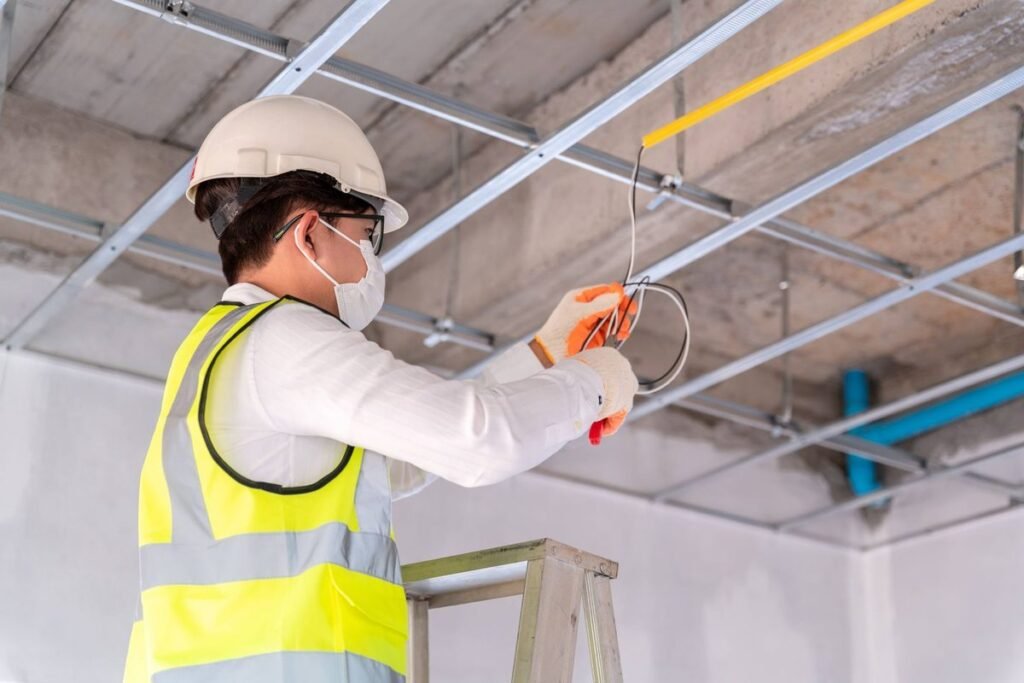
Here’s a scenario I’ve seen play out at least a dozen times. A buyer specs recessed downlights for a hotel corridor. The fixtures fit into existing 4-inch junction boxes. They’re IP20, which is fine for indoor corridors. The installer drops them in, puts insulation on top because that’s what the building code requires, and moves on.
Eighteen months later, the corridor looks like a Christmas tree with every third light dead.
What happened: Thermal runaway. The LED junction temperature exceeded 105°C because:
– The junction box was too small for the driver
– Insulation trapped heat
– The thermal pad between LED PCB and heatsink dried out
The datasheet said “ambient temperature range: -20°C to +45°C.” Which is technically true — but only if you have free air circulation. Nobody put that on the spec sheet.
The real number that matters: Tc (case temperature) at maximum drive current. If your supplier can’t tell you what Tc is at 350mA in a sealed housing, walk away. I’ve seen fixtures where the Tc delta between “open bench” and “installed in ceiling” was 32°C. That 32°C is the difference between 50,000 hours and 12,000 hours.
Here’s what I now require on every downlight spec I approve:
| Parameter | Minimum Requirement | Why It Matters |
|---|---|---|
| Tc max at rated current | ≤ 85°C | Direct predictor of lifespan |
| Thermal interface material | Named compound (not “thermal pad”) | Generic pads degrade in 2-3 years |
| Tested in simulated housing | Yes, with report | Bench testing means nothing |
| Insulation contact rating | IC or IC-AT rated | If you can’t insulate over it, it’s a liability |
I’ll be honest — most Chinese factories don’t run this test. They test on an open aluminum plate at 25°C ambient and call that “thermal management.” It’s not. It’s marketing.
2. Capacitor Drying in LED Drivers (The 3-Year Time Bomb)
If I had a dollar for every “premature failure” that turned out to be a cheap electrolytic capacitor, I’d retire tomorrow.
Here’s what most buyers don’t know: the LED chips in your fixture will almost certainly outlive the driver. In fact, in 90% of the cases I’ve investigated, the LEDs were still producing light when the “fixture failed.” The driver died first.
The weak point? Electrolytic capacitors. Specifically, the ones on the output side of the driver’s DC bus. They’re rated for 2,000 to 5,000 hours at 105°C. At lower temperatures — say, 65°C junction — that extrapolates to maybe 20,000 hours using the Arrhenius equation. That’s roughly 2.3 years of 24/7 operation.
For a commercial project where the lights run 16 hours a day? You’re looking at 3-4 years before capacitor failures start showing up as flicker or total blackout.
What changed my approach: I stopped accepting “isolated driver, 5-year warranty” as a spec. Now I ask:
– What brand capacitors? (Rubycon, Nichicon, or Panasonic — anything else makes me nervous)
– What’s the rated temperature and hours? (105°C, 5,000 hrs minimum on the output caps)
– Is it a constant current or constant voltage design? (Constant current handles aging LEDs better)
A client of mine — a Dutch distributor — switched to requiring capacitor specs in their RFQ last year. Their warranty claims dropped from 4.2% to 1.1% in six months. That’s not a small number when you’re shipping 20,000 units per year.
My personal rule: If the driver supplier won’t disclose the capacitor brand and rating, I don’t use it. Period. You’re not saving money on a $3 driver — you’re borrowing $150 in replacement costs at 2.5x the original fixture price when you factor in labor.
3. Connector Corrosion in Outdoor Installations (The One Nobody Specs For)
This one is specific to outdoor and damp-location projects, but it accounts for more field failures than I’d like to admit.
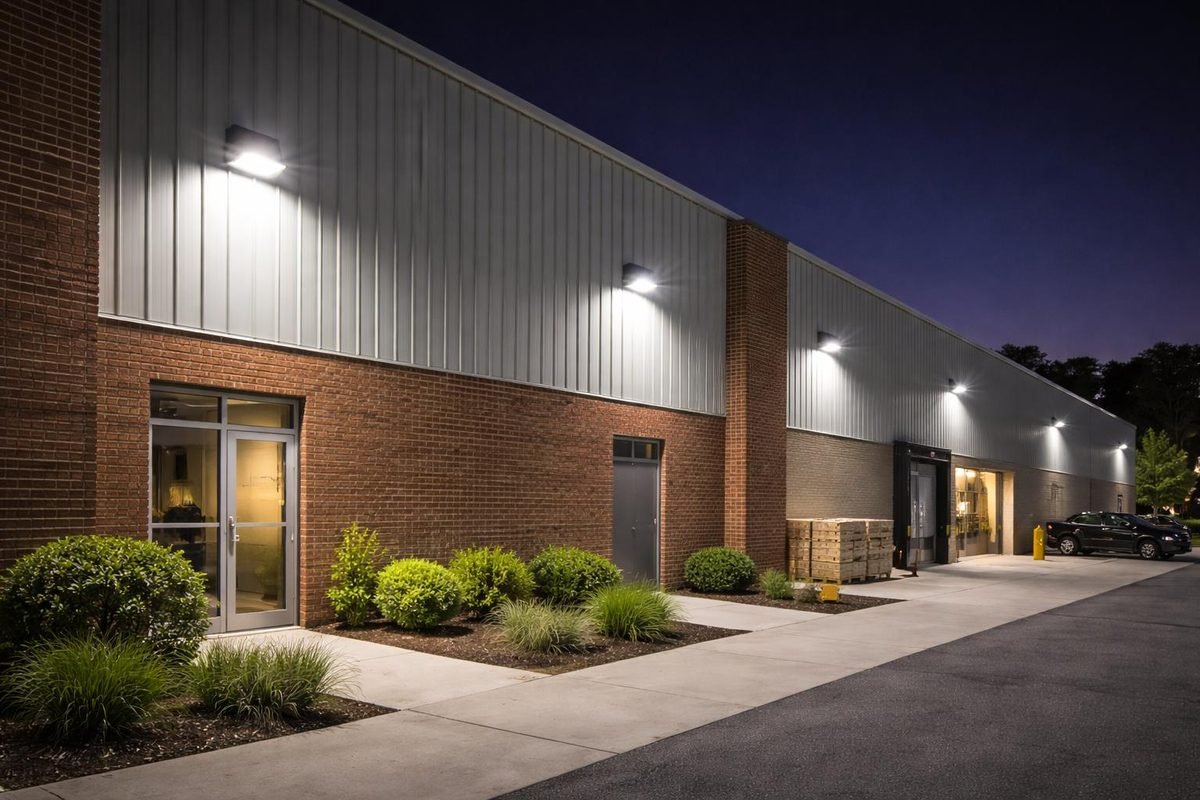
A municipality in Portugal ordered 800 LED wall packs for a parking structure renovation. IP65 rated. Stainless steel housing. 3-year warranty. Everything looked right on paper.
Fourteen months in, the city’s maintenance crew started reporting failures. Not total failures — intermittent ones. Lights would work for a few hours, then go dark, then come back. The maintenance team blamed the drivers. The driver manufacturer blamed the wiring. The wiring contractor blamed the fixture.
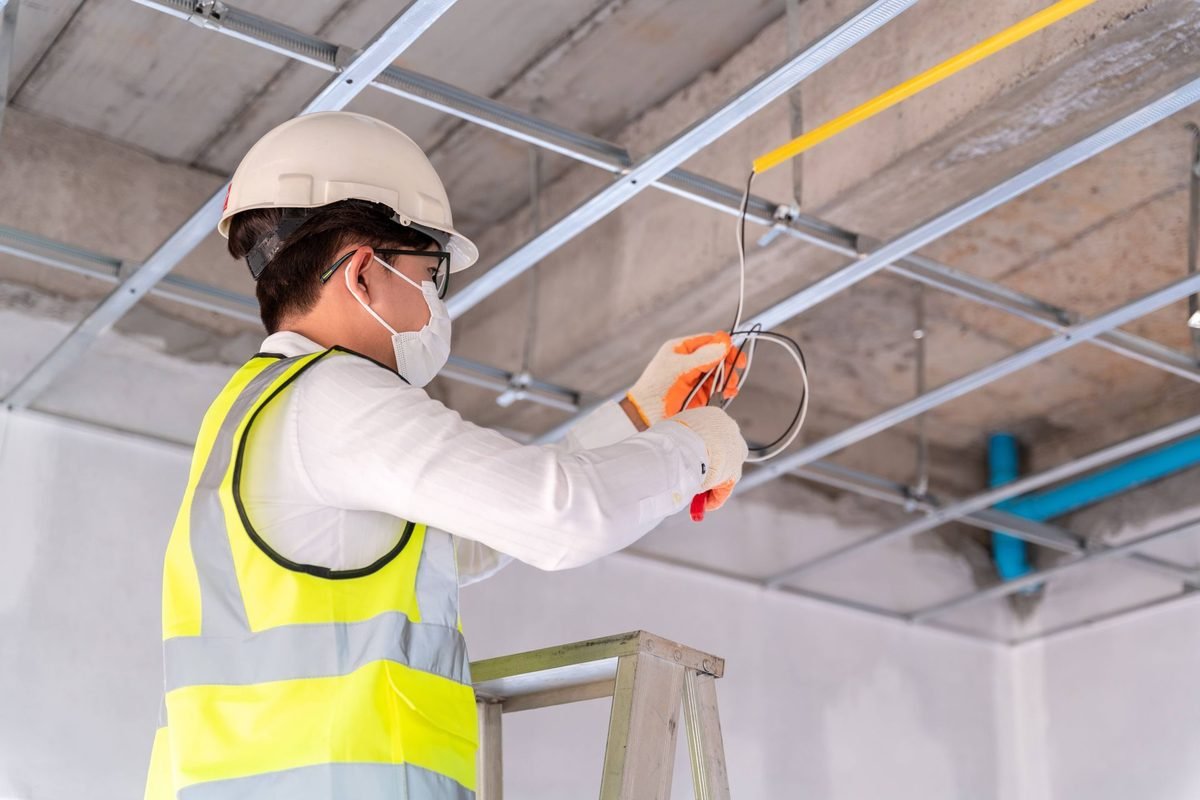
The actual cause: Wire nut connectors at the junction box weren’t rated for the environment. The IP65 rating protected the fixture internals. But the field wiring — where the electrician connects the building’s power supply to the fixture’s flying leads — was done with standard wire nuts in a damp junction box. Salt air from the nearby Atlantic crept in, corroded the copper connections, created high-resistance joints that generated heat, and eventually caused open circuits.
I wish I could say this was a one-off. It’s not. I see it in at least 1 in 4 outdoor projects where the installer uses standard connectors instead of gel-filled or heat-shrink connectors rated for wet locations.
What I now spec on every outdoor project:
– Fixture-side: Flying leads with pre-attached waterproof connectors (IP68 rated at the connection point, not just the housing)
– Junction side: Require gel-filled wire connectors (3M DBY-30 or equivalent)
– Require a “connection method” section in the installation manual that specifies connector types
The cost difference? About $0.80 per connection point for a gel-filled connector versus $0.12 for a standard wire nut. On a project with 800 fixtures, that’s $544 in connectors versus $96. The warranty claim for one failed fixture — including the truck roll — costs more than the connectors for the entire project.
4. Lumen Depreciation Mismatch Across a Batch (The Aesthetic Disaster)
This one doesn’t kill your fixture. It kills your client relationship.
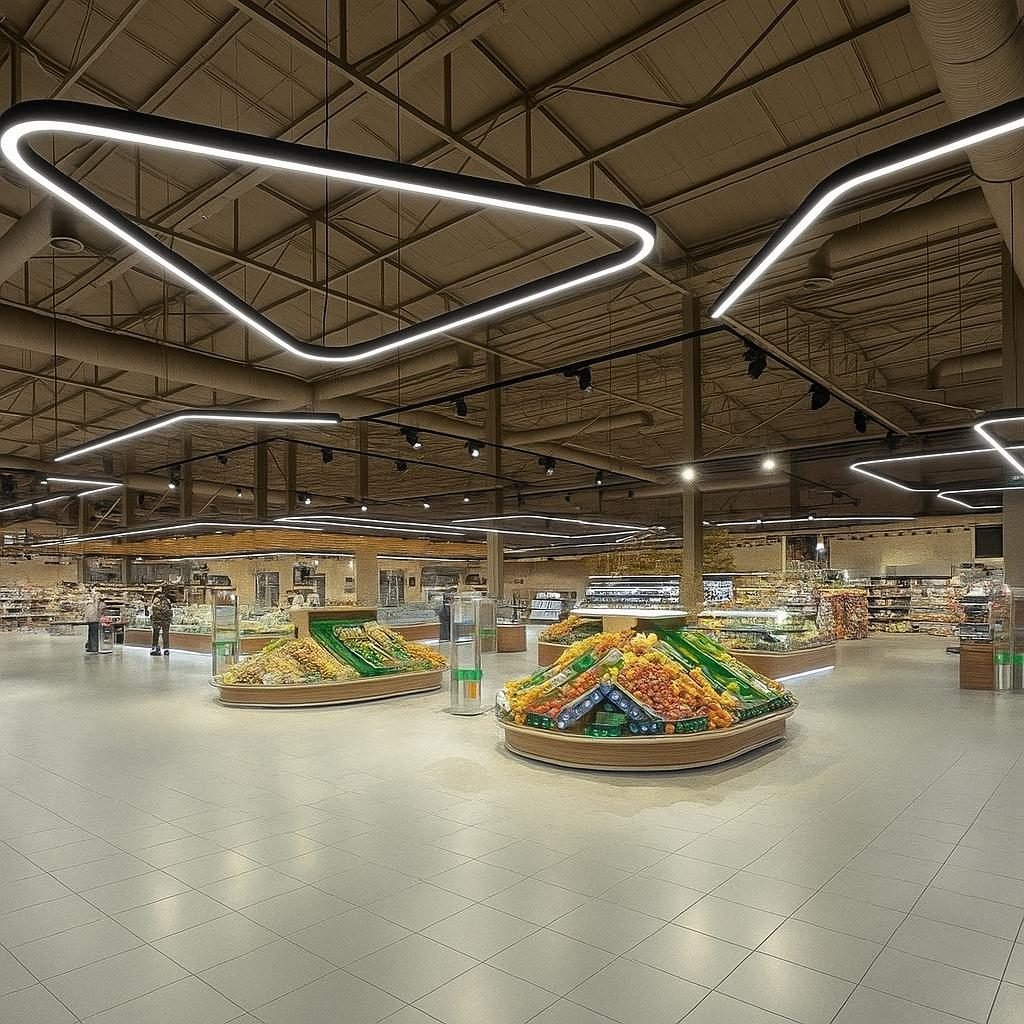
Picture this: A retail chain in Germany orders 2,000 LED track lights for a store renovation. They come in three shipments over six weeks because the factory runs out of LED chips on the first batch. The first 800 units go into the flagship Berlin store. The remaining 1,200 go into satellite locations.
Three months later, the Berlin store manager calls: “The lights near the entrance look different from the ones near the fitting rooms.”
What happened: The first batch used Samsung LH351D chips (bin 5000K, 7 CRI). The second batch — because of a supply shortage — used Seoul Semiconductor SunLike chips with a slightly different spectral power distribution. Both are 5000K. Both are >90 CRI. Both are “white.” But side by side, the difference is visible.
This isn’t just a theoretical problem. CIE MacAdam ellipses define color tolerance, and most suppliers spec “within 3-step SDCM.” But SDCM only covers chromaticity coordinates — it doesn’t account for spectral power distribution differences that affect how colors render under the light.
My approach after this burned me once: I now require every batch order over 500 units to include a “batch uniformity guarantee” — same LED chip brand, same bin, same production week. If the factory can’t guarantee that, I ask for a physical sample comparison before shipment. Yes, it adds 5 days. No, I don’t care.
For project buyers, here’s what I’d add to your spec:
“All LED emitters within a single order shall be from the same manufacturing batch, same chromaticity bin (maximum 3-step MacAdam ellipse), and same phosphor lot. Supplier shall provide written confirmation of batch uniformity prior to shipment.”
That single paragraph has saved me more headaches than anything else in my sourcing career.
5. Surge Damage in Areas with Unstable Grid Power (The Regional Time Bomb)
Most buyers think surge protection is a spec item — throw an SPD on the drawing and move on. But the reality is more nuanced, and it depends entirely on where the project is.
I’ve done projects in Southeast Asia where the local grid throws 2kV surges regularly — not during storms, but during normal operation because the transformer infrastructure is undersized. I’ve done projects in Scandinavia where the grid is so clean that a 1kV surge is an annual event.
If you spec a 2kV surge protector for the Scandinavian project, you’re over-engineering. If you spec a 4kV protector for the Southeast Asian project, you’re still under-protected — because the surge energy (measured in joules, not just peak voltage) matters more than the peak voltage rating.
Here’s a real example: A 10,000-unit street lighting project in the Philippines. The spec called for 4kV/2kV (differential/common mode) surge protection. Standard for the region. But the local utility’s capacitor switching was generating repetitive 800V microsurges — not enough to trigger the SPD, but enough to degrade the driver’s input rectifier over time. After 18 months, 7% of drivers had developed a characteristic buzz (piezoelectric effect from the degraded input capacitor).
What I learned: In areas with poor grid quality, you need to spec surge protection based on energy rating (joules), not just voltage clamping. And you need to consider a two-stage approach:
– Stage 1: External SPD at the distribution panel (10kV/5kA minimum)
– Stage 2: Internal protection in the driver (4kV/2kA with >100 joule energy rating)
The cost impact? About $8-12 per driver for proper two-stage protection on a $45 driver. On a 10,000-unit project, that’s $80k-120k in protection. The 700 driver replacements at $45 each plus labor? That’s closer to $350k. Not a hard choice.
The Bigger Picture: Stop Spec’ing for Bench Tests, Start Spec’ing for Reality
Here’s what ties all five of these failures together: they’re all gaps between laboratory conditions and real-world installation.
Your supplier tests on an open bench at 25°C. Your fixture gets installed in an insulated ceiling at 40°C ambient. Your supplier tests with a clean sine wave from a lab power supply. Your fixture gets fed by a 20-year-old transformer with 8% THD. Your supplier tests with factory-fresh connectors. Your fixture gets wired with connectors that were sitting in a damp junction box for three weeks before installation.
Every one of these failures costs money. But more importantly, every one of them is preventable — not by buying more expensive fixtures, but by asking better questions before you buy.
My practical spec checklist — the five things I now add to every commercial lighting RFQ:
- Tc measurement at rated current in simulated housing — not open bench
- Capacitor brand and rating disclosure — non-negotiable
- Connection method specification — including field connector requirements
- Batch uniformity guarantee — same chip, same bin, same production week
- Surge protection rated for regional grid conditions — joules, not just volts
These five items add zero cost to the fixture price. They might add a week to the procurement timeline. But they’ve saved my clients hundreds of thousands of dollars in warranty claims, rework, and reputation damage.
If you’re sourcing commercial LED fixtures — whether you’re a distributor stocking inventory or a project buyer spec’ing for a single installation — I’d suggest you start asking these questions today. Because the five failure modes I’ve described above? They’re not rare. They’re routine. The only question is whether they happen on your watch.
If you’re evaluating LED suppliers for commercial projects, browse our catalog for product ranges designed with these failure modes in mind. Or get in touch — we’ve been navigating these issues for 15 years and can help you spec right the first time.
