
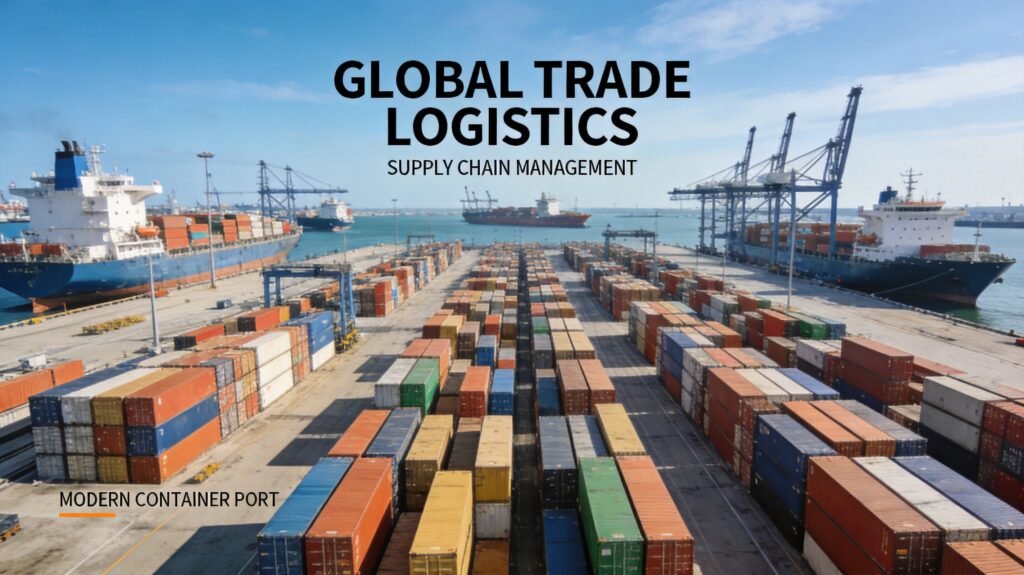
Introduction
The global commercial lighting supply chain is undergoing its most significant transformation in decades. Since 2018, escalating US tariffs on Chinese goods, the COVID-19 pandemic’s supply chain disruptions, and the emergence of Vietnam as an alternative manufacturing hub have fundamentally altered how importers source LED lighting products.
For procurement managers, lighting distributors, and brand owners, understanding these shifts isn’t optional—it’s essential for maintaining competitive pricing and supply chain resilience in 2026.
The Tariff Landscape: Current Situation
US Tariff Timeline on Chinese Lighting Products
Current Tariff Rates on Lighting Products
Most commercial LED lighting products from China face:
– Section 301 tariffs: 25% additional duty
– Most Favored Nation (MFN) duties: 3-6% base rate
– Total landed cost impact: 28-35% above pre-tariff pricing
Product categories and their typical tariff classifications:
Vietnam’s Rise as a Lighting Manufacturing Hub
Why Vietnam Attracts Lighting Manufacturers
Vietnam offers several strategic advantages for lighting production:
1. Trade agreements: Access to ASEAN Free Trade Area and reduced tariffs to key markets
2. Labor costs: Approximately 30-40% lower than China for comparable skills
3. Political stability: Predictable business environment
4. Geographic proximity: Close to Chinese component suppliers
5. Investment incentives: Tax holidays and land use benefits
Vietnam’s Lighting Industry Capabilities
By 2026, Vietnam has developed substantial lighting manufacturing capacity:
What Vietnam Can and Cannot Produce
Products increasingly sourced from Vietnam:
Products still primarily China-sourced:
The Reality of “Made in Vietnam” for Importers
Pros of Vietnam Sourcing
Cost advantages:
Supply chain diversification:
Cons and Challenges
Hidden costs:
Operational challenges:
Quality considerations:
The Tariff Exclusion Process: What Importers Need to Know
Current Exclusion Mechanism
The US maintains a tariff exclusion process where importers can request relief from Section 301 tariffs for specific products. However:
1. Exclusions are product-specific: Must demonstrate the product is not available from non-China sources
2. Process is slow: Applications take months to review
3. Uncertainty: Exclusions are temporary and subject to policy changes
4. Retroactive refunds: Sometimes available but requires proper documentation
Documentation Requirements
To successfully navigate tariff exclusion requests:
Strategic Responses: How Leading Importers Adapt
Strategy 1: Dual Sourcing
Many sophisticated importers now operate dual-source strategies:
Strategy 2: Tariff Engineering
Legal approaches to reduce tariff exposure:
– SKU optimization: Focus on product categories with lower tariff rates
– Assembly operations: Import components, assemble domestically
– Foreign Trade Zone utilization: Store goods duty-deferred in FTZs
– First sale valuation: Reduce declared value through intermediary sales
Strategy 3: Price Optimization
Strategic pricing adjustments:
– Value-based pricing: Focus on total cost of ownership vs. unit price
– Contract restructuring: Shorter terms with price adjustment clauses
– Volume consolidation: Larger orders to spread fixed costs
– SKU rationalization: Eliminate marginal products with poor margin contribution
The Hybrid Model: China + Vietnam Production
How Successful Importers Combine Both
The most resilient supply chains in 2026 leverage both countries strategically:
For YoubeeLight clients, we recommend:
1. Vietnam production for:
– Standard commercial products
– Price-sensitive commodity items
– Products without complex customization
– Orders with flexible timelines
2. China production for:
– Custom OEM/ODM products
– High-specification technical products
– Products requiring specific certifications
– Urgent orders requiring fast turnaround
Quality Assurance Across Borders
Managing quality across multiple production locations:
– Unified quality standards: Same specifications regardless of factory location
– Third-party inspection: Independent QC at both China and Vietnam facilities
– Component qualification: Qualify components separately for each production location
– Documentation protocols: Consistent paperwork and traceability systems
What This Means for Your Procurement Strategy
Immediate Actions
Review current product portfolio:
Strengthen supplier relationships:
Long-Term Positioning
Build a resilient supply chain:
Conclusion: Adapting to the New Reality
The combination of elevated tariffs and emerging Vietnam manufacturing capacity represents a structural shift in the global lighting supply chain, not a temporary disruption. Importers who adapt successfully will:
– Diversify strategically: Not all products need to move to Vietnam, but every importer needs Vietnam options
– Think total cost: Consider landed costs, not just unit prices, when evaluating sourcing decisions
– Build relationships: Strong supplier partnerships enable flexibility when conditions change
– Plan for uncertainty: Maintain buffer stocks and contingency plans for tariff policy changes
The lighting industry will continue evolving. Those who understand these dynamics and respond proactively will maintain competitive advantages in pricing, supply reliability, and market responsiveness.
For personalized guidance on navigating tariffs and optimizing your lighting supply chain, [contact YoubeeLight](https://youbeelight.com/contact/). Our 15 years of experience in cross-border lighting procurement includes helping clients build resilient, cost-effective sourcing strategies.
Frequently Asked Questions
Q: Is Vietnam lighting production actually cheaper than China after all costs?
A: Not always. While labor and tariffs may favor Vietnam, higher component import costs, logistics expenses, and quality management overhead can offset these advantages. Total landed cost analysis is essential before switching production.
Q: Can Vietnam manufacturers match Chinese quality for commercial lighting?
A: For standard commercial products, Vietnam quality can match China when proper quality systems are implemented. For complex, high-specification, or custom products, China remains ahead in manufacturing maturity.
Q: Are there other countries besides Vietnam for lighting production diversification?
A: Yes, India, Mexico, Turkey, and Eastern European countries like Poland are emerging as alternatives for certain lighting categories, though each has specific strengths and limitations.
Q: How do tariffs affect OEM vs ODM product pricing differently?
A: OEM products typically face higher per-unit tariff impact due to higher value. ODM products with simpler designs may have more Vietnam production options, reducing tariff exposure.
Q: What is the typical timeline for moving a product from China to Vietnam production?
A: For a standard product: 3-6 months including supplier qualification, sample approval, and initial production. Complex OEM products requiring new certifications may take 12-18 months.
Q: How should I handle the uncertainty of potential tariff policy changes?
A: Build flexibility into contracts (price adjustment clauses), maintain buffer inventory of critical items, diversify sourcing across multiple countries, and stay engaged with industry associations that lobby on tariff policy.
—
*Navigating tariffs and supply chain complexity? [Contact YoubeeLight](https://youbeelight.com/contact/) for strategic sourcing consultation.*
