
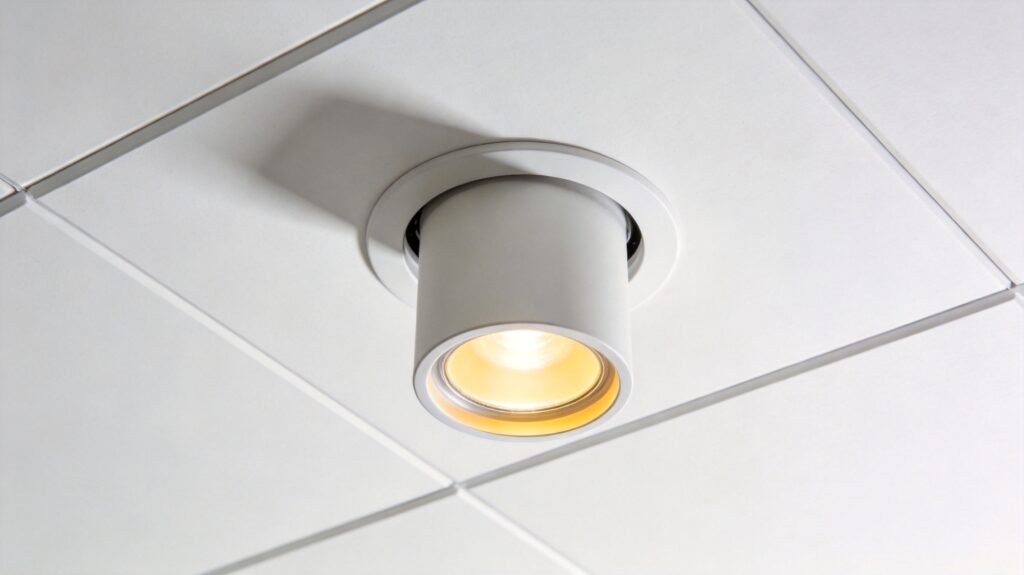

Understanding LED Dimming Fundamentals
How LED Dimming Works
Unlike incandescent bulbs, which dim naturally with reduced voltage, LEDs require specific control methods:
1. PWM (Pulse Width Modulation): Rapidly switches LED on/off, varying the ratio to control perceived brightness
2. CCR (Constant Current Reduction): Reduces current flowing through LEDs while maintaining stable voltage
3. AM (Amplitude Modulation): Directly varies LED current (least common for commercial applications)
Why Compatibility Matters
Using incompatible dimming protocols causes:
- Flickering: Visible light oscillation that creates uncomfortable environments
- Dead travel: Gap between dimmer and light output response
- Limited range: Inability to dim below 20% or above 90%
- Noise interference: Audible humming from poorly matched components
Request dimming compatibility testing from YoubeeLight’s technical team →
—
Protocol 1: 0-10V Analog Dimming
How 0-10V Works
0-10V is the oldest and simplest LED dimming standard. A control device (dimmer or building automation system) outputs a DC voltage between 0V (minimum) and 10V (maximum), which the LED driver interprets to adjust light output.
Wiring Configuration:
- Two-wire low-voltage control circuit
- Separate hot/live wire for power
- Polarity-sensitive wiring
Specifications
| Parameter | Specification |
|---|---|
| Control Voltage | 0-10V DC |
| Maximum Distance | 20m (65ft) typical |
| Driver Current Sinking | 0.5-2mA typical |
| Dimming Range | 1-100% (varies by driver) |
| Wiring Type | Class 2, 18-22 AWG |
Advantages
✅ Pros:
- Simple, reliable technology
- Lowest cost implementation
- Wide driver compatibility
- Minimal technical expertise required
- Excellent for single-room applications
Disadvantages
❌ Cons:
- Limited to 20m control distance
- No individual addressability
- Analog signal susceptible to voltage drop
- No feedback/status reporting
- Requires separate wiring from power
Best Applications
- Individual fixture dimming
- Small commercial spaces (offices, retail)
- Retrofit projects with existing 0-10V infrastructure
- Budget-conscious installations
—
Protocol 2: DALI (Digital Addressable Lighting Interface)
How DALI Works
DALI is an international standard (IEC 62386) specifically designed for lighting control. Unlike analog 0-10V, DALI transmits digital commands over the same two-wire bus, enabling individual fixture control and bidirectional communication.
DALI System Components:
- DALI Controllers/Gateways
- DALI Drivers (with DALI interface)
- DALI Sensors (occupancy, daylight)
- DALI Bus Power Supply
Specifications
| Parameter | Specification |
|---|---|
| Protocol | IEC 62386 |
| Bus Voltage | 16V DC typical |
| Maximum Devices | 64 per bus |
| Maximum Bus Length | 300m (984ft) |
| Addressing | Individual or Group |
| Communication | Bidirectional |
| Data Rate | 1200 baud |
Advantages
✅ Pros:
- Individual fixture addressability
- Bidirectional communication (status feedback)
- Flexible grouping and scene control
- No polarity concerns
- Integrates with building automation systems
- Industry standard with broad compatibility
Disadvantages
❌ Cons:
- Higher cost than 0-10V
- Requires DALI-certified drivers
- More complex programming/setup
- Limited expandability beyond 64 devices
- Separate bus wiring required
Best Applications
- Medium to large commercial buildings
- Office buildings with multiple zones
- Hotel guest rooms and public areas
- Projects requiring energy code compliance
- Integration with BMS (Building Management Systems)
Contact YoubeeLight for DALI-compatible commercial LED drivers →
—
Protocol 3: DMX512
How DMX512 Works
DMX512 is primarily known for entertainment lighting but is increasingly used in architectural applications. It transmits up to 512 channels of data per universe over a single twisted-pair cable, with each channel controlling a specific parameter (intensity, color, etc.).
DMX Addressing:
- Each fixture receives a unique starting address
- Fixtures consume 1-512 addresses depending on channel count
- Multiple universes connect via DMX mergers or processors
Specifications
| Parameter | Specification |
|---|---|
| Channels | 512 per universe |
| Data Rate | 250 Kbps |
| Maximum Nodes | 32 per line (repeaters extend) |
| Cable Type | DMX512 Cable (5-pin XLR typical) |
| Update Rate | 44 updates/second |
| Distance | 300m (984ft) without repeater |
Advantages
✅ Pros:
- High-speed control (44 updates/sec)
- Individual control of multiple parameters
- Industry standard in entertainment
- Excellent for dynamic lighting effects
- Extensive fixture ecosystem
Disadvantages
❌ Cons:
- Not designed for building automation
- Unidirectional (no feedback)
- Requires termination and careful wiring
- Complex setup for large installations
- Higher cost for infrastructure
Best Applications
- Theaters and performing arts venues
- Architectural façade lighting
- Nightclubs and entertainment venues
- Dynamic color-changing installations
- DMX-controlled commercial displays
—
Protocol 4: Bluetooth Mesh
How Bluetooth Mesh Works
Bluetooth Mesh is a relatively new protocol specifically designed for large-scale commercial lighting networks. Based on Bluetooth Low Energy (BLE), it enables thousands of devices to communicate through a mesh network topology where signals hop between nodes.
Network Architecture:
- Flooding protocol (messages propagate through network)
- No central controller required
- Self-healing network topology
- Many-to-many communication
Specifications
| Parameter | Specification |
|---|---|
| Protocol | Bluetooth Mesh (SIG standardized) |
| Network Size | Up to 32,000 nodes |
| Range | 10-100m per hop |
| Power Consumption | Ultra-low (battery-powered nodes possible) |
| Smartphone Support | Native (no gateway needed) |
| Provisioning | Secure, out-of-band authentication |
Advantages
✅ Pros:
- No dedicated control wiring (uses existing power lines or wireless)
- Native smartphone commissioning
- Scalable to massive networks
- Lower infrastructure costs
- Gateway optional (can operate standalone)
- Excellent for retrofit applications
- Growing ecosystem
Disadvantages
❌ Cons:
- Relatively new standard (2017)
- Interoperability challenges between vendors
- Network commissioning can be complex
- Latency higher than wired protocols
- Security requires careful configuration
Best Applications
- Large-scale commercial retrofits
- Historic buildings (minimal wiring disruption)
- Multi-tenant facilities
- Projects requiring frequent reconfiguration
- Smart building integrations
- Outdoor commercial lighting
Explore YoubeeLight’s Bluetooth Mesh compatible fixtures for your next project →
—
Comparison Matrix
| Feature | 0-10V | DALI | DMX512 | Bluetooth Mesh |
| Cost | $ | $$ | $$$ | $$ |
| Complexity | Low | Medium | High | Medium |
| Individual Addressing | No | Yes | Yes | Yes |
| Feedback Capability | No | Yes | No | Yes |
| Wiring Required | Separate | Bus | Dedicated | Optional |
| Scalability | Poor | Good | Excellent | Excellent |
| Retrofit Friendly | Moderate | Difficult | Difficult | Excellent |
| Standardization | High | Very High | Very High | Growing |
—
Making Your Selection: Decision Framework
Choose 0-10V When:
- Budget is primary concern
- Simple single-room applications
- Existing 0-10V infrastructure
- Minimal future expansion anticipated
Choose DALI When:
- Building automation integration required
- Energy code compliance (ASHRAE, Title 24)
- Medium-to-large commercial projects
- Individual fixture monitoring needed
Choose DMX512 When:
- Dynamic effects or color-changing requirements
- Entertainment venue applications
- High-speed updates essential
- Experience DMX integration available
Choose Bluetooth Mesh When:
- Retrofit project with minimal wiring disruption
- Large-scale deployment (hundreds+ fixtures)
- Future flexibility and reconfiguration needed
- Smartphone-based commissioning preferred
—
Conclusion: Matching Technology to Application
No single dimming protocol wins universally. The optimal choice depends on project scale, budget, integration requirements, and future flexibility needs. Most successful commercial lighting projects select technologies based on long-term system requirements rather than initial cost alone.
Need help selecting the right dimming technology for your commercial lighting project?
YoubeeLight’s technical team provides free consultation services, helping architects, contractors, and facility managers choose optimal dimming solutions. We supply both standard 0-10V drivers and advanced DALI/Bluetooth Mesh compatible fixtures for commercial projects.
📧 Get Professional Dimming Recommendations: info@youbeelight.com
📱 WhatsApp: +85265063139
🌐 Explore Compatible Products: https://youbeelight.com/products/
—
Related Resources:
- Commercial LED Driver Selection Guide
- Smart Lighting Control System Integration Services
- LED Track Lighting with DALI Compatibility
—
This technical guide is provided by YoubeeLight to support lighting professionals in making informed product selection decisions.
